



1. Introduction
You can see how things are changing in 2025, if you have been tracking crypto. Bitcoin has already made it over the 100k threshold this year, Ethereum continues to drive new applications, and additional institutions are starting to approach crypto as an asset class. To traders this translates to larger openings and larger risks, as well.
The heart of such action is the cryptocurrency exchanges. These are where you purchase, sell and operate your online property. But an exchange is not merely a marketplace. It is full of cryptocurrency exchange tools and resources that will either enable you to make intelligent choices or will confuse you when you do not know how to utilize them.
These features are important to professional traders. They do not simply observe the prices, they dissect the candlestick charts, are automated order takers, and monitor the performance of their portfolio on a daily basis. Beginners also benefit. The big losses can be avoided even by something simple like placing a stop-loss order.
In this blog we are going to deconstruct the exchange tools that every crypto trader must know in 2025. Whether it is analysis and execution, portfolio management, security, and learning resources, this is your guide to trade smarter, not harder.
2. Cryptocurrency Exchange Tool types.
We can begin by putting the tools you will encounter on most exchanges in a group.
-
Market Analysis Tools: Depth books, market volume, charts and indicators. Order types, leverage, automation.
-
Portfolio Management Solutions: ROI analysis, portfolio board, allocation board, position management.
-
Security and Support Tools: authentication, transaction logs, alerts.
To put it simply, the crypto trading tools are used to gain knowledge about the market, execution tools are used to take action, portfolio tools are used to manage the results, and security tools are used to secure your account. Novices can perhaps be content with surface scratches, but professional traders tend to have all the single ones in use.
Case Study Example: Imagine a clean, beginner-friendly dashboard on BTCDana with candlestick charts, RSI indicators, and simple to use execution panels. Next to that, imagine a professional display with different chart windows (MACD and order books) open, and the ability to automate through API. This comparison reveals how various tools can be used by various classes of traders-and why it is important to select the appropriate perspective.
3. Market Analysis Tools

Trading is supported by market analysis. Otherwise, you are gambling.
-
Candlestick Charts: The candlestick chart analysis displays the close, low, high prices and the open price. The common formations like the hammer or the engulfing typically show possible reversals. They are still the main type of chart used by many traders in 2025.
-
Depth Charts: These are used to display the buy and sell orders at various price levels. A wall of buy orders may show good support.
-
Volume Analysis: When a price movement has large volume it typically indicates that the price movement is strong. Volume spikes were virtually always supported by strong rallies in the 2021 bull run, and again in 2025.
-
Technical Indicators: RSI and MACD are still being used. RSI (Relative Strength Index) is used to determine whether the asset is overbought or oversold. MACD (Moving Average Convergence Divergence) shows the trend momentum and trend direction.
To a novice, the concept of watching volume would be the number of students who attended the classes. When the room is full, there is something important that is going on. Pros can use candlesticks together with MACD or Bollinger Bands to identify accurate entry and exit points.
4. Trading Execution Tools
When to trade is not the whole story. The manner in which you set up the trades is as important.
-
Market Orders: Buy or sell at the current market prices. Not necessarily the best but simple when the market is moving rapidly.
-
Limit Orders: Allow you to select price. A limit order allows you to buy at 102k even though you want to buy at 100k.
-
Take-Profit and Stop-Loss Orders: Required Risk Mechanisms Stop-loss automatically sells your position when the price is decreasing too much and take-profit automatically sells your position when the price increases.
-
Leverage and Margin Trading: Exchanges continue to provide leverage of up to 100x in certain markets in 2025, although the majority of retail traders trade with significantly lower leverage, such as 5x or 10x. Gains can be increased through leverage, and leverage is among the quickest methods to lose money.
-
Automation: Some traders automate strategies to operate 24/7 either through APIs or in-built bots. As an example, a bot can purchase every time RSI lowers to less than 30 and sell when it is above 70.
Novices can consider stop-loss to be a seatbelt. It will not prevent the accident but will be able to reduce the damage. To institutions, having automated trading tools is equivalent to having a group of assistants performing trades 24 hours a day.
Comparison of Order Types
5. Portfolio and Risk Management Tools
One trade is not going to make or break you. What matters is how you handle your total portfolio.
-
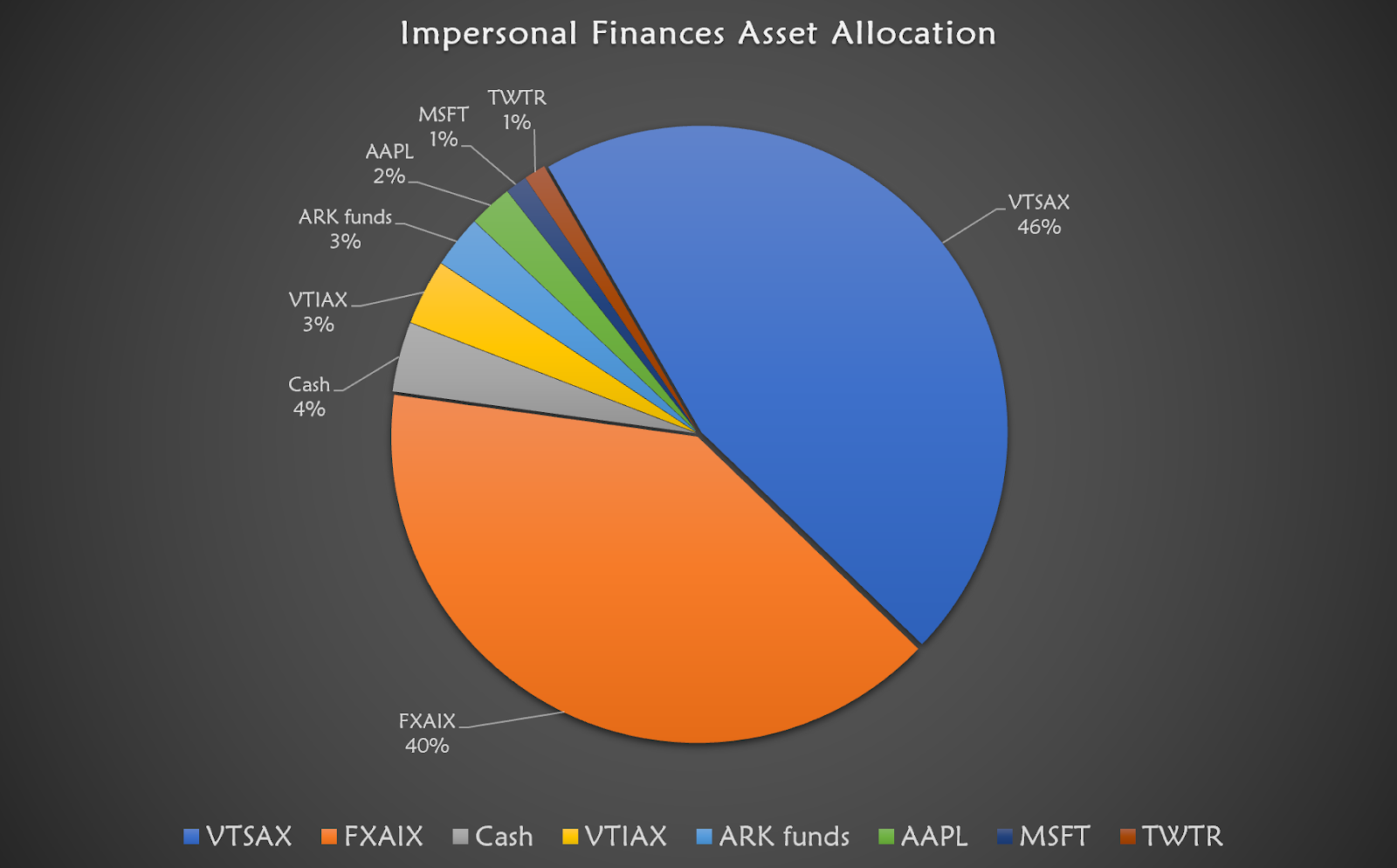
Asset Statistics: Dashboards provide insight into your overall holdings, allocation and performance. You will see it clearly when 80 per cent of your capital is in one coin.
-
Position Management: Allows you to change leverage, close partial positions or scale-in to trades.
-
Risk Control: diversification, loss limit/day or rebalancing per week. The 80/20 principle is adhered to by many long-term traders in 2025, who hold 80 per cent of their money in the big coins (BTC and ETH), and 20 per cent in the small tokens.
To a beginner, this is similar to sorting your study materials according to topic. You are aware of where everything goes and you are not confused. Pros track higher-level measures such as Value at Risk to ensure that a single bad trade is not going to capsize the ship.
6. Security and Support Tools
Trading in cryptos is always a risk, but you can avoid losing money to inadequate security.
-
Two Factor Authentication: An essential. The person who guessed your password cannot get into your account without passing the second step.
-
Wallet Management: Both cold and hot storage can be provided by exchanges. The largest amounts are the safest in cold storage (offline wallets).
-
API permissions: Control what an automated robot or third party is allowed to perform with your account.
-
Alerts and Records: Receive notification of price changes or log-ins and can also download a trade history yourself.
As history has demonstrated, the absence of good crypto security tools leaves things to chance. The notorious exchange robberies a few years ago are flashbacks of how fast money can disappear. By 2025, security is the backbone of the house that serious traders consider. In its absence, all the other things fall apart.
Security & Support Tools Comparison
7. Additional Resources
Being a good trader is to be informed. Exchanges are now offering additional resources in addition to the tools.
-
Market Data Sites: These monitor the supply in the market, market cap and ranking.
-
Educational Resources: Step-by-step explainers, video tutorials, and other educational resources may be useful to amateurs and experts alike.
-
Communities: We create online communities within forums, social networks, and groups of traders to exchange their strategies and news.
Take these as your extended schoolroom. You do not simply read what the textbook teaches; you receive the tips provided by your fellows, crypto news resources and mentors.
8. Strategies in Practice with Exchange Tools.
But what do these tools look like when put together? A flow that many traders here pursue is simple:
-
Start with analysis. Check candlestick charts and RSI and volume.
-
Limit order at a price which you think is a good entry price.
-
Enter at a loss of capital and place take-profit above.
-
Monitor your portfolio position to ensure that you are not overexposing yourself.
-
Make changes on the alerts or new data.
The same process is applicable to small traders who are only trying to expand gradually and also to institutions that are automating complex multi-step trading strategy.
9. Choosing the Right Tools
The most useful tools will be based on your stage in the process.
-
Entry level: Market charts, limit orders and alerts are simple enough.
-
Intermediate traders: Add indicators, trade more than one position, and can trade more complex order types.
-
Experts: Explore APIs, high leverage, on chain analytics, and multi asset dashboards.
Crypto tool selection is like picking a car. Others simply require a small vehicle to drive around the city and some require a full-fledged SUV with everything.
10. Desktop vs Mobile Tools
Mobile and desktop are both important in 2025.
-
Mobile: The best way to check prices and receive alerts and to trade quickly when markets shift. Mobile apps are the most common tools used by many traders in Asia and Africa since they are constantly on the move.
-
Desktop: Still the ruler when it comes to an in depth analysis. Desktop is best suited to strategy work with multiple screens, side by side charts, and quicker navigation.
A student may look at grades via a phone, and do his or her serious studying on a laptop. Trading instruments do the same. Mobile trading tools are your report card.
11. Data and Research Tools
Instincts cannot make good trading. Decisions that are data driven are more robust.
-
Past Data: Trading Bitcoin has made it possible to predict possible upsurges by examining its halving cycles in the past. The 2024 halving, in particular, brought BTC up over 30 percent in one year.
-
On Chain Data: The number of active wallet addresses, transactions, and whale activity has become one of the most popular things to monitor in 2025. When large wallets begin to purchase in large numbers, this is usually an indicator of a bullish trend.
-
Research Platforms: Analytical dashboards bring technical and on chain data together in intuitive charts, enabling users to more easily identify trends.
Novices may consider such crypto data analysis as a record of grades and averages. The Professional traders move in and out of wallet flows and trade inflows to foretell market movement.
12. Common Mistakes & Warnings
Despite all these tools traders commit crypto trading mistakes. Using a single signal, such as RSI, on its own.
-
Sharing information after buzzing on the social network without fact-checking.
-
Negligence in relation to security and depositing funds in unsecured accounts.
-
Overusing leverage. Several traders made 50x or 100x a few years ago who lost it all when the market dropped to at least 5 percent.
To a beginner, this is similar to copying homework answers without the knowledge of the subject. The risk to pros is that they believe they are invincible and are not taking basic risk management into consideration.
13. Conclusion
The future of crypto trading in 2025 is a thrilling yet competitive one. You must be familiar with your tools to have any chance. Market analysis, execution, portfolio management, security and research resources are used together to make improved decisions.
The good news is that today exchanges provide these crypto exchange tools to all. Beginners are able to perform basic and specialists can utilize all available data and automation. All one has to do is learn, practice, and improve.
If you are ready to try this yourself, explore the features and resources on BTCDana.com. The right tools plus consistent learning will give you the best shot at long-term profitability.