




What is an ICO?
An Initial Coin Offering (ICO) is akin to an IPO for cryptocurrency projects. Rather than selling shares in a company, projects raise funds by issuing agricultural digital assets that are tokens to investors. Depending on the project structure, these digital assets could be a token that offers rights from platform access to ownership rights.
ICOs have democratized early-stage investing by opening up access to investment opportunities that had previously been reserved for venture capitalists to anyone with an internet connection of interest in investing. Most well-known was Ethereum's ICO in 2014, which raised $18 million selling ETH tokens for roughly $0.30 each. Those early investors were looking at returns north of 16,000 times their original investment when ETH reached rates of $4,800+.
Core Concepts and Token Types
Each initial coin offering (ICO) has 4 key elements involved in the offering; these are: the project team, the tokens themselves, the investors supplying funding, and the smart contracts, which allow the entire process to be automated. Smart contracts are self-executing programs that manage token distribution and funds, with no intermediaries, which increases transparency and lowers the risk of fraud.
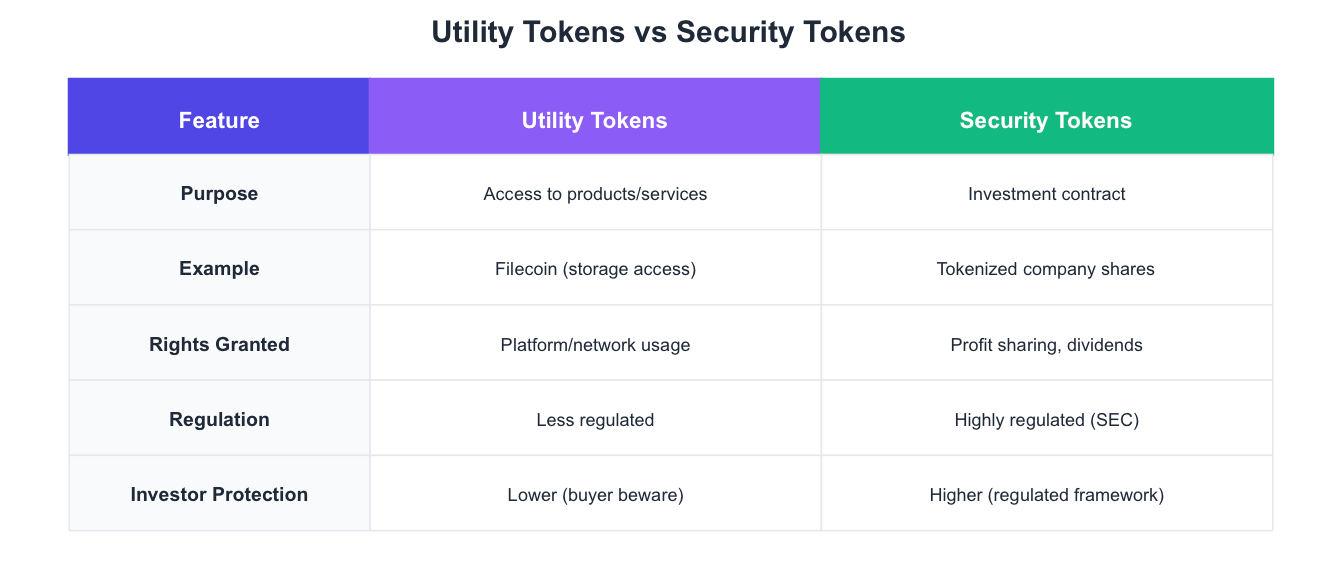
Tokens fall roughly into 2 types. Utility tokens provide access to a product or service. For example, Filecoin's tokens provide access to their decentralized storage network. Security tokens are investment contracts and may include shares of profit and dividends, similar to traditional securities.
The ICO Investment Process
Understanding the ICO Process will provide the confidence to invest in Initial Coin Offerings. When projects begin, they create a detailed whitepaper that outlines the vision for the project, the technology behind it, the token's economics, and the roadmap ahead. This is your main source of information about the investment.
During the token design process, each team will make decisions on how many tokens to create, how to allocate the tokens, what rights, if any, are granted to them, and the vesting schedule for team members. Token economics are important to get right because if done properly, the teams, initial investors, and future users will all be aligned.
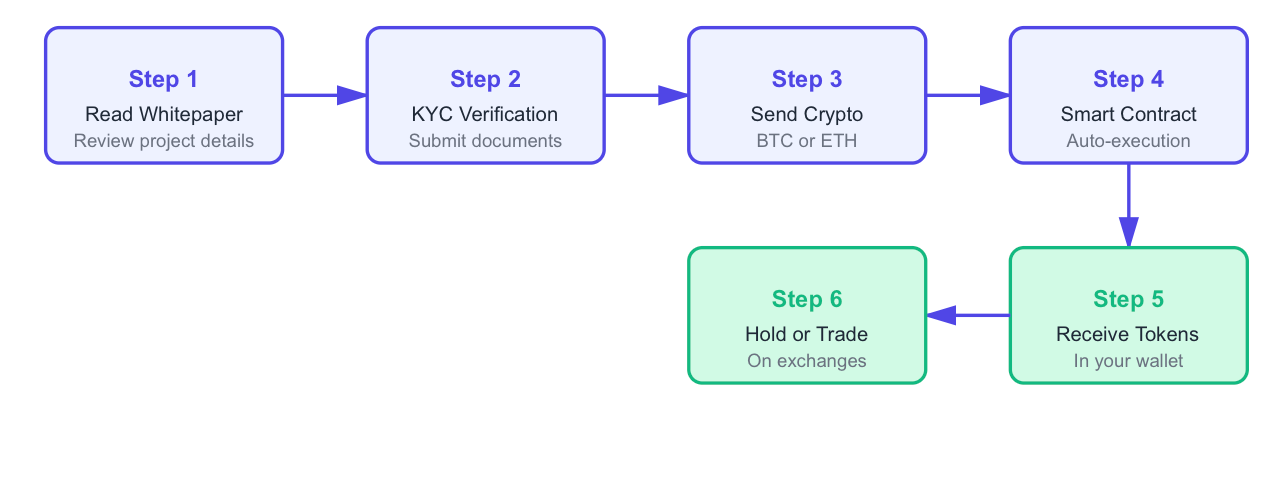
When the ICO launches, investors will generally need to register on the project website, and submit identification documents to complete KYC (Know Your Customer) verification. At this point, you can send the project cryptocurrency (typically Bitcoin or Ethereum) to the project's address. Smart contracts are programmed to automatically calculate and send the tokens to your wallet upon completion of the verification step.
After the ICO concludes, there will usually be a period of time it will take to receive your tokens. Once the tokens are delivered they can either be left in the wallet or traded on cryptocurrency exchanges once the project has been able to land listings.
Why Invest in ICOs?
ICOs have impressive advantages over traditional capital raising mechanisms. The most appealing is the possibility of obtaining high returns. Investors buy tokens as 'early investors' at their lowest price, and for successful projects, the potential monetary increase can be substantial. This potential for high value also comes with proportional risk.
Another characteristic that makes ICOs different from traditional IPOs is that ICOs can obtain global participation and investment. Traditional IPOs often limit the potential investor base to only accredited investors or investors from certain countries. ICOs allow any person in the world with access to the internet and cryptocurrency to invest without having to deal with traditional banking.
The size of the investment is also remarkably small. Whereas, venture capital may require an investment of hundreds of thousands of dollars, if not more, ICOs usually provide an opportunity for a small investment of $10 or $100. This small investment possibility makes it easier for retail investors to invest across different projects instead of committing a large amount of capital in order to diversify their portfolio.
Understanding ICO Risks
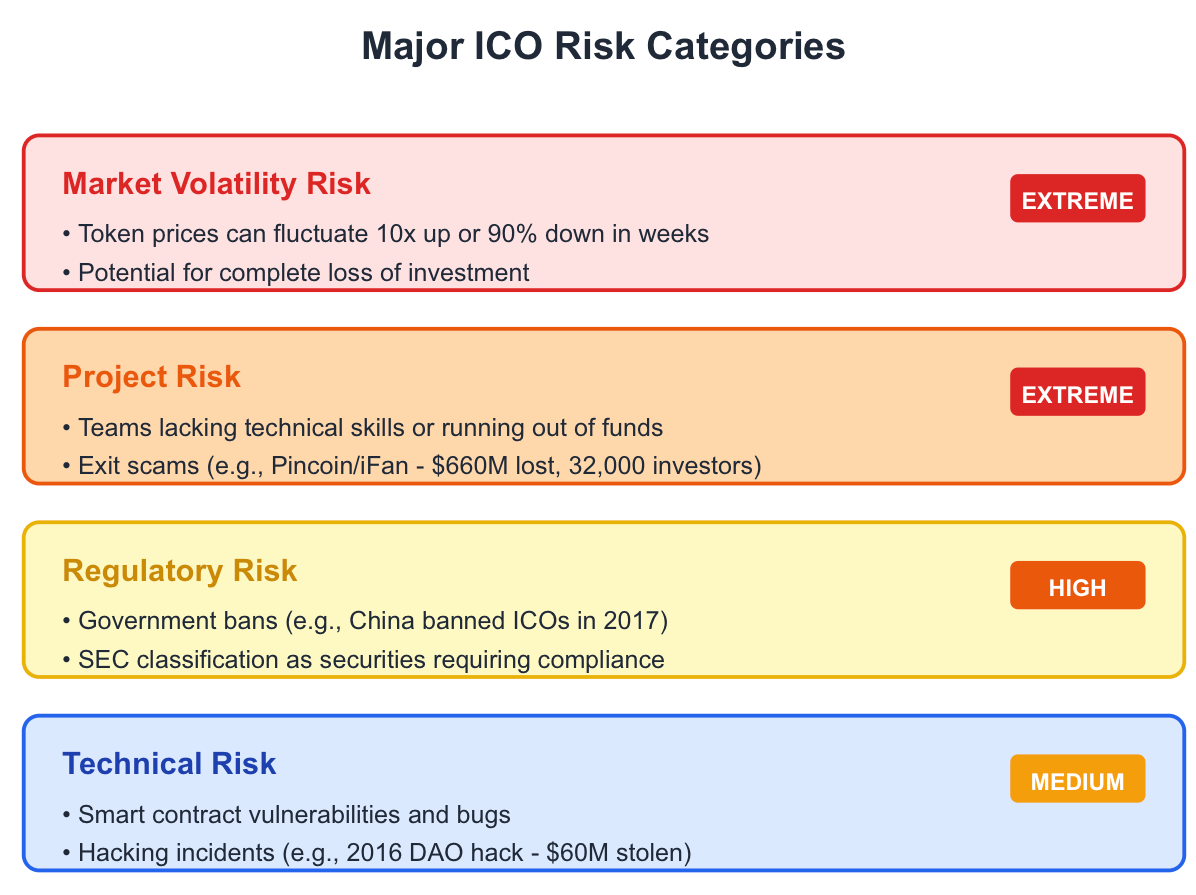
While ICOs offer great potential, they also present significant risk. The market can be very volatile - a token can go up 10x and then down 90% in 2-3 weeks. You can potentially lose most of your investment, and in some cases, your investment will disappear entirely, even if the project is not a scam.
Project risk is probably the most concerning. Often the ICO teams do not possess the technical skills to create their product, they run out of money, or they simply go away. For example, in 2017, the Vietnamese ICOs, Pincoin and iFan, raised hundreds of millions of dollars, while the project founders took the money and disappeared, leaving over 32,000 individual investors with nothing.
Regulatory risk is also a potential unknown. China banned ICOs in 2017, and in the USA many ICOs that are classified as tokens are regarded as securities, which means compliance with federal regulations. If a project conflicts with government regulations, it may be forced to shut down or risk losing their offering at a cost to the investor.
Technical risk includes hacking through smart contract vulnerabilities and bugs to steal tokens or funds. Although there are positive aspects of an ICO, the past events have shown that these project vulnerabilities have cost millions of dollars.
Investment Strategy and Analysis
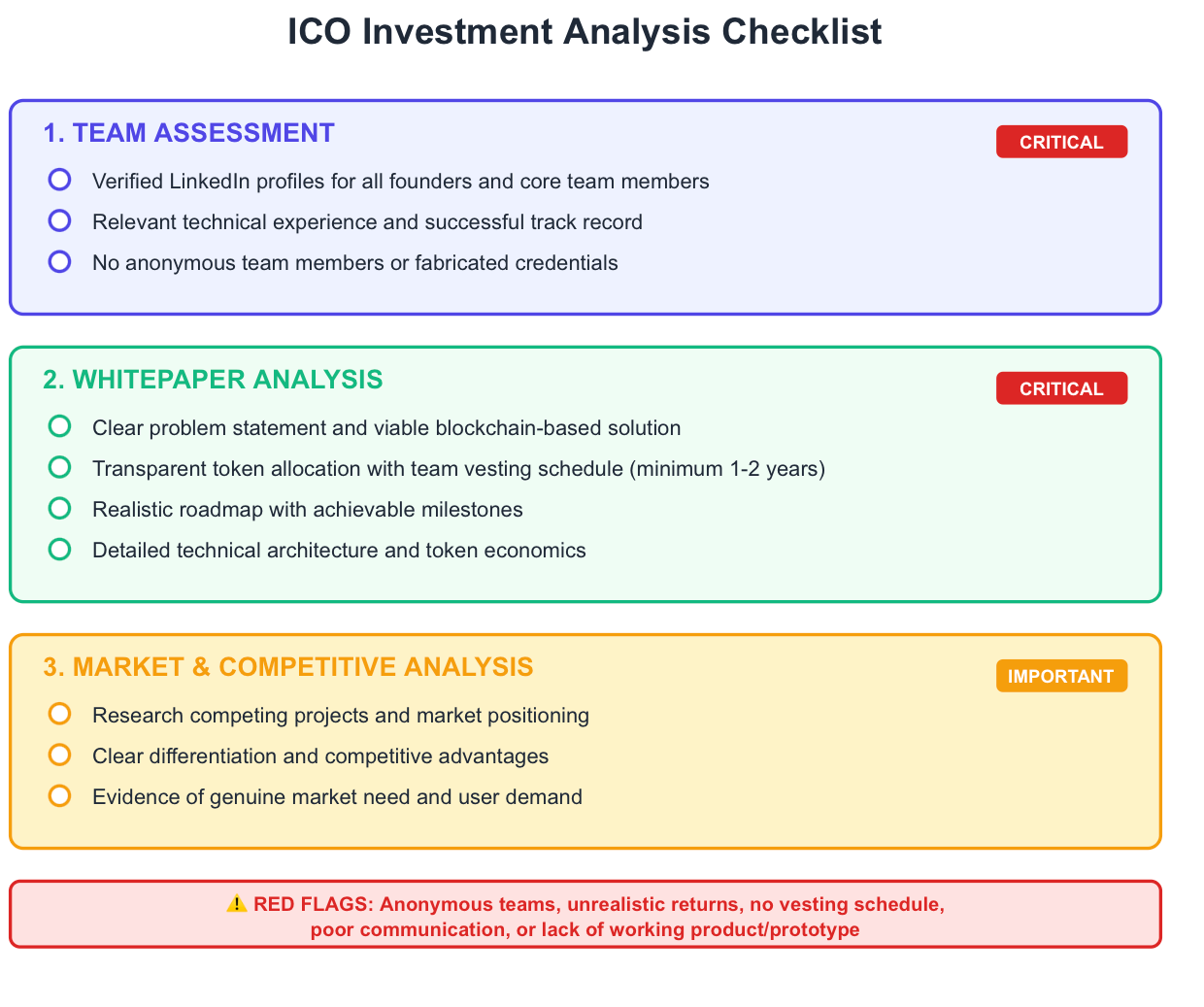
Taking a systematic approach to your analysis will greatly enhance your ability to uncover worthwhile projects. Start the evaluation process by assessing the team. Conduct a search for each founder and core team member through LinkedIn and professional networks. Look for backgrounds that can be verified, relevant experience, and most importantly a successful track record. Anonymous teams or embellished identities are a cause for concern.
Analyzing the whitepaper helps assess the fundamentals of the project. A solid whitepaper will clearly state the problems being solved, the solutions being offered, and why blockchain or tokens are key feature of their product. Pay close attention to token allocation and vesting periods. If the teams have the ability to sell their tokens immediately upon completion of their ICO, they don't have any incentives to continue building.
Contextual analysis of projects in the market will help you understand competitive categories. Look up similar projects and how they are positioned to differentiate themselves. Projects entering an established market are going to have a hard time competing, unless they have a really excellent team and really great technology.
Having a diversified portfolio across different sectors (regulated finance, gaming, infrastructure), will reduce your exposure to sector risk. Plan how much to invest in specific projects based on your appetite for risk. Less risk adverse investments should be a smaller portion of your portfolio, and more speculative early stage projects can comprise a higher proportion of your portfolio.
Establish a stop-loss and a profit-taking rule beforehand. Emotional decision-making is one of the reasons for buying high and selling low. Pre-established rules help keep you strategic.
Learning from Case Studies
Ethereum represents the benchmark of what an ICO can be. Bold technological innovation in the smart contract space, brilliant execution by inexhaustible and visionary founder Vitalik Buterin, and an unwavering commitment to deliver value built a platform for sustainable growth. The Ethereum team delivered on all commitments, and created an infrastructure that has grown into the launching platform for thousands of blockchain projects.
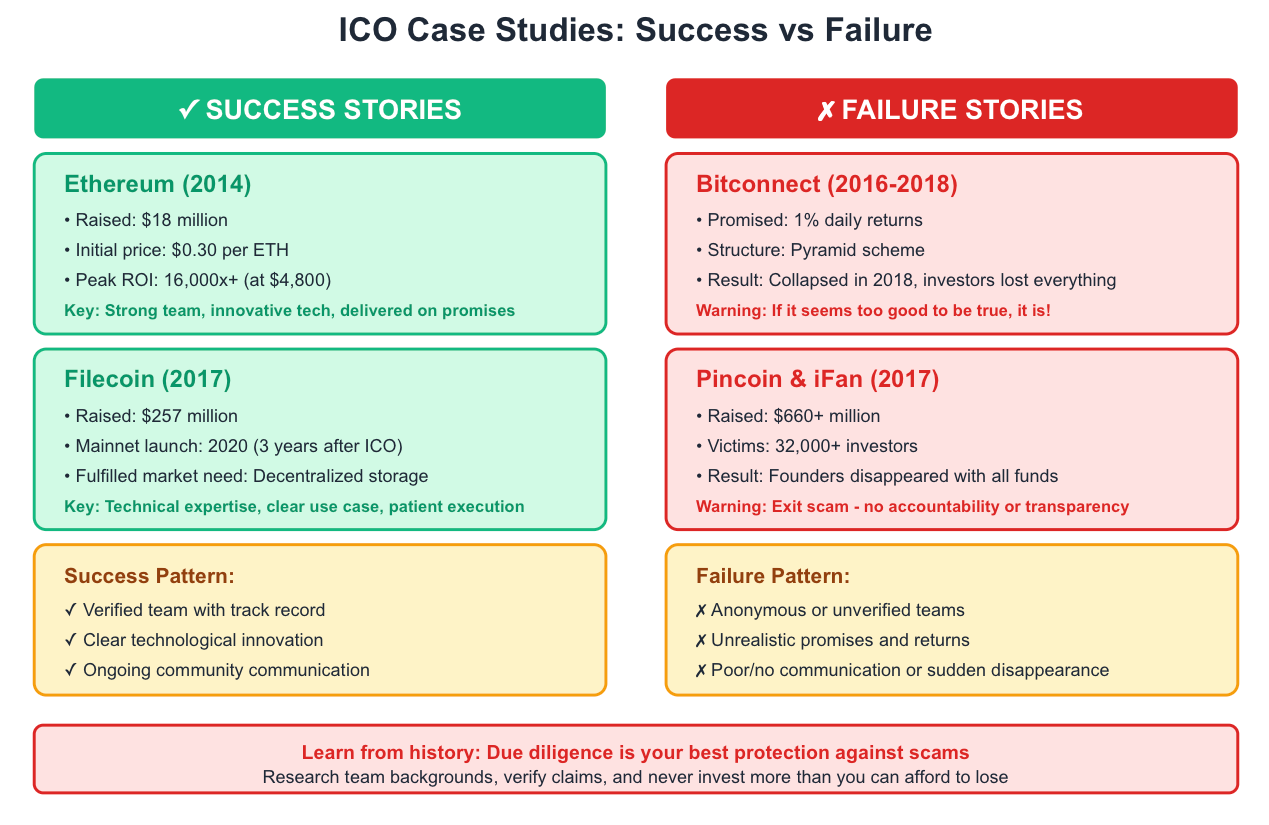
In 2017 Filecoin raised $257 million which made it one of the largest ICOs of all time. The company discussed how they fulfilled a pressing market need (decentralized storage) while demonstrating extensive technical pedigree and communication on an ongoing basis. Many investors waited for several years after the 2017 ICO for the commitment to launch the mainnet in 2020.
On the contrary, Bitconnect became one of the most notorious scams seen to date a few years ago. Promising unrealistic daily returns of 1% through a pyramid structure bitconnect vanished and collapsed in 2018. Let it serve as a lesson, if something seems too good to be true, it most likely is.
Comparing success and failures the patterns remain consistent. Successful teams have track records, articulable technological promise, scheduling meetings with ongoing communication with the community, and a product performing to-date. Failed projects generally have anonymous teams, promises with no articulated provisions, failed communication, or too many excuses to simply vanish.
ICO vs IEO vs STO
The landscape for cryptocurrency fundraising has gone beyond simple ICOs. IEOs (Initial Exchange Offerings) appeared because exchanges like Binance host token sales while conducting due diligence to filter out scams. Investors benefit from the due diligence as well as the ability to trade the tokens on an exchange immediately, although the exchanges are charging rather large listing fees.
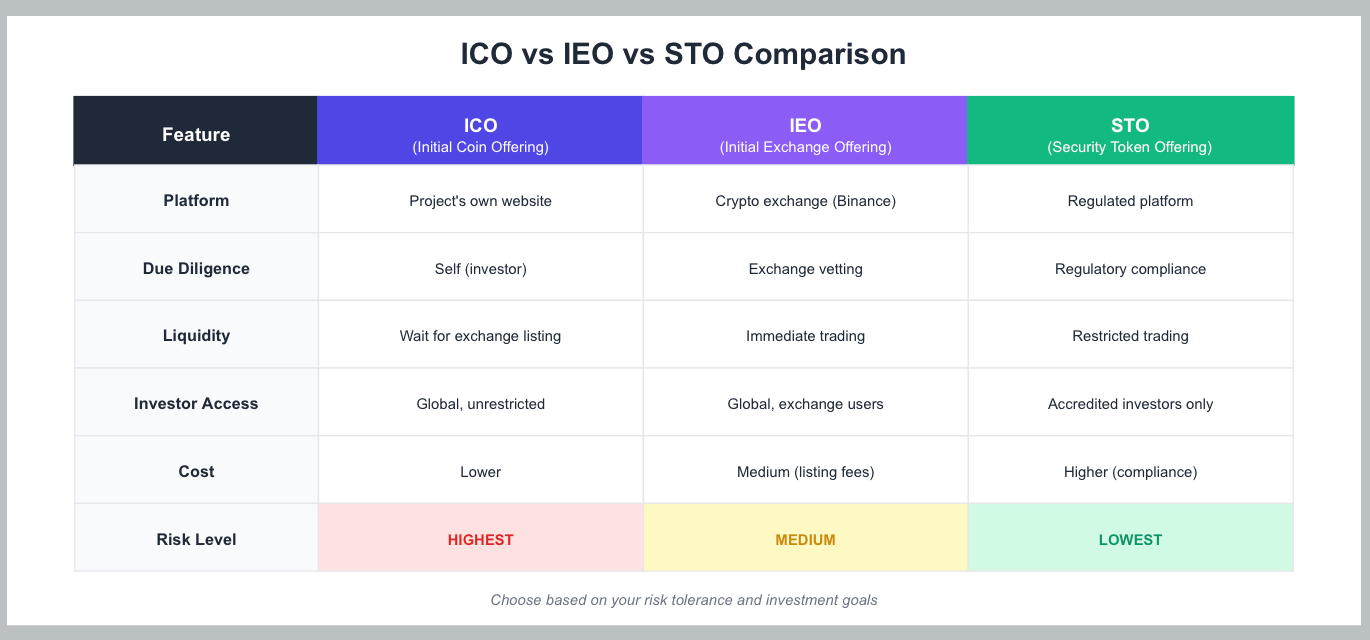
STOs (Security Token Offerings) offer tokens that are explicitly defined as securities under financial regulations. STOs, like IEOs, must comply with various securities regulations, such as issuers providing registration with the local authorities, ensuring that investors are accredited (to a certain level), and reporting. STOs provide clarity of regulations and assurance of investor protection, however, transaction costs are much higher and investor participation is restricted.
Ultimately, the decision is yours - your risk tolerance and goals should drive your decision. ICOs have the highest reward potential, but come with the highest risk. IEOs provide a middle ground, with some investor protection and immediate liquidity; however, these still have a level of risk. Lastly, STOs will provide a layer of regulatory compliance and investor protection, however, this carries a higher transactional cost and limited reward potential.
Global Regulatory Landscape
Grasping the relevant regulations is essential to invest with a proper degree of protection and comply with the law. The United States addresses the issue through the SEC, utilizing the Howey Test to determine if tokens are securities. Most tokens must register with the SEC or find which exemption applies, which is expensive and complicated.
The European Union adopted MiCA (Markets in Crypto-Assets) regulation in 2024, implementing expansive regulatory framework features with white papers, consumer protection measures, and anti-money laundering provisions. MiCA-compliant Initial Coin Offerings (ICOs) indicate better protection and legal recourse than non-compliant projects.
Singapore and Switzerland are crypto-friendly jurisdictions, with regulatory clarity and action ensuring their desirability as the level of protection of the investor is high while ensuring quality projects are invited. Meanwhile, China and India have been restrictive, with China banning ICOs completely back in 2017.
Make sure to check with the local laws before engaging. Engage with projects that represent regulatory comprehension and compliance. While engaged, they might indicate a higher cost to the end user and a longer time to visit the exchange, as they comply with regulations. However, they are less likely to face post-launch shutdowns that will destroy token value.
Technical Foundations
Smart contracts are functioning on the blockchain as self-execution electronic programs that trigger token distribution and collecting funds. Most ICO tokens are structured according to Ethereum's ERC-20 standard which means they will be compatible with digital wallets and exchanges.
While technical risks exist, past events in which real smart contract bugs occurred demonstrated the true risks. The 2016 DAO hack resulted in the loss of $60 million worth of ETH due to a bug in the code. But we can take preventative steps to mitigate smart contract risks, but those start with audit reports on the smart contract code from a reputable security firm such as OpenZeppelin or ConsenSys Diligence.
Investors should look into open-source smart contract code that allows the community to review the code base. Multi-signature wallets that require multiple parties to approve a transaction add more layers of security. Security researchers who discover vulnerabilities and exploit them before it is revealed to the developer community usually have a bug bounty that can be rewarded.
Market Trends and Future Outlook
The ICO landscape has evolved from the boom of 2017-2018 to a more developed market. Recent trends identify movement to DeFi, gaming, NFT platforms, and many variations of metaverse Projects. Looking ahead, regulatory compliance will become more prevalent, as the framework develops with more security token offerings (STOs) and compliance compliant offerings. Real world asset tokenization is going to be a strong trend, providing a bridge between crypto and traditional finance. AI integrated and projects based on climate sustainability are also gaining traction. The five-year horizon will see a shift to a continued evolution towards quality projects that have realized products that fulfill their brushstrokes that identify their prospective use cases as opposed to explosive growth.
Final Investment Tips
The ICO landscape has evolved from the boom of 2017-2018 to a more developed market. Recent trends identify movement to DeFi, gaming, NFT platforms, and many variations of metaverse Projects. Looking ahead, regulatory compliance will become more prevalent, as the framework develops with more security token offerings (STOs) and compliance compliant offerings. Real world asset tokenization is going to be a strong trend, providing a bridge between crypto and traditional finance. AI integrated and projects based on climate sustainability are also gaining traction.
The five-year horizon will see a shift to a continued evolution towards quality projects that have realized products that fulfill their brushstrokes that identify their prospective use cases as opposed to explosive growth.
Visit BTCDana.com for more guidance and start an account now!