


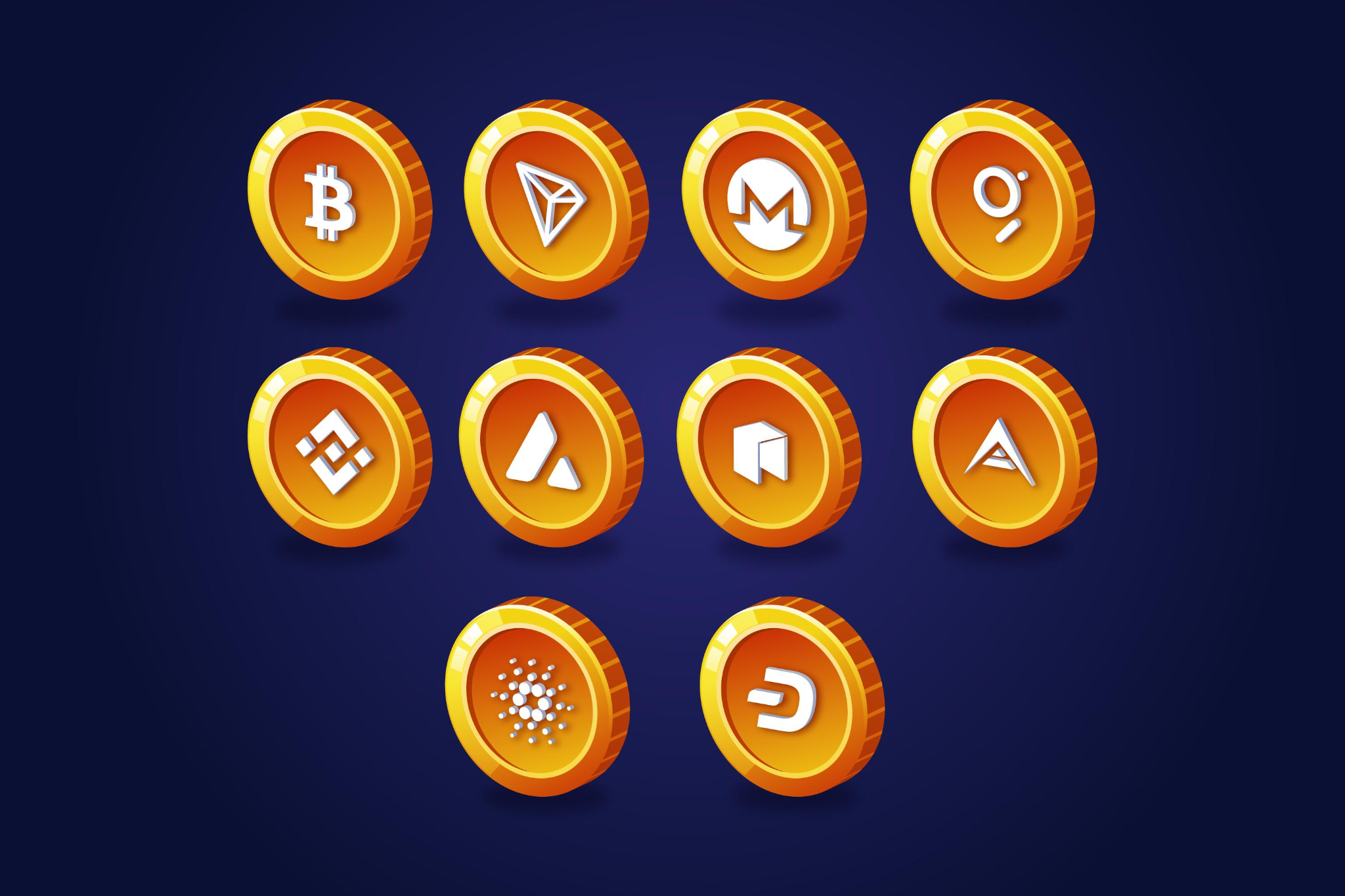
If you've explored cryptocurrency even just a bit, you've heard the word "altcoin" used frequently, and might even be asking yourself what they are compared to Bitcoin, and if they are worth considering. Let's cut the noise and assess what altcoins are, how they work, and if they'll ultimately be a trading option for your portfolio.
What Are Altcoins Anyway?
You can think of altcoins as every other cryptocurrency besides Bitcoin. It is literally short for "alternative coins," and there are thousands of altcoins. Of course, Bitcoin may get the most exposure, but they are so much of the entire crypto space.
So, if they are called an alternative, why do they exist? While Bitcoin was revolutionary in 2009 when it launched, it did have drawbacks. Transactions took time, the network could not handle significant volume, and essentially it was digital cash. There was room for improvement of Bitcoin's design, and building upon it.
Take Ethereum as an example. They didn't just want to be cashed. Instead, they introduced smart contracts, which are self-executing contracts that are written in code. This allowed for entire ecosystems to be created in DeFi (decentralized finance) and NFTs (non-fungible tokens), and more. The cryptocurrency space became more than just sending money!
Or consider Litecoin. Litecoin kept it simple, but again improved the transaction speed, and costs of transactions and provided a more practical use of cryptocurrency for buying coffee or splitting a dinner bill.
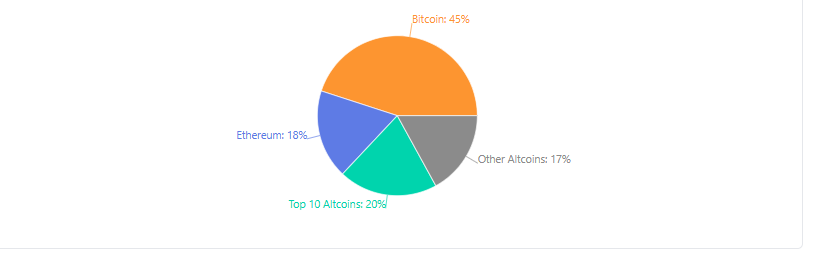
The altcoin market is huge! Although market cap percentage remains on Bitcoin, altcoin collectively plays a huge part of the total cryptocurrency market.Certain altcoins are dedicated to privacy, others focus on speed, and some come equipped with hardware to have a completely decentralized platform. Altcoins are not a simple copy of Bitcoin; each altcoin is valuable and has its own unique use case and is worthy of your consideration.
The Rise of Altcoins
Altcoins have not appeared spontaneously. The first generation altcoins started emerging as early as 2011, just two years after Bitcoin. Litecoin emerged in 2011 and advertised itself as the “silver to Bitcoin’s gold." Litecoin operated under a different Proof algorithm, which promised faster transaction speed.
Then there was Ripple (XRP) in 2012, using a completely different targeted approach. Ripple did not wish to replace traditional banking but rather help banks and consumers execute cross-border payments at a lower cost and faster speeds.
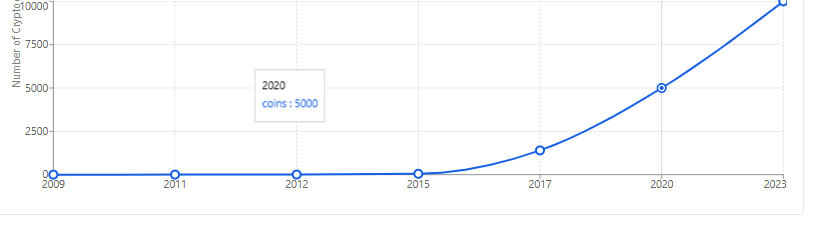
But the advancement came with Ethereum in 2015. Founder Vitalik Buterin recognized that blockchain had potential to do more than just track transactions. Ethereum launched with "smart contracts", allowing developers to push the utility, and ultimately innovation, of Apps developed on the Ethereum blockchain, resulting in the ICO boom of 2017 and cryptocurrency companies raising millions of dollars by issuing and selling their own digital tokens.
Then, innovation took another leap. Other altcoins began to experiment with other consensus mechanisms. Bitcoin uses Proof of Work (PoW), which requires significant computing power to solve its cryptographic algorithm.
Other altcoins, on the other hand, began utilizing a Proof of Stake (PoS) consensus which was more energy efficient, and allows cryptocurrency holders to validate authenticity and transactions by how many of those cryptocurrencies we hold.
The last significant advancement we have seen is the rise of DeFi platforms allowing users to connect banks and exchanges directly on-chain, and ultimately NFT marketplaces and stablecoins with USDT and USDC tokens which are pegged to asset value in the real world or equal to the US dollar in order to hold their price volatility in check.
They have become indispensable for conducting trades and transferring money between exchanges. Even meme coins like Dogecoin, which emerged from a joke in 2013, gained widespread acceptance through social media action and endorsements from the well-known.
Whether they love or hate them, they demonstrate exactly what community and culture can create even if they seem trivial in the blockchain sphere.
Types of Altcoins You Should Know
Not all altcoins are the same. They all fulfill different roles to fill different needs. Here are the major types:
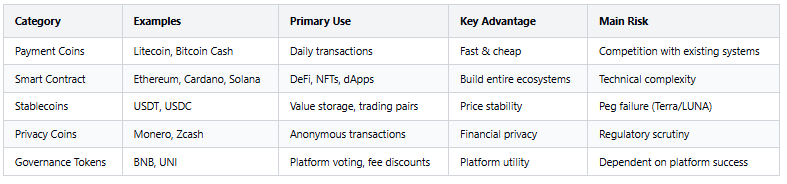
Payment Coins like Litecoin and Bitcoin Cash seek instead to be better forms of digital currency than bitcoin. Thus, they will be faster and cheaper to use to process payments for daily purchases. If you simply want to send money to and from countries with no bank, then these coins are useful.
Smart Contract Platforms are where the fun with altcoins begins. Ethereum is the big name in smart contract platforms, but Cardano and Solana competitors are starting to gather steam. Smart contract blockchains allow developers to build applications (like DeFi protocols, NTF marketplaces). Smart contracts are not just digital currencies but can be entire ecosystems.
Stablecoins fix what many see as the biggest issue with cryptos and that is volatility. Tokens like USDT (Tether) and USDC are stabilized to the US dollar, this means that at 1, you are for the most part, buying 1 US dollar for that coin. Stablecoins are valuable to traders as it is a way to lock in gains and avoid converting currencies. Also, exchanges will always make stablecoins a stable trading pair to other currencies.
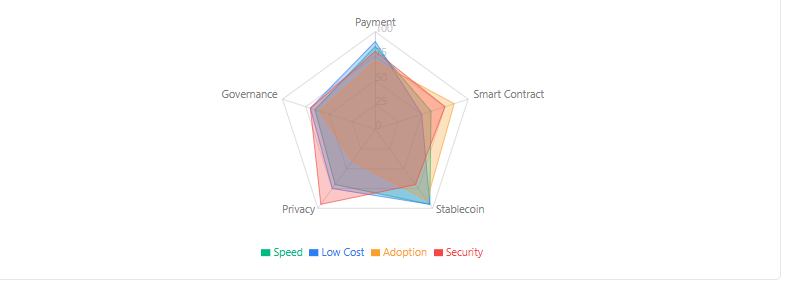
Privacy Coins like Monero and Zcash carry the flag impressively as requirements of anonymity.Unlike Bitcoin, which has all transactions public on the blockchain, some other coins use cryptography to hide transaction details. They can be a favorite of people who want a sense of privacy in their finances, but they have also drawn attention from regulators.
Governance and platform tokens (think of Binance Coin (BNB), and Uniswap (UNI) tokens here) allow users to be part of the governance related to their platforms. For example, BNB provides users with a discount on their Binance trading fees. UNI allows the holder to vote on aspects of how the Uniswap protocol is structured. In general, they are tied to the success of their platforms.
With all of these, each has risk and reward. Payment coins are straightforward, but will have to compete with existing payment mechanisms. Smart Contract platforms have the risk of being technologically possible without any current infrastructure to support it. Stablecoins should be stable, but that has limits (Terra/LUNA anyone?).
Privacy coins may work, but may have to deal with laws governing financial information. Governance coins may be profitable but their success totally depends on whether the platform is adopted.
How do you Trade Altcoins?
If you are ready to start trading now, you essentially have two forms of trading: spot trading or CFD (Contract for Difference) trading.
To explain spot trading, it is quite simple. You purchase cryptocurrency and become the owner. For example, if the price of Ethereum goes from $2,000, to $2,500, you have made $500 for each coin that you own. You now own the coin; you can put it in your wallet, send it to here, or there, or sell it. The downside to spot trading is that you will need to commit the entire capital at once - and you will only profit when the price goes up.
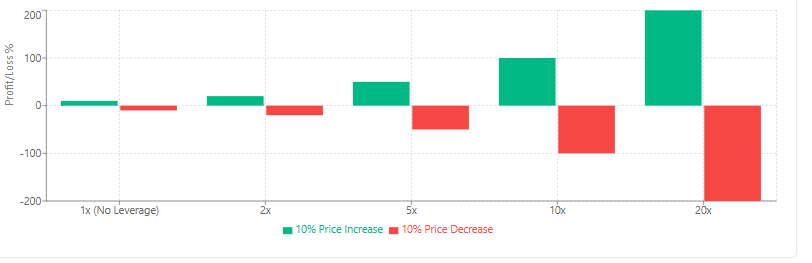
CFD (Contract for Difference) trading is a little different. In CFD trading you will not have purchased the actual coin, rather you are betting it is either going up or down in value. CFDS also gets you involved with leverage, which then allows you to "control" a much larger position by using less of your total account capital. This all sounds attractive, however; just remember leverage can go more than one direction. If the market moves against you, you could just as easily lose more than your initial investment.
Altcoins are wild. Compared to some of these coins even bitcoin appears relatively "stable". There is huge potential for one coin to open 20% higher (or lower) in value in a single day just because one person tweets or an article is published. The company's price "volatility" really creates opportunity, but it also can create a much more opportune loss.
The platform you chose will also make a difference. For example, Binance and Coinbase are the giants, and they offer many different altcoins and high trading liquidity. Other trading platforms like BTCDana, cater for beginners and more advanced traders who need an easier overall platform and ability to learn more.
Risk management is not optional. You should have stop-losses so your trades will sell automatically if the price drops below a certain percentage of your initial purchase price. You should not put all your money in one coin, even if you feel it is the next coming of something. If you are going to use leverage, start with low levels of leverage until you feel comfortable and experienced. You should never invest money you are not willing to lose.
Methods That Really Work
Everyone is trying to figure out which is the "best" method. But, the reality is, it depends on your own goals and risk appetite.
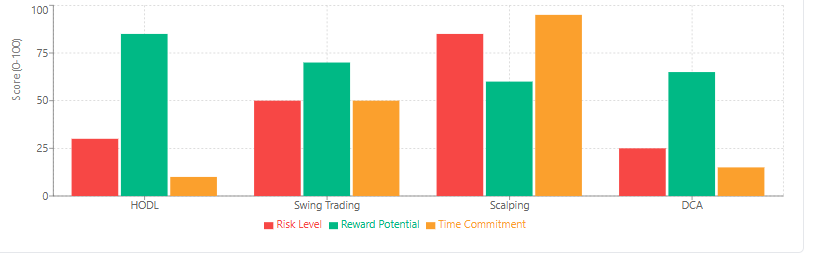
HODL (Hold on for dear life) is the most basic of approaches. You buy altcoins you believe in and simply hold them for months or even years, and generally ignore price action until you desire to sell. There were numerous people that carried out this only with Ethereum, and it is fair to say they did exceedingly well. There is a significant amount of faith, patience, and resiliency each time a coin drops 30% in a week, but you must possess these qualities.
Swing Trading means holding trades for days or weeks and trying to catch "medium" price action. It basically means you hold based on trends and charts. Swing trading requires more time, experience and expertise than HODLing, but it can be far more rewarding if you understand the charts and trends.
Scalps, well these are for the adrenaline junkies. You make a lot of trades, sometimes dozens in one day, and usually make profits on trades that only have minimal price movement. Scalping is incredibly taxing on the mind and body and to scalp you must be very focused. For that reason, scalping is only a good fit for some traders, especially newer traders - beware.
Dollar-Cost Averaging (DCA), is a method of investing without the emotional component. You simply allocate a fixed amount of money at regular intervals, totally irrespective of price. For example, if you were to buy Cardano for $100 each and every month (and didn't consider price whatsoever), you would buy more when the price was lower, and less when it's higher. Over time, this strategy allows your average "entry price" to lower without the worry of adding shares at the high price with DCA.
Technical Analysis will help you decide when to buy. Common indicators are:
-
RSI (Relative Strength Index) shows whether a coin is overbought or oversold
-
MACD (Moving Average Convergence Divergence) indicates changes in trends
-
Moving Averages smooth out price data to show the overall trend
-
Again, none of these are magic crystal balls but can give you an edge when coupled with rock-solid research
The Dangers Nobody Wants to Talk About
The Terra/LUNA debacle erased $40 billion in total market value almost overnight in 2022. People lost their entire life savings. The stablecoin (UST) was supposed to be pegged to the dollar, but when the algorithm failed, both UST and LUNA sank to close to zero! The collapse consensus was a hard reminder that even the "safest" coins come with a great deal of risk.
Security is another issue! Exchanges get hacked. People lose their private keys and can't access their crypto. Phishing scams are also everywhere. If you are holding a significant amount of a coin, consider looking into a hardware wallet like Ledger or Trezor which stores your coins offline, and keeps hackers away.
Regulation is in a perpetual state of flux and confusion! The US is tightening up on specific components of the crypto business but, at the same time, is opening the door for regulatory uncertainty. The EU government is having its own approach. Singapore is potentially crypto-friendly but certainly has its restrictions. What is legal in one jurisdiction may not be legal in the next, and we really may not know what is legal tomorrow, next week, or next year.
Some altcoins just die! The project gets abandoned, the team quits, or the project fails and does not do what it was advertised to do.
Prior to making any investment, look into the team, read the whitepaper, verify that the project has actual users, and check the activity in the community.
Necessary Definitions
The crypto universe has its own terminology. Here are the definitions to some of the terms you will see the most:
Market Cap is the entire value of all active coins, the calculation is the price per coin multiplied by the total coins released. Area of high market cap often indicates lower volatility of the token.
Liquidity is the ability to buy/sell without causing disruption/upkeep of the price point. High liquidity would allow you to buy and sell large amounts of coins with ease.
Stablecoin is a cryptocurrency pegged to a stable asset, usually the US dollar. Utilized to hold value in times of market volatility.
Governance Token is a type of token that gives the holder voting rights on decisions within the platform. Typically companies will have the voting power based on the amount of tokens held.
ICO/IDO/IEO - The investment base of choice for a majority of projects. ICO (Initial Coin Offering) was the most popular in 2017. IDO (Initial DEX Offering) occurs on decentralized exchange. IEO (Initial Exchange Offering) occurs on a centralized exchange.
HODL is a meme that originated from a simple misspelling of the word "hold". HODL conveys the meaning to hold any coins you have acquired as opposed to selling them off, regardless of fluctuations in the market.
Pump and Dump is a term for the process of when people discuss and generate an artificial "pump" in a coin's price through hype. After the pump happens, insiders sell at that current price peak, thus leaving the outsiders who bought after the peak with losses.
DeFi (Decentralized Finance) is the term used to describe decentralized financial services built on a blockchain network without any traditional intermediaries, i.e. banks.
NFT (Non-Fungible Token) is used to signify a unique digital asset that can be verified on the blockchain. For example, NFTs are typically used for art or collectible purposes.Staking is the process of locking your coins away for a period of time to help secure a network, and in return you receive rewards in the form of a percentage of those same coins, very similar to interest earned in traditional banking.
A fork occurs when a blockchain splits into two separate chains, often over a disagreement in the community or after a protocol upgrade.
A whale is someone who holds enough cryptocurrency that their trades literally move the market and prices.
Knowing these phrases and terminology can help you to thrive within discussions, reading articles and making more informed decisions.
Tools the Help Your Trading
You don't need to use expensive trading software to trade altcoins, but the right tools will make a world of difference. The following sections will list some tools, and recommended software, that will help you trade smart and more effectively.
Exchanges is an online platform where you will actually buy and sell your altcoins. For example, Binance has the highest supply of altcoins, and is the largest cryptocurrency platform by total volume. Coinbase is more straightforward with education in mind, which makes it easier to use for beginners. BTCDana has the best of both exchanges, where there is plenty of educational material with the familiar exchange interface.
Charting Tools allow you to track price movements, as you will want to analyze the highs and lows of price movements. For example, TradingView is the industry standard for charting tools. TradingView offers advanced charting capabilities and has a ton of charting indicators. CoinMarketCap is used for a quick price check or comparing the price of another altcoin at first glance.
Security Tools are something you have to consider when you are holding a significant amount. Hardware wallets like a Ledger and Trezor are the most used, and a hardware wallet will ensure your private keys are offline. Both Ledger and Trezor are worth the investment.
Portfolio Management apps are something like Delta or CoinStats. These are increased in value as they allow you to track all of your holdings. They will even track your total value, overall profit or loss, and manage your allocation. Most portfolio management apps will connect to your exchanges and wallets and auto-sync.
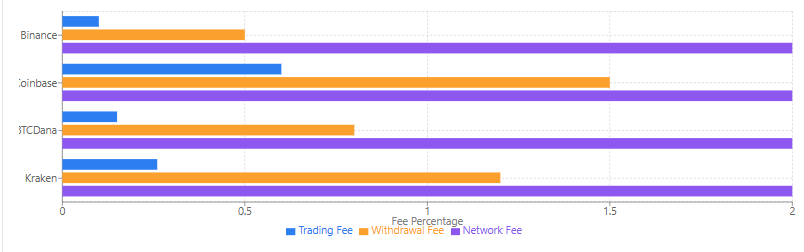
If you're just starting out, or don't want to spend the time, I recommend trying the free versions of the apps. Once trading becomes a bigger focus for you, or if you are taking trading more seriously, they also have a premium version.
Mistakes That Cost You Money
Everybody makes mistakes, even experienced traders, but when they make mistakes it often costs them money.Here are the most common mistakes and how to prevent them:
-
Trading Without a Strategy is more like trading than it is investing. You need to enter the trade with guaranteed profit, a stop-loss, and a time-frame. Write it down and follow it.
-
Over-Leveraging magnifies your profits and your losses. If you are in a 10x leveraged position, a 10% move against you will liquidate you. Use a low leverage until you have proven you can make money trading without it.
-
Not Taking Security Seriously means particles of your portfolio are lost for good. You should always have two-factor authentication of some type. You should NEVER keep lots of money on exchanges. You should be paranoid about phishing emails and phishing sites.
-
Emotional Trading Blows Accounts. If the market goes against you, fear will make you sell at the bottom. Greed will make you hold too long. Create rules and stick to them. Your feelings and thoughts are irrelevant.
-
Following Hype Blindly made people lose money on pump-and-dump schemes. Dogecoin goes up because Elon tweets, you buy at the top, and then sell after it crashes 40%. You should do your own research.
-
If you do not think of fees, then they will eat into your profits. There are trading fees, or withdrawal fees, or network fees; on and on it goes. You have to factor all of those fees into your calculations.
-
The secret to trading is not just knowing what to do, but being disciplined and able to make mistakes without ruining your trading account or your confidence.
What is Next For Altcoins
The altcoin space is very fast. Here is what is next.
Layer 2 Solutions are making blockchains faster and cheaper.Ethereum has had its issues with gas fees, which has resulted in projects like Polygon and Arbitrum becoming Layer 2 networks that route Ethereum transactions off the main chain then batch them together. This makes DeFi and NFTs more accessible.
Cross-Chain Technology that allows different blockchains to communicate is becoming more approachable and understandable. Currently, the majority of ecosystems are siloed from communication. Projects like Polkadot and Cosmos are building bridges for assets and data to move across chains seamlessly.
Ethereum 2.0 has finalized its move to Proof of Stake and is now more energy-efficient and scalable. Staking ETH has become a major way to generate passive income and upgrades are scheduled to improve transaction speeds.
DeFi is evolving from lending and borrowing, and we are now seeing decentralized insurance policies, prediction markets, and complex financial instruments that rival traditional finance.
NFTs have also progressed from digital art into gaming, music, ticketing, and tokenization of real-world assets. Additionally, play-to-earn games allow people to earn cryptocurrencies while playing the game.
Institutional adoption is also on the rise as more entities are adding cryptocurrency to their balance sheets, and we have seen spot Bitcoin ETFs approved (and potentially altcoin ETFs to follow). This helps to give legitimacy and liquidity to the space.
Altcoins are no longer just investment vehicles - they will be infrastructure for a new financial system, ownership paradigm, and digital economy. Projects that truly solve a problem and gain adoption will thrive, while hype coins will fade away.
Ready to Get Started?
Altcoins can offer amazing opportunities, but they should be respected. They are volatile and high-risk investments, and can be overwhelming. That being said, if you have the requisite knowledge, tools, and a strategy, you will find it can also be rewarding.
To start, I recommend doing it in small increments. Learn the fundamentals of investing in altcoins, learn how platforms work, and engage with contrary educational offerings and sources. Do not invest money you need for bills or send money that you will need in the short term. Once you build up some knowledge, make some small trades, then learn from your mistakes, and trade in small increments again as you build trust in your knowledge base. Eventually, you will become more confident, and the size of your trades can increase slowly as well.
Create your BTCDana account today and confidently start your altcoin journey. To get started, use their educational resources, engage in their intuitive trading platform, and become part of a community of fellow traders who are, and were in the same position as you are at this moment.