



What is an IEO? Understanding Initial Exchange Offering Basics.
If you're new to crypto fundraising, you might have overheard IEO being used before. An Initial Exchange Offering is a way for blockchain projects to offer new tokens for sale, launched through cryptocurrency exchanges rather than directly as companies or other self-funded offerings (like ICOs).
Basically, the exchange acts like a middleman. The exchange puts its stamp of approval on the project and hosts an offering for investors to purchase tokens. But what’s different about an IEO structure compared to an ICO structure, or an IPO structure? First, an ICO (Initial Coin Offering) is a self-funded offering where projects run everything themselves on their own, creating a website, having wallets, and having an investor purchase tokens directly from the account.
No one has verified the project’s legitimacy up to that point. This ended with a ton of scams during the crypto boom of 2017-2018. The IEO is a twist to the ICO; now, the exchange does this work. The exchange has reviewed the project, is hosting an offering for a project on their platform, and immediately lists the token after the offering is completed.
IPOs (Initial Public Offerings) are totally different and involve a project/company's selling stocks to public investors through a regulated stock exchange. IPOs deal with equity ownership in a company, and IEOs deal with a digital token that may do anything from access utility to a governance vote in a protocol.
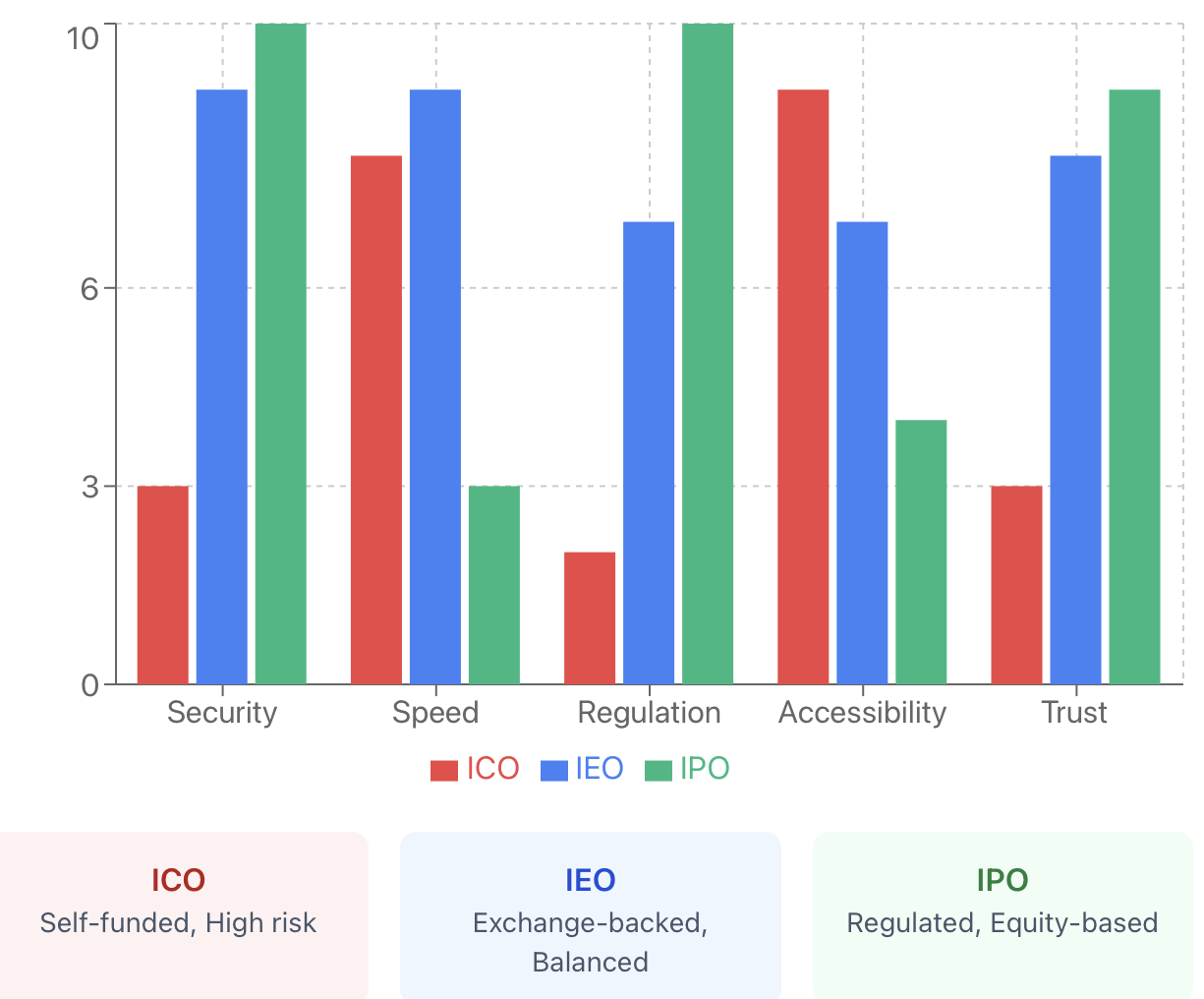
What do IEOs offer the most? They offer security and trust. When a more centralised exchange, such as Binance or OKEx, supports or backs a token sale, this enhances their reputation. When they support a project, they have done their due diligence, read the project's whitepaper, verified the team's background, and ensured the smart contracts. For most investors, this means the risk of being scammed by a fake project is much lower.
Think of it this way. Let's say your school wants to raise money for renovations on campus. Instead of having students sell and buy "campus tokens" from each other (similar to an ICO), the school could partner with a trusted student-led platform that has verified the project, made sure the campus tokens are handled through that same platform, and ensured that the tokens could be used at campus events. Essentially, that is what IEOs are.
A success story from the real world? Fetch.AI's IEO on Binance Launchpad in 2019. The project was able to raise money extremely quickly and gained instant credibility as it was backed by Binance. The FET token was listed on one of the largest exchanges in the world right after the IEO completed. Investors who bought in the presale enjoyed significant gains, but the risk factors always associated with any investment in cryptocurrency still remained. Assuring the cryptocurrency could keep its market capitalisation and not risk its goals were factors that influenced investors’ valuations.
How Does an IEO Work? Step-by-Step Process
Understanding how an IEO works can help you appreciate why it has become increasingly popular for fundraising. The process goes through a number of steps, all designed to protect the project and investors.
The first step is project preparation. Before an exchange will even look at your project, you will need the foundational elements. This means, at least, a full whitepaper providing detail on what you are building, why, and where tokenomics fits into the ecosystem. You'll also need properly audited smart contracts, a solid team with experience relevant to the offering, and varying levels of regulatory compliance depending on how your country operates. This prep can take months because exchanges have demanding standards.
Once that is all ready, the next step is exchange vetting. This is where the magic happens! The exchange's team will conduct a review of everything regarding your project. They will be examining whether the technology actually works, if your team is real and legitimate, whether the tokenomics are logical and sensible, and if the project has any red flags that could be harmful to investor participants in the offering. For example, it's reported that Binance accepts less than 5% of projects that apply to Binance Launchpad. This vetting and filtering process is indeed what makes IEOs more secure than using an ICO model.
Once the project is approved, the IEO (Initial Exchange Offering) launch will begin. All potential investors must register on the exchange platform, complete KYC (Know Your Customer) due diligence, as well as possibly hold the exchange's native token to invest. On the Binance Launchpad, for instance, you must hold BNB. The actual sale could last anywhere from 30 minutes to many hours, depending on the offering structure. Some IEOs operate with a lottery due to demand exceeding supply, while others utilise a first-come, first-served approach.
At the end of the sale, the listing and trading of the token will begin immediately. This is a major advantage compared to the ICO (Initial Coin Offering) process, where investors can wait months for tokens to be listed on exchanges. With an IEO, the tokens are already on the exchange, all liquidity is ready, and trading is started within hours, if not days.
Back to the campus token example. If we imagine students registering and identity verification through the school platform, and a timed sale for students to purchase tokens, and then once the sale ends, the tokens would immediately become available to trade in the campus marketplace or save for a future date.
To illustrate this point in the real world, BitTorrent's BTT token ICE on TRON's ecosystem is perfect. The sale took place via Binance Launchpad in January 2019 and sold out in less than 15 minutes. The tokens were immediately available for trading, providing instant liquidity for your investment. The transparency of doing this through Binance means investors have a level of trust in the process from shutdown to login.
The point? Exchange oversight at every stage is a more secure process than wild-west ICOs ever attempted or claimed.
Why Investors Love IEOs: Key Benefits
IEOs attracted investors for a good reason. After losing money in the countless ICO scams, having a reputable exchange vet projects was very useful.
The biggest benefit is better security. When you invest in an IEO on an exchange you trust, you are confident that professionals have already filtered out the garbage. The exchange has looked at the project’s code, verified founder identities, and confirmed that there is, in fact, some substance behind the claim. Is crypto and investment risky? Yes, but at least you’re taking a calculated risk instead of a blind gamble.
Exchanges give projects immediate credibility. If an exchange like Binance puts a project on their Launchpad, it is more than just marketing. Investors see the endorsement and think, “Well, Binance wouldn’t risk their reputation on a scam.” This trust is built quickly and quantifiably attracts serious investors back into the game, while others still rely on verified, credible projects.
Participating in IEOs can allow you to invest in potentially explosive projects before the rest of the general public. An IEO enables you to purchase their token at its initial offering price, which, in most cases, is lower than its trading price when it starts to trade publicly. If the project is successful, your early investment will grow significantly. Similar to standing in line for a concert ticket release before they go on sale, you are purchasing the ticket at face value before ticket resellers start selling the tickets at upwards of thirty per cent more.
In other terms, think of it as a limited edition product you pre-ordered at your college bookstore. You accomplish the pre-order at the launch price, and if the limited edition product becomes popular, the price per product goes up immediately. This is the reason to participate in an IEO.
An excellent example of this is the Harmony ONE token IEO. The IEO sold on Binance Launchpad in May of 2019, and investors who invested in the initial IEO price were able to see opportunities for returns on investments once it hit the secondary markets. The trust of the exchange gave early investors the sense that Harmony was developing a meaningful technology instead of some bogus endeavour.
When you participate in an ICO, you are usually sending crypto to a wallet you know very little about and hoping for the best. An IEO occurs solely in the exchange's secure environment. Your funds stay with the exchange, and the tokens will be deposited into your exchange wallet without you needing to do anything. You can begin to trade right away. You do not have to rely on some random website, court fake smart contract arguments, and wait months to list your tokens.
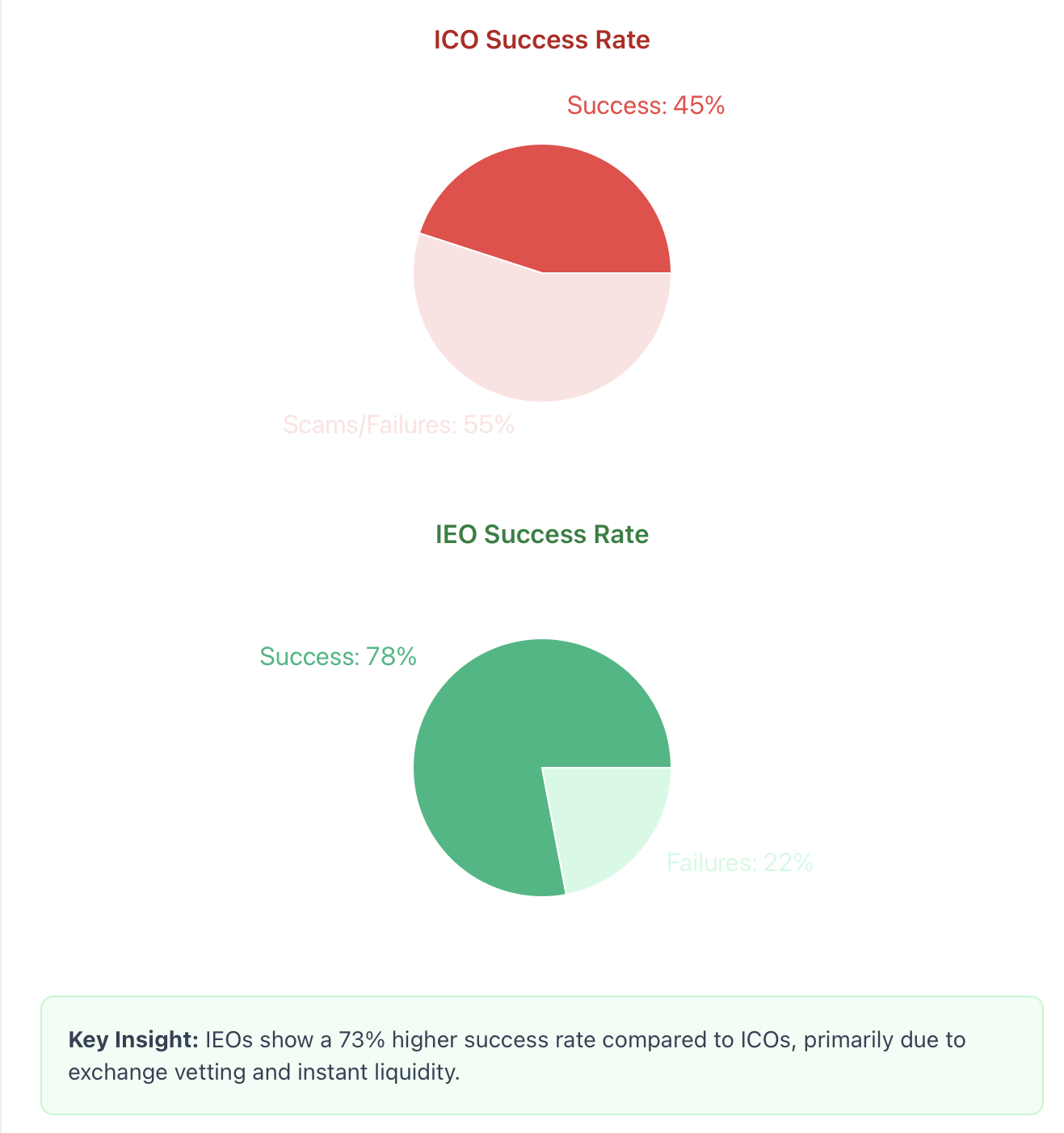
The data support this reasoning as well. Statistically, IEOs have had a higher success rate and lower scam rate than ICOs. While there is no such thing as no risk, an exchange vetting investors before they receive investment money means that, to a certain degree, bad actors are being screened out before they ever come to investors.
Why Projects Launch IEOs: Benefits for Projects
IEOs provide benefits to project teams in addition to investors. Project teams found that using exchanges to conduct token sales resolved many of the challenges associated with ICOs.
The access to resources provided by exchanges is immense. When you conduct an IEO on a top-tier platform, you are not just using the platform as a fundraising venue; you are getting marketing exposure and awareness support from a major platform with millions of active users. You are also receiving the technical infrastructure necessary to handle spikes in user traffic, and your token receives instant liquidity, to boot.
Exchanges have relationships with market makers, listing partners and media partners that would take a new project years to establish organically. There is an immense value added in terms of visibility and market perception associated with having an exchange as a partner.
A Binance Launchpad announcement is simply picked up by every major crypto media outlet and exchanges online and in the social media space, promoting and advocating for the project to their millions of followers and users. As a startup, you easily get on the radar of real investors, investment funds, and other exchanges.
Exposure and marketing of this type could easily cost you millions of dollars as a start-up project without the support of a platform gets you.
The process of raising funds becomes incredibly easier. You're not responsible for designing your own token sale infrastructure or security, customer support or regulations; the exchange takes care of all of that. They have the legal frameworks worked out, the technology is battle-tested, and they have teams available to help facilitate the sale process. For project teams, this means they can focus on building their product and not have to act as temporary operators of a financial service.
The legal and regulatory risk goes way down. Exchanges have compliance teams to keep abreast of regulations in multiple jurisdictions. When your token sale is initiated by an exchange, you can be assured that the token sale will follow relevant regulations, which protect the project from the potential risks of a legal situation down the road.
To provide further context to our campus token example, let's think about the school and their individual sale of tokens to hundreds of students, each team handling payment text and tracking who bought what, making sure it was all fair. Now, suppose the trusted person is doing that for the school, and the school can just sit back and plan great events for campus, the technology is taking that complication and reducing the school’s risk of workload.
The IEO (initial coin offering) of Matic Network (now Polygon) on Binance Launchpad in April 2019 illustrates these benefits. They quickly raised $5 million, secured credibility in the blockchain space, and the MATIC token initially launched with liquidity. This was key to the project becoming one of the leading Ethereum scaling solutions. Would they have been able to replicate that success if they had launched independently? Perhaps, but the backing of a well-known exchange helped them get a head start on competing projects.
Data published by Binance Launchpad shows the average fundraise for projects in the millions, and most projects reached their caps in a matter of minutes. That is the speed at which the users of an exchange can invest.
IEO Risks and Considerations: What to Watch Out For
IEOs are not without flaws, and anyone who believes they're without risk is lying to you. Investors and projects need to accept the fact that many things can go wrong.
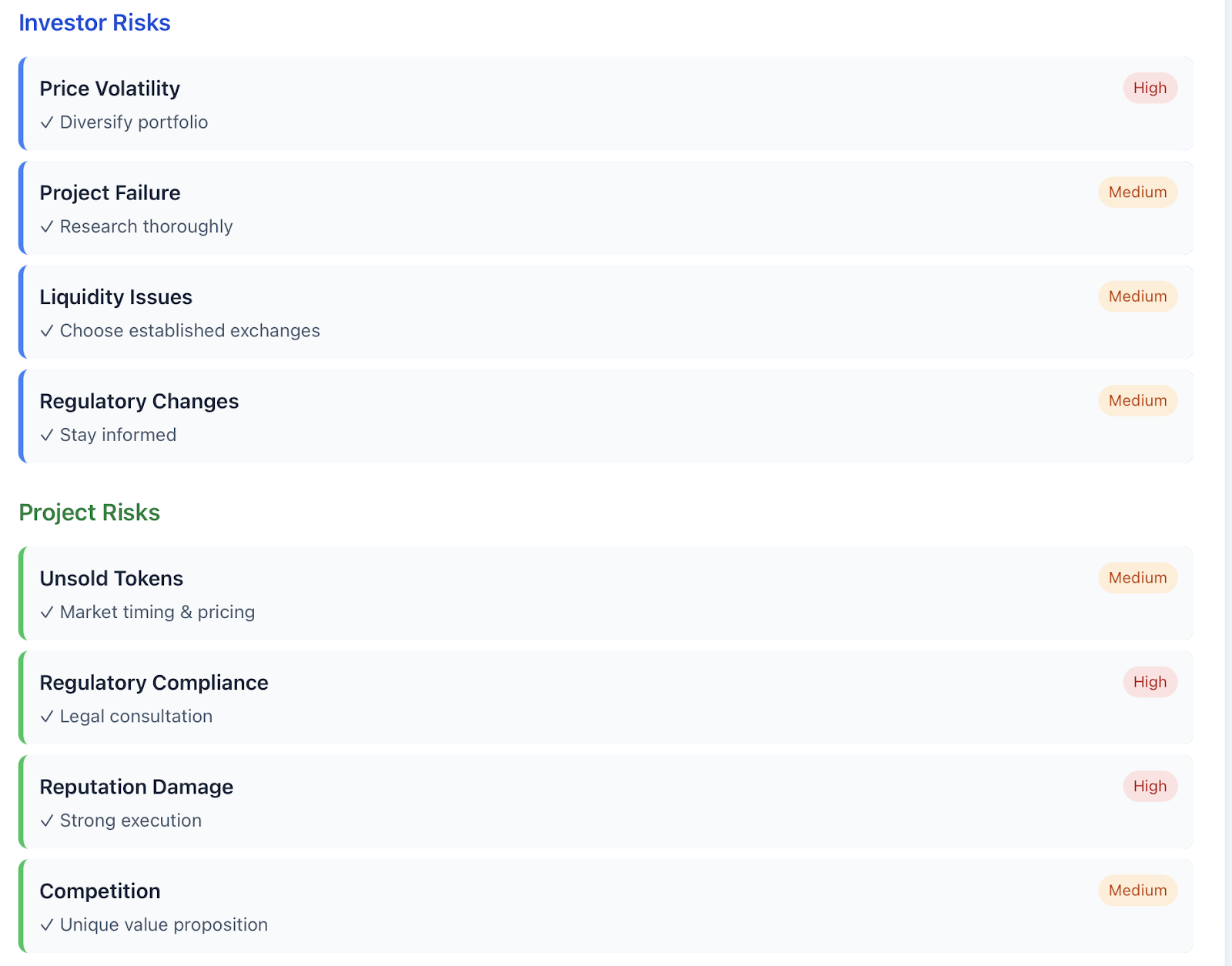

For Investors, token price fluctuations are a fact of life. Just because a token is sold on a top-tier exchange does not mean it rises and stays at that price. Influences such as the market’s health, the team developing the project and competing projects can all have an impact on a token's price. In fact, some IEO tokens have plummeted post-launch and left early investors carrying a loss. In theory, exchange vetting limits the possibility that a project will not directly scam you; it does not limit the possibility that the project fails after launch or that the token’s value appreciates.
For Projects, there is always a possibility that your project doesn't work out. Good teams, good tech, good intentions, still can fail to find users, run out of money or get beaten to the punch by a competitor. Projects in the blockchain space move quickly. What someone thought was an innovative product could be presumed dead in two or six months. Exchange vetting guarantees that a project was legitimate when launched, but it does not guarantee a project will succeed.
Token liquidity could potentially be a problem with the exchange listing. If a team fails to hold their community engagement or fails to engage developers to build on the project, the token trading volume could dry up. Low liquidity could mean large movements in price could happen if someone decided to buy or sell a token. Liquid markets allow investors to enter and exit at will without impacting the price as much.
Projects are prone to risks of their own as well. Unsold tokens often arise from poor conditions in the marketplace or a lack of appetite from investors to purchase. Unsold tokens, even on perhaps a major exchange, can paint the venture in a poor light and can damage the reputation of the project in general and in future fundraising opportunities.
Regulatory risks are rapidly evolving. What is compliant today could very well not be compliant tomorrow as governments around the globe begin to realise how to regulate the space of crypto. Projects will have to keep tabs on regulations in all of the markets in which they operate, and it will become complicated quickly.
Strategies for risk management will matter. Investors should be making good choices in choosing reputable exchanges that have had historical success in IEOs. Read the white paper in detail, do a background search on the members of the team, and evaluate if the technology makes sense. Your investment should never be more than what you could afford to lose, and this includes not going all in on a singular IEO and spreading your investment across multiple projects.
Using the campus token as our primary example again, let's say the project fails, and tokens can't be redeemed for any of the prizes or activities promised to students. Students who purchased tokens would be stuck with worthless digital tokens. This is the main point of why proper vetting can matter, as even vetted or legitimate projects can fail.
BitTorrent is another key lesson in volatility as well. After a successful Binance Launchpad IEO in January 2019, the price of the BitTorrent token fluctuated wildly in the days or weeks to follow. Investors who acted quickly tended to sell and take profits, while those who held too long from the IEO were left holding worthless tokens, just like the students in our token example. Most KuCoin Spotlight projects tend to, similar to BitTorrent, have these swings, with some batches having hype immediately, then correcting hard later based on early investors taking profits.
The point is this: vetting by exchanges or through excellent token sales significantly reduces the risk of scams or poorly run projects, but doesn't eliminate the risk of market risk or execution risk. Do your homework, manage your expectations, and think about IEO participation for what it is:: a high-risk investment.
Top IEO Platforms Worldwide: Where to Launch and Invest
If you want to partake in IEOs, you'll want to know where the IEOs occur. There are some major exchanges that have created their own IEO platforms. Each exchange has its own features.
Binance Launchpad is the big one. Launched in 2017, then relaunched with a new model in 2019, this exchange has had the most successful IEOs of all time. Fetch.AI, BitTorrent, Matic Network, and Harmony all started on Launchpad. Since Binance has a huge user base and a reputable name in the industry, Launchpad is the most competitive platform for projects and the most sought-after for investors. Often, you simply need to hold BNB tokens to be eligible to participate.
OKEx Jumpstart is another major platform. OKEx is one of the leading exchanges globally, and Jumpstart has launched significant projects that received community attention. Jumpstart uses the exchange's native tokens, OKB, for the right to participate, similar to how Binance operates.
Huobi Prime is a similar platform. Huobi is a prominent Asian focused exchange with a global reach, and Prime has offered opportunities for blockchain projects. Participants usually need to hold HT (Huobi Token) and go through that exchange's KYC.
KuCoin Spotlight focuses on slightly smaller yet still reputable projects. KuCoin promotes itself as "the people's exchange," and Spotlight can occasionally showcase projects earlier in development than projects on larger exchanges. Participation in most sales necessitates KCS tokens.
You can think of these platforms broadly as different campuses, and each campus has "special events" to raise funds for tokens. All sorts of different projects on any of the campuses will have varying amounts of vetting and embedded infrastructure; some campus events will cater to projects that are already established, while others are aimed at previous cohorts / new projects.
When deciding which campus you want to support, carefully consider the reputation of the exchange or platform overall, the quality of previous IEOs, the process of participation, and your access to the exchange (some exchanges limit participants by geography). Projects successfully hosted on Binance Launchpad, for example, have raised millions of dollars and achieved 100's of millions in market capitalisation; however, it's still very competitive to get an allotment on virtually every section. However, smaller exchanges may offer better odds of getting allotment, while the projects themselves may not be as tightly vetted or as polished.
At the end of the day, you have to align your goals with your desired campus. If you want to project exposure on the highest quality products, you probably want to focus on the biggest campuses (like Binance Launchpad) but expect higher competitive participation on either side. If you are looking for better odds to acquire a new token, consider newer or smaller campuses like KuCoin Spotlight or other exchange offerings. Regardless of any of this, just ensure to rely on exchanges or platforms that have an established reputation or solid process in place.
The Future of IEOs: Trends and Innovations
The IEO model continues to change with the cryptocurrency landscape. There are a few trends impacting the direction of token launches.
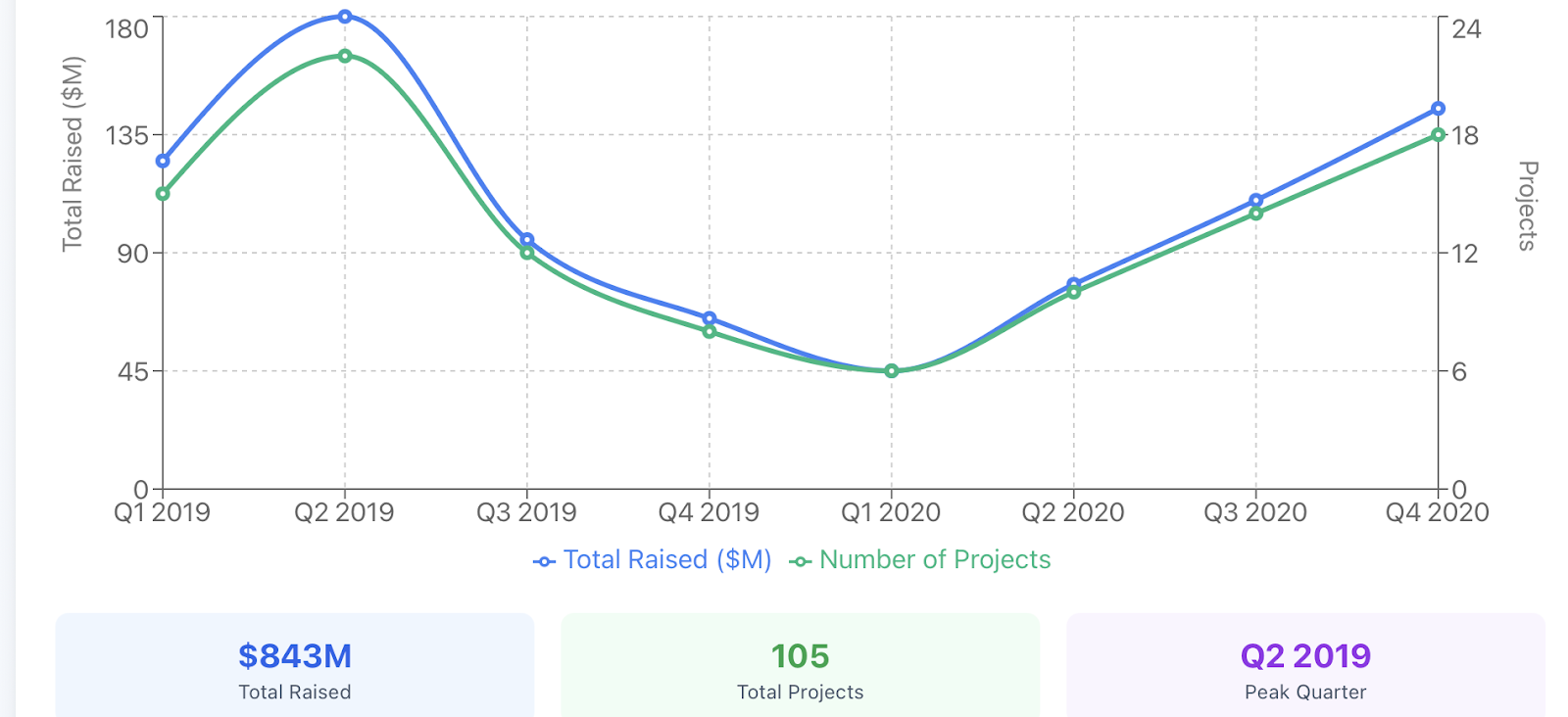
The markets are still developing, albeit with a few peaks and valleys. The wild explosion of IEOs we saw in early 2019 has gone behind us, but quality projects are still choosing this fundraising model. The market has matured with exchanges establishing a more robust vetting process, and investors becoming more sophisticated. Instead of the old spray-and-pray approach we saw with ICOs, we now see a smaller number of IEOs being launched but having a higher quality.
The integration with DeFi and NFT markets is the most fun development. In some cases, there are projects that have launched IEOs and have some sort of DeFi mechanism to it, such as yield farming and liquidity mining. We are also seeing projects exploring ways of incorporating NFTs into their tokenomics or fundraising structures. These hybrid structures allow for novel ways to engage communities and for investors to get involved.
Regulatory developments will have a significant impact on the future. Governments around the globe have been implementing clearer rules on crypto, which will have an effect on how IEOs are able to operate in the future. The exchanges will have to navigate new securities laws, tax requirements, and cross-border compliance schemes. We will likely see more jurisdictional limits and KYC requirements, but also more legitimacy in the space.
New platforms are emerging that blend centralised exchange IEOs with decentralised launchpads. Polkastarter, for example, offers the best of both worlds. It offers the security of audited contracts with decentralised participation. These platforms could represent the next stage in an evolution, keeping the benefit of vetting while removing single points of failure.
The analogy to campus tokens also evolves. Picture those tokens becoming virtual campus NFTs and representing actual spaces or experiences in a metaverse version of the school. Students could trade those NFTs or use them in virtual worlds, or keep them as collectable items. That is the kind of 'innovation' that is happening in actual crypto projects.
In the future, IEOs should become more specific to a segment or niche. We may see platforms designed specifically for particular interests, like gaming tokens or DeFi protocols, or projects in the environmental sector. One-to-one IEOs could lead the way to launchpads that are targeted at serving particular ecosystems.
What will not change? The primary value proposition around third-party vetting and instant liquidity (as long as investors need protection from scams and projects need streamlined fundraising- some version of the IEO model will exist).
Monitor the regulatory landscape in your jurisdiction, observe how successful projects continue to evolve their models, and watch for platforms that are testing hybrid approaches. The IEO ecosystem will be innovative, but the core value propositions of security, transparency, and exchange backing will always remain important.
Ready to Dive In? Your Next Steps in the IEO World
Now that you know a lot, it's time to get into action. Choose an exchange that fits your investment profile, for example, Binance for well-known projects and KuCoin for more unknown projects. Go through their KYC (Know Your Customer) and verification processes and begin to learn about upcoming launches. Look over whitepapers, ask questions in their Discord communities, and don’t invest more than you are willing to lose.
While the IEO market continues to change, one thing is guaranteed: investors who do independent research and take risks through investing will always stand a better chance than potential investors who become aligned to projects after they launch and hype in the community.
Start Your IEO Journey with BTCDana Today.
Head to BTCDana.com now to discover upcoming IEOs, get expert analysis on vetted projects, and join a community of smart investors who know that timing and research make all the difference.