



Introduction – Understanding the NFT Revolution
NFT is short for Non-Fungible Token. The term "non-fungible" means you cannot replace one with something else. Every NFT is distinct and one of a kind. Consider money. If you have a $10 bill and trade it for another $10 bill, you still have the same value—this is fungible. If you own a unique painting and trade it for another unique painting, you have traded something that is non-fungible.
Bitcoin and Ethereum are fungible. One Bitcoin will equal another Bitcoin. NFTs are different; they have their own identity and value tied to each unique NFT.
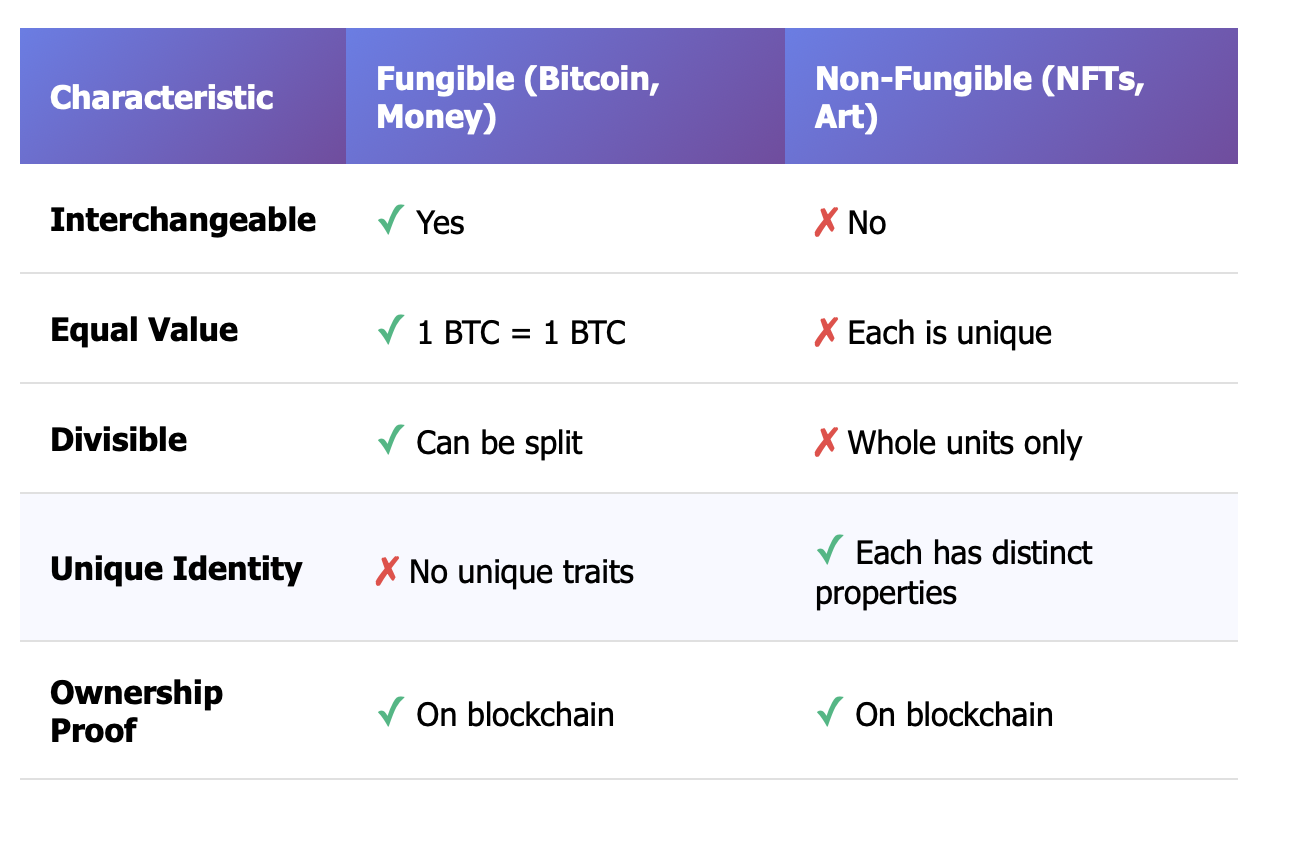
The technology behind blockchain allows NFTs to exist due to an ongoing public accounting of ownership or proof of validity. Nobody can fake ownership of an NFT, and nobody can change it without permission.
NFTs became grossly popular around 2021, when computational artists sold their pieces for millions of dollars, followed soon after by musicians releasing albums as NFTs. Even major brands began exploring the NFT space.
The crypto trading community also embraced NFTs. Customers began buying and selling in crypto wallets. NFTs became an alternative asset class within the growing digital economy.
NFTs are different from fungible tokens in that they represent true ownership of a digital item. You can prove ownership of a digital item. Before blockchain technology, this would not have been possible.
How NFTs Work – The Technology Behind the Tokens
NFTs are hosted on blockchain networks, with the most prevalent option being Ethereum, although Solana and Polygon are also popular picks.
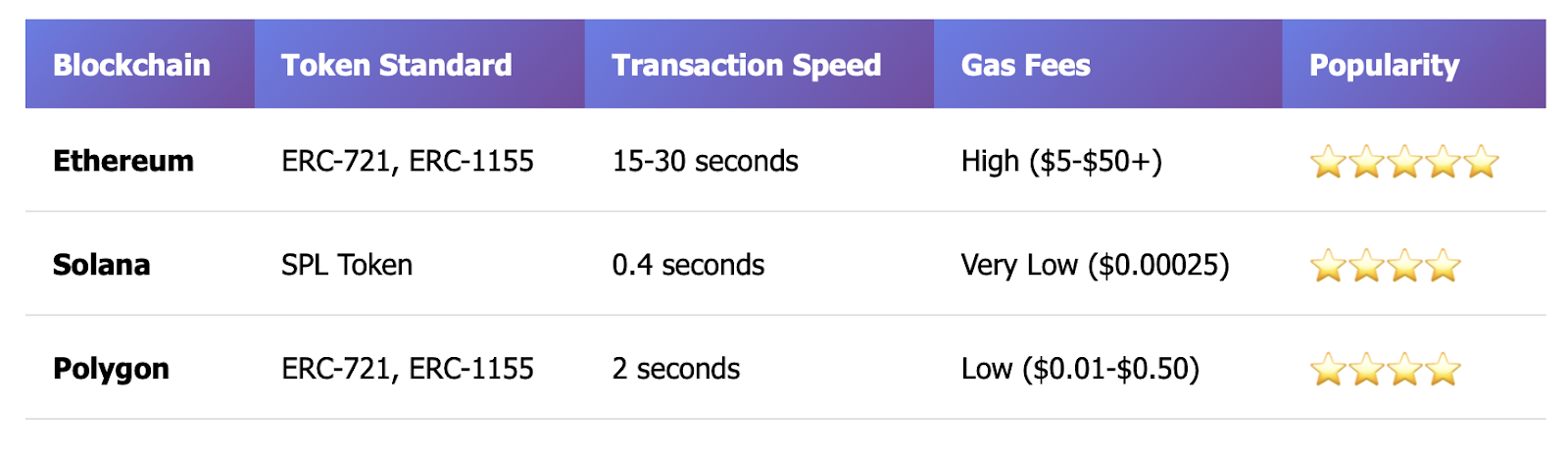
NFTs run on smart contracts, which are code running on the blockchain, defining what the NFT is in addition to the NFT owner. When you purchase the NFT, the smart contracts will automatically update. There are two main standards for NFT tokens; the original standard on Ethereum is ERC-721. Each ERC-721 token is entirely unique. ERC-1155 is new, built to be more flexible than ERC-721, and can allow both unique and semi-fungible tokens. NFTs are created through a process called minting. Minting occurs when you upload your digital file into a platform, which, in turn, creates a token on the blockchain that is tied to the digital file, thereby providing proof that the file is yours.
Here is how the process works. You first mint the NFT. Next, you list it for sale on a marketplace. Somebody buys it using cryptocurrency. A smart contract transfers ownership to them. All data is permanent in the blockchain.
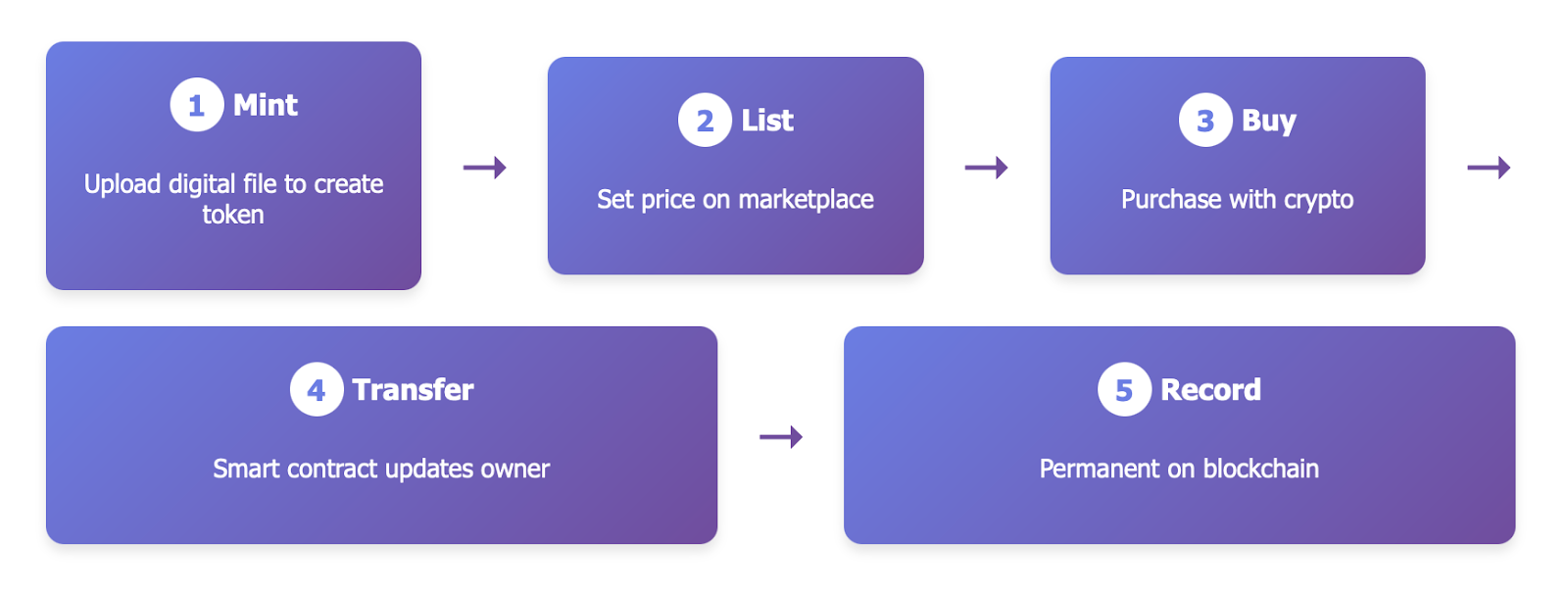
You can track the entire history of an NFT, with each transaction being permanent. You can see who owned it and what they paid for it before you. This allows for trust and transparency.
The blockchain never forgets, and your ownership of an NFT is secure. Nobody can take it away unless you sell or transfer it.
NFT Use Cases Beyond Art
NFTs were popularised by digital art. Collections of products, like Bored Ape Yacht Club, sold at staggering price points. However, NFTs do more than highlight images.
Gaming is a massive NFT market. Games, such as Axie Infinity and Decentraland, utilise NFTs to represent in-game assets. This means players can truly own their weapons, characters, and land, and then sell them for cash as well.
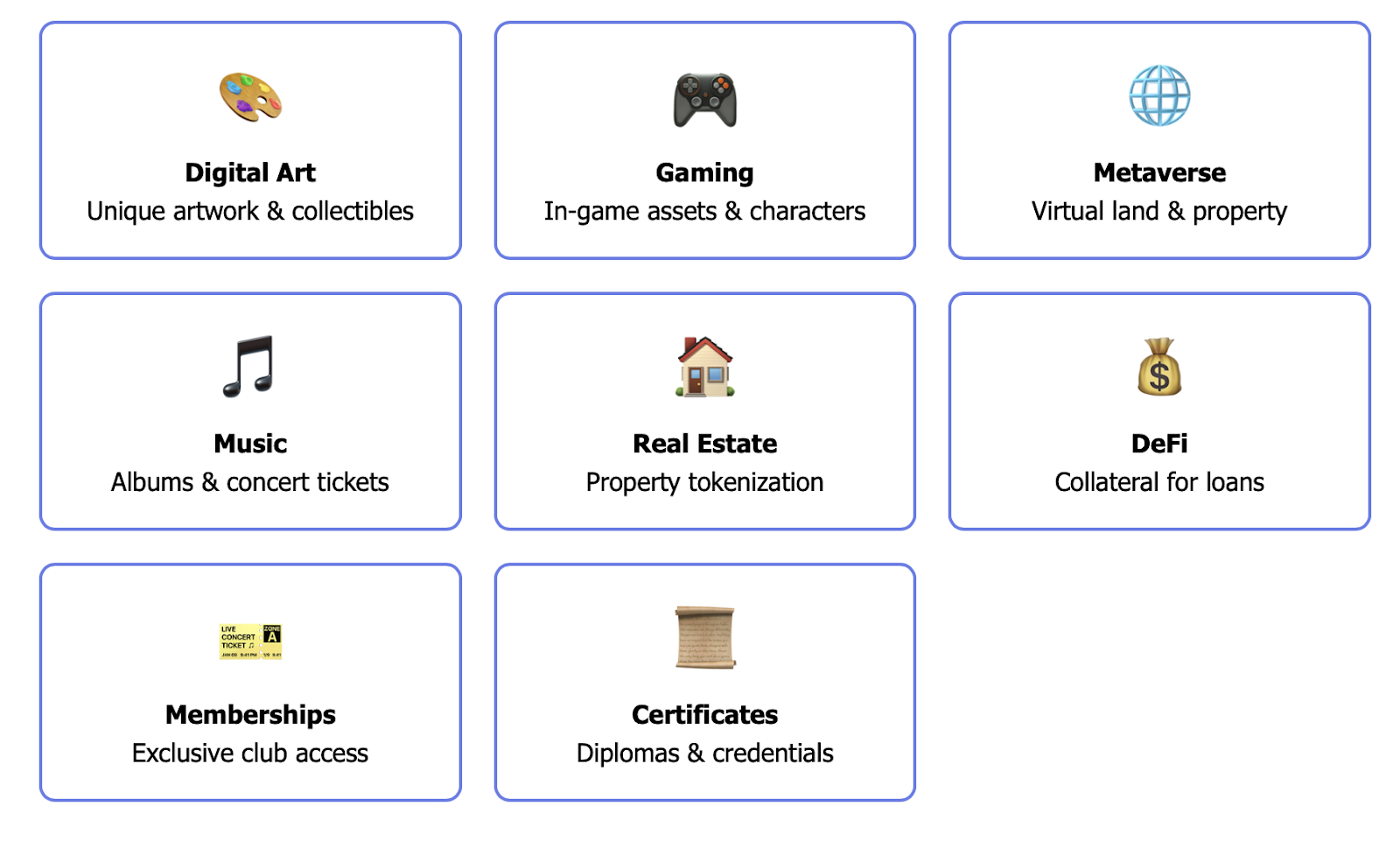
NFTs play a key role in forming the metaverse. Most virtual worlds must manage ownership of digital property. NFTs serve this purpose exceptionally well.
Musicians are also using NFTs. Albums and concert tickets are sold as NFTs. Musicians receive greater amounts of their reported sales because record labels do not take the percentages on NFT sales.
NFT is used for real assets. Houses, cars, and event tickets have been tokenised by individuals. Tokens make it easier to buy and sell physical assets, and are safe to collect assets.
DeFi applications are a growing segment. DeFi marketplaces allow users to collateralise NFTs for loans. Essentially, because NFTs are not liquid assets, you can borrow money against the NFT without selling the digital asset.
Memberships issued as NFTs give the owner access to exclusive clubs. Owning an NFT can grant a user into VIP groups and events or perks only to NFT holders.
The benefits certainly span far beyond images. NFTs create and enforce actual ownership over digital and physical assets in many industries.
NFTs and Cryptocurrency Trading
Purchasing NFTs requires cryptocurrency. Most marketplaces accept Ethereum (ETH), while others accept Polygon (MATIC) or Solana (SOL). Most marketplace platforms refuse cash or traditional currency for NFTs. NFT prices often mimic the upward or downward movement of the cryptocurrency market.
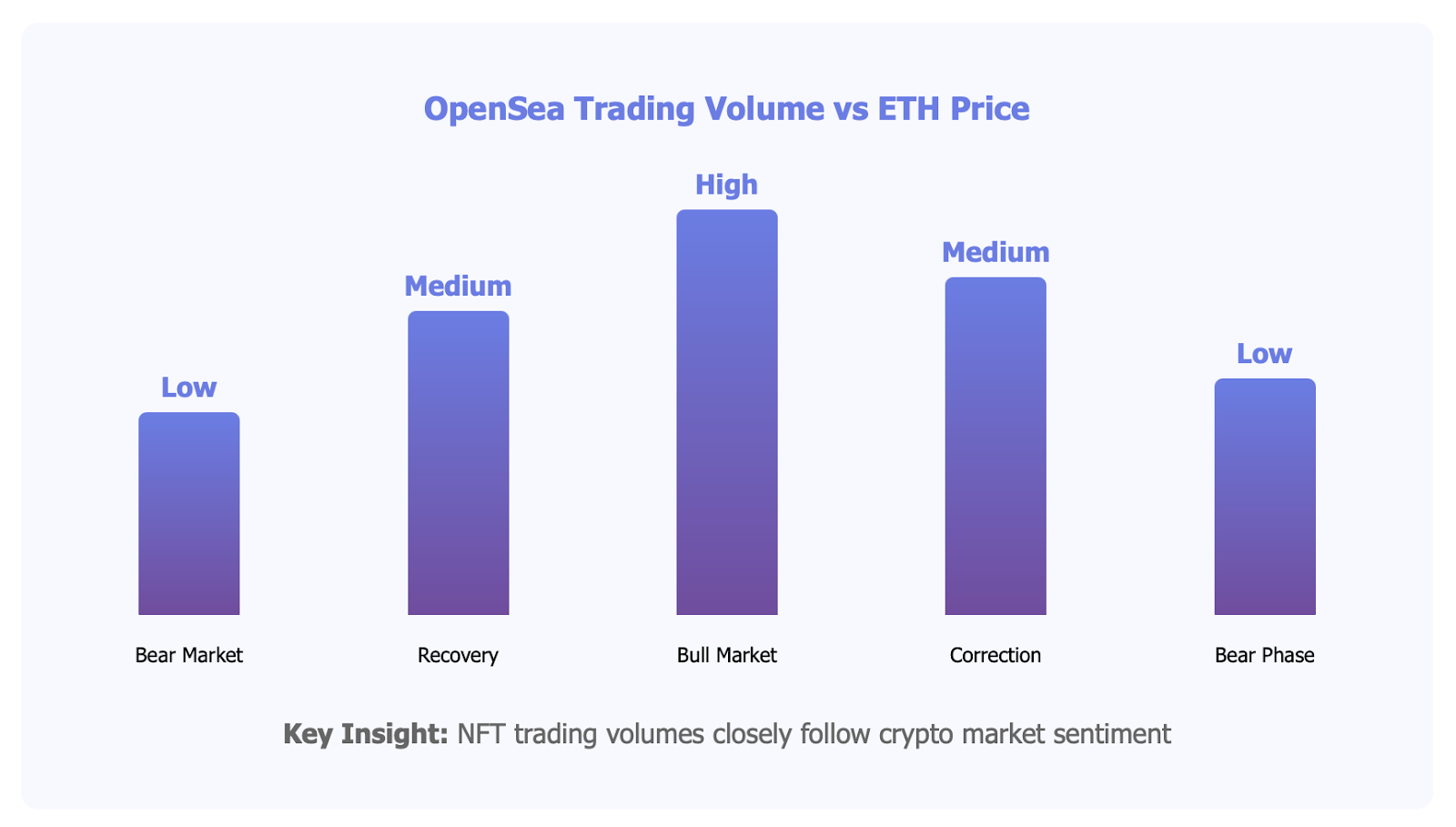
As an example, Bitcoin and Ethereum prices will push up sales of NFTs. If the crypto market crashes, you can expect NFT trading to cool off as well.
NFT Marketplaces, such as OpenSea, Blur, and Rarible, operate like cryptocurrency exchanges. You connect your wallet and then can search or browse for NFTs, which you can buy or sell. Trading NFTs is different from trading cryptocurrencies. Generally speaking, cryptocurrencies are liquid, meaning you can sell them for instant cash. NFTs take more time to sell because you need to connect with the right buyer with the right interest in your specific item.
You often see extreme price swings in NFTs relative to crypto. A collection may boom one week only to crash the next, which is more extreme than swings in the price of the cryptocurrency market. The NFT market and broader cryptocurrency market have a symbiotic relationship with one another. When Ethereum gas fees are high, the interaction with the NFT marketplace is affected. Similarly, when new blockchains are introduced, new NFT platforms quickly follow.
OpenSea usually sees its trading volume situation (up or down) coinciding with the price of ETH. When there is a bullish market, you will see new buyers entering the NFT site. When there is a bear market, you usually will see lower prices with less activity. NFTs are all a part of the larger digital asset ecosystem, and if you understand cryptocurrency markets, you can potentially understand NFT markets better.
The Economics of NFTs – Value, Scarcity, and Demand
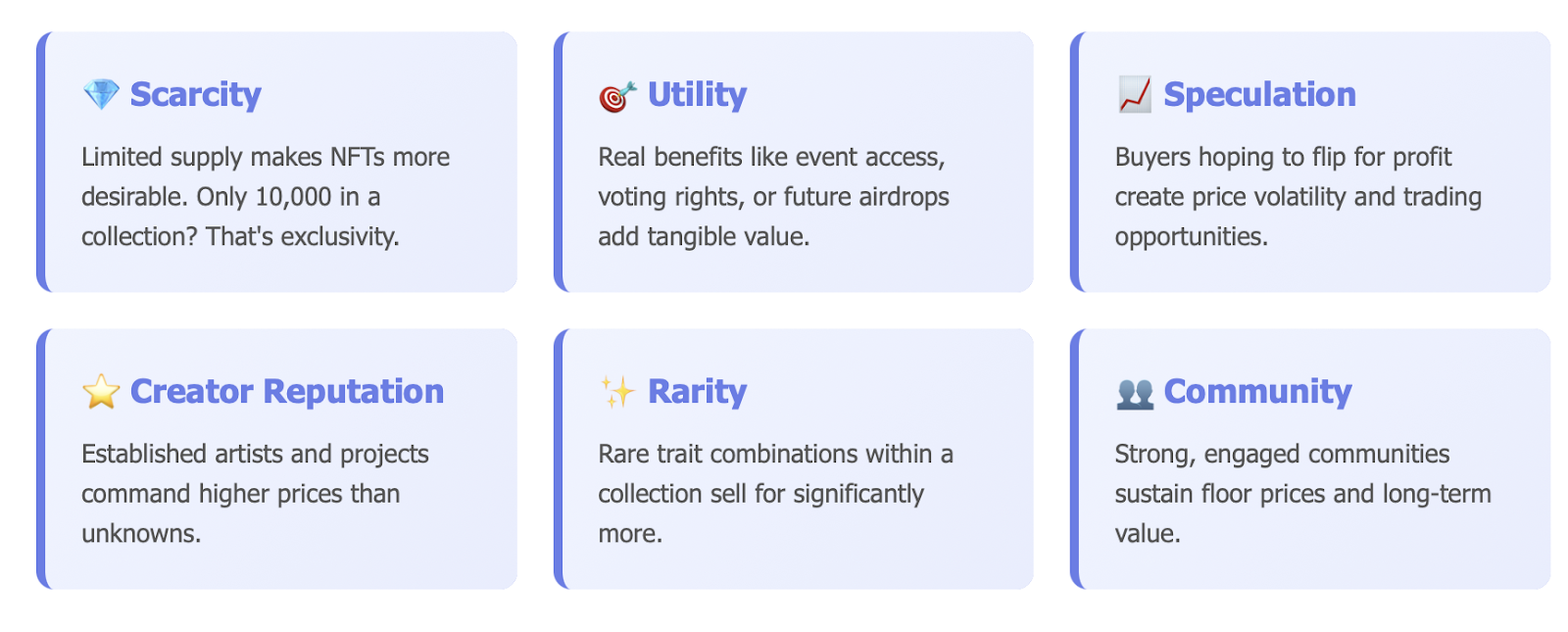
NFTs hold value through scarcity. A limited supply makes them appeal to consumers more. For instance, if only 10,000 are created in a collection, they feel special.
Ownership, or perceived ownership, leads to a rise in price. People want to own something that only they own. People want to be a part of an exclusive group. This thought process will push the price up.
Utility is important when it comes to the value of NFTs. Some NFTs just look really cool. Some NFTs offer real-life benefits. Things like access to events, the ability to vote, or be put on a future airdrop list have real utility and added value.
Speculation is another major driver of price influence. A lot of buyers buy with the hopes of flipping the NFT for a profit. If they can purchase the NFT low and sell for high, they will do this without thinking twice; this creates price volatility.
The reputation of the creator is also an important aspect of NFT value. NFTs created by highly regarded artists or projects will cost more than an NFT created by an unknown creator, who may never sell it in the first place.
Rarity within the collection is also a factor. Some traits are more common than others. A rare combination of traits will sell for much more than a common combination.
The lasting value of an NFT project is driven by community strength. A strong and engaged community is capable of sustaining the floor price of a collection. A community that is not strong will see the value of its NFTs plummet.
The floor price of a collection is the lowest price at which you can buy a collection. The floor price gives you the minimum price to buy into that project. Floor price changes inform the health of a collection.
The Bored Ape Yacht Club saw its floor prices soar to over 100 ETH in 2021. They had a strong community to sustain it, they had celebrities owning them, and they had real utility.
Value is driven by multiple factors working together. Rarity plus community plus utility equals a valuable NFT.
Risks and Challenges in the NFT Market
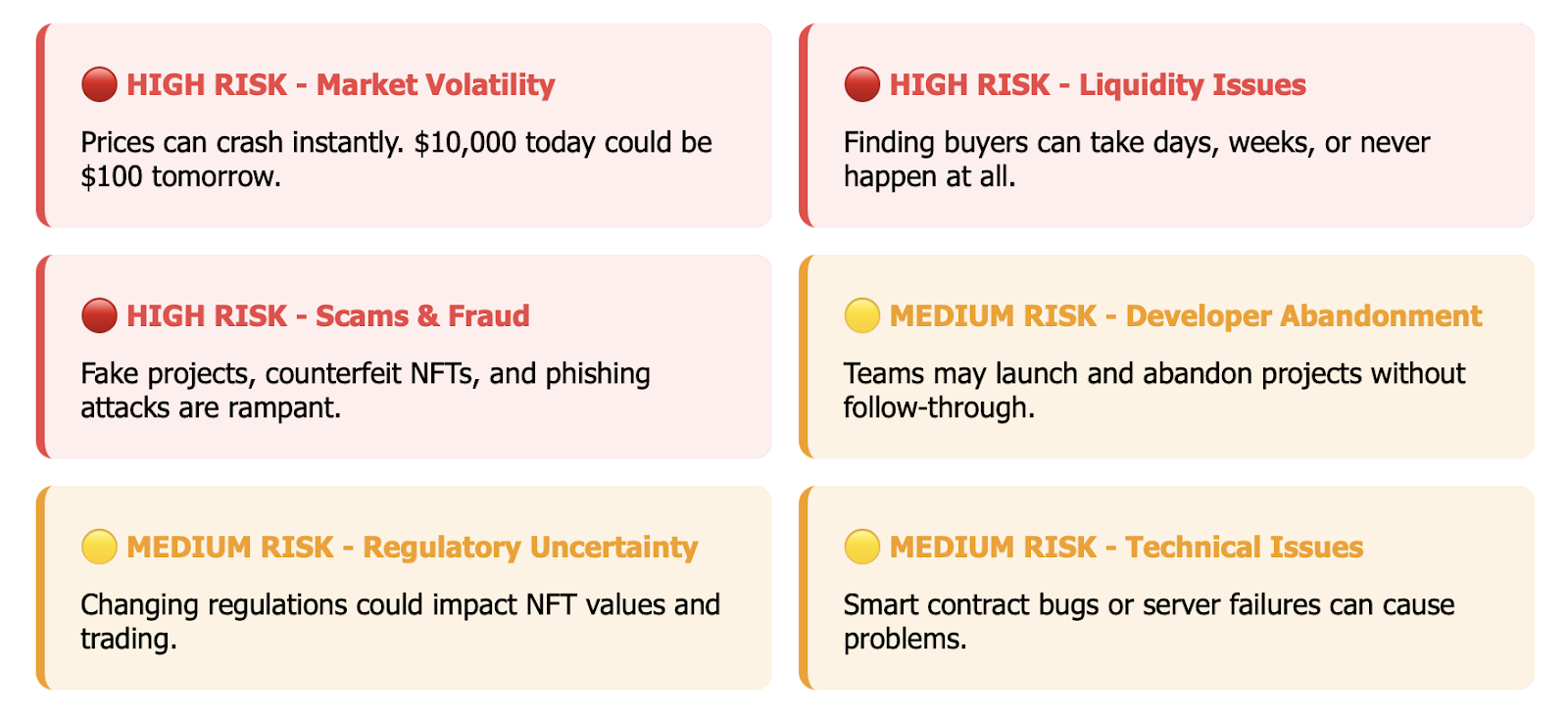
The markets for NFTs are erratic. The price can drop instantly. What is worth $10,000 today could be 100 tomorrow.
Another huge risk is a lack of liquidity; NFTs aren't liquid like cryptocurrencies. The process for selling an NFT involves finding someone who is interested in buying it. This can take days, weeks, or an eternity with no one interested in buying your NFT.
Scams are rampant on the NFT scene. For each potentially great NFT project, there are many fake NFT projects coming through and selling out, never to be heard from again. Counterfeit NFTs are other NFTs that simply copy a highly sought-after NFT collection in the hopes that someone will buy them. These scams take money from unsuspecting customers.
Phishing scams are probably the greatest risk to NFT owners. Scammers send a link that looks like a legitimate part of the NFT project, but instead, it extracts access to your wallet for everything in it. With just a click, you can easily lose your entire NFT collection.
There are environmental concerns, too; for example, Ethereum is running on a huge amount of energy when it comes to NFTs. Ethereum mitigates this somewhat, yet environmental concerns are still around.
Another major risk is regulatory uncertainty. Regulation can be changing, and law is still being written surrounding NFTs. Future regulations could jeopardise the values of NFTs and other trading considerations, too.
Many experts, including economists, are warning that NFT prices are all inflated for nothing but nostalgia and speculation on others in the past. Some NFT collections have notably dropped quickly after many pundits said they were in the last 'bubble'.
Another drop in value that is a concern for NFT investors/developers is a lack of follow-through from a developer. They can just launch an NFT and not finish the project and abandon it.
The dangers of scams and developer abandonment can be an issue on some NFTs with their source file host image. If the server goes down, the visual image is lost.
Smart contract bugs can create issues. If the contract is poorly coded, a hacker could exploit it.
This is why you must do your research before purchasing. Look at the team, look for reviews, and understand exactly what you're purchasing. Do not make quick purchases from hype.
NFT Investment Strategies
Assessing NFT projects requires considerable effort. Review the team behind the project. Are they credible? Experience? Transparent? Investigate their pasts.
The roadmap is also important.
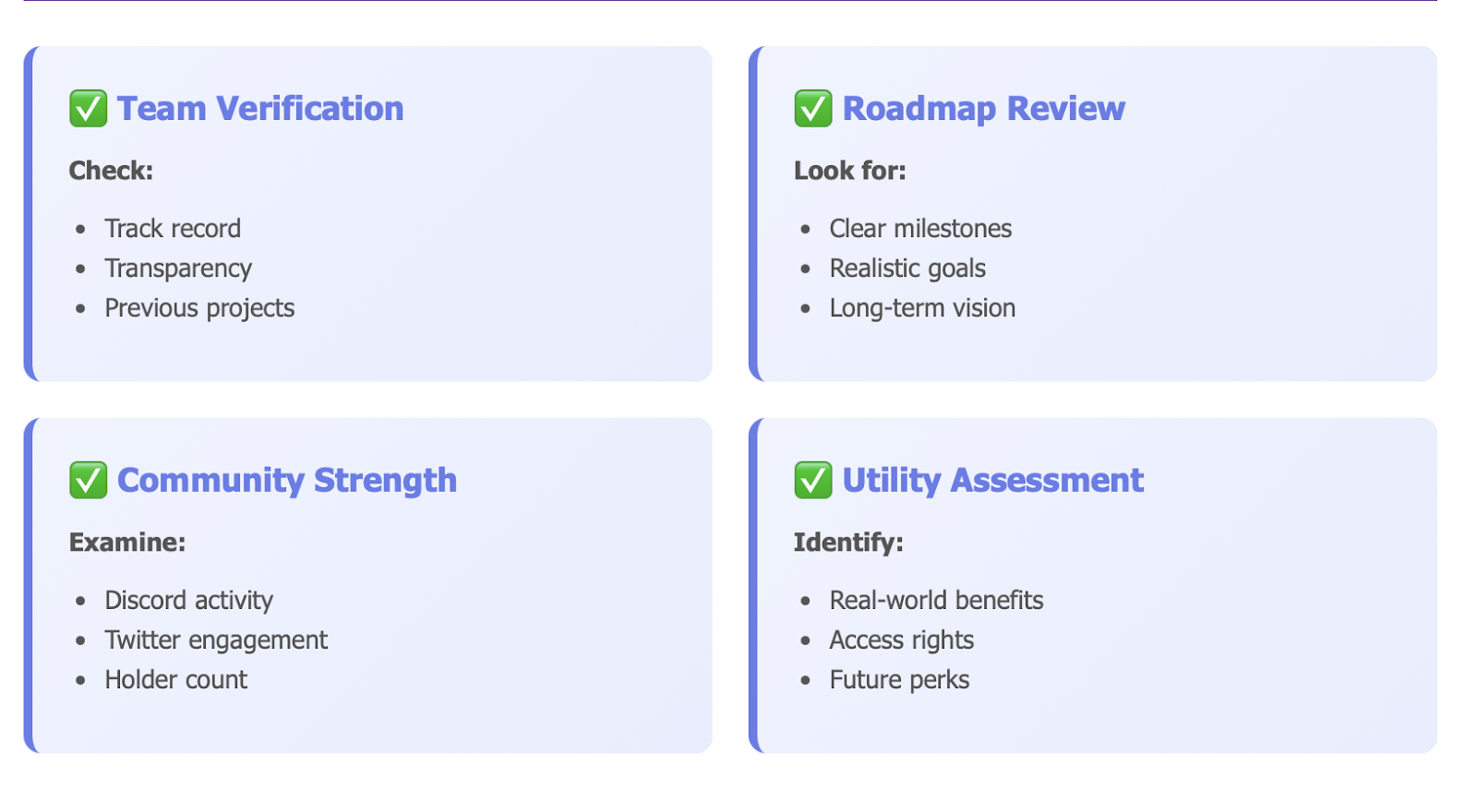
Profit-taking projects will have ways to explain a succinct roadmap compared to those that have no intention of continuing. A roadmap will reveal what will be given back to the project's holders over time.
Lastly, community strength is a measure. An active Discord server and an engaged Twitter following show a healthy project. A dead community should raise red flags.
Utility (or what you get from owning a good NFT) can set good projects apart from bad projects. What does having an NFT do for you? It's fine to have a digital piece of art, but the by-products of additional utility re-enhance value.
Long-term holding works for strong projects. Acquire high-paying NFTs and let time work its magic. As the project grows, so does your asset value.
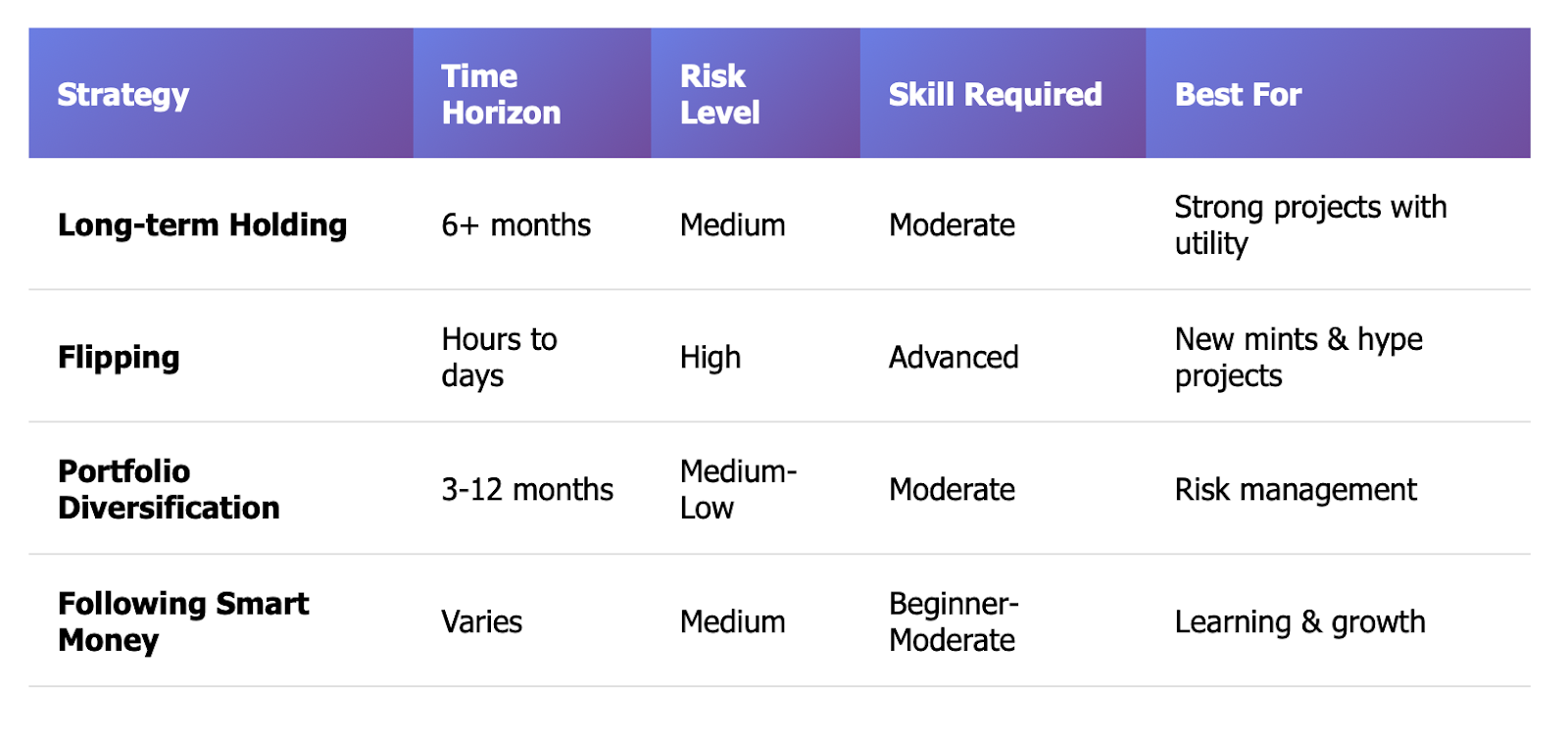
Flipping (buying in the mint and selling for profit) can satisfy short-term investors. This is higher-risk, requiring incredible timing and the required research.
On the other hand, investing across the scope of collection types can reduce your overall risk. Don't venture all funds in one collection, good or bad. Consider spreading investments amongst art, gaming, and utility NFTs.
Analytics tools can provide actionable information towards smart investing. Nansen tracks some of the top wallets and the actions or wallets of traders who primarily operate from those wallets. DappRadar provides ways to track the volume of sales, trending collections, NFT collections for trading, etc.
Follow the "smart money". There are wallets that consistently choose the winning NFTs. Pathing influence/advice from others who may have stronger NFT clout.
NFT funds and DAOs professionally curate collections, buying select NFTs with pooled money from investors. This allows for spreading risk across many different assets.
Timing is everything in NFT investing. You will generally find the cheapest prices when you buy during a time of market fear, and the best prices when you sell during market euphoria.
Have a clear objective for your purchase. Are you buying for collectable enjoyment, or are you seeking profit? Your exit strategy is based on your intentions.
The Future of NFTs in Global Finance
NFTs are now being used for more serious financial use cases. DeFi platforms are accepting NFTs as collateral for loans, which allows users to borrow money against their digital assets.
Platforms like Arcade and BendDAO have ushered in the era of NFT lending. The process is simple: you lock your NFT within a smart contract and receive a loan of cryptocurrency. You then make the payments back. Upon complete payment, the NFT is released, and you walk away from the transaction with your collateralised NFT returned and the cryptocurrency.
NFTs are also about to get into identity verification. Your digital identity may be something like you have an NFT, which could then prove who you are online without sharing your personal information.
NFTs also work well as digital certificates and credentials. Diplomas, licensing, and certifications can be created as NFTs, eliminating the possibility of fraud and facilitating instant verification.
We are now also seeing the tokenisation of real-world assets come to life. Houses, cars, and business equity may also exist in NFT form, which allows for the trading of physical assets as simply as the trading of digital assets.
The institutions are also getting involved, with large banks working on NFT custody services and investment firms utilising NFTs in their portfolios.
Regulatory frameworks are being formed as well, with businesses developing rules for the trade of NFTs, providing some legitimacy but more restrictions within the industry.
NFT bonds may also become a norm, similar to bonds that are traded in traditional finance. Companies may issue debt in the form of NFTs, and investors will trade these NFTs on blockchain platforms.
Blending with traditional finance is underway. Stock exchanges are beginning to explore NFT listings, and payment processors are adding NFT functionality.
The technology is maturing, gas costs are decreasing, and user interfaces are becoming easier to use. More people now have better access to NFTs.
Web3 considers NFTs foundational. The next version of the internet will run on blockchain ownership. NFTs prove what you own in digital contexts.
There is continued corporate adoption. Brands use NFTs to serve loyalty programs. Businesses are issuing NFTs for voting and shareholder rights.
Infrastructure is being built now. What today seems like an experiment will become the standard tomorrow. NFTs are moving from speculation to real utility.
Why NFTs Matter to Every Crypto Trader
NFTs changed our perception of ownership in the digital landscape. Before blockchain technology, copying any file was as simple as right-clicking and selecting the "copy" option. Now ownership can be proven and secured.
There are real opportunities in the NFT trading markets. Those early adopters of solid projects made huge sums of money. New opportunities are emerging every day in this evolving market.
There are risks at every level. Market crashes, scams, and a lack of liquidity can all impact your investment. Being cautious is necessary to survive in these markets.
NFT markets have a direct connection to crypto markets. If you understand one aspect of it, you can transfer your understanding to the other, as they utilise the same underlying technology and have the same underlying user base.
Simply put, we are quickly building a digital economy, and to sustain this economy in virtual worlds, online games, and digital communities, we have to build our ownership systems, and these systems are provided through NFTs.
There is a difficult learning curve; however, if you are willing to climb that curve, you will be rewarded with knowledge of new trading strategies and areas of investment.
Start small. Once you get your feet wet in the NFT markets, start by purchasing cheaper NFTs to learn the process and tools necessary to participate. You will find that you will learn more from experience than you can from webinars or books.
Make connections with NFT communities. Join Discord servers or Twitter spaces to find good information sources to help your education and exposure to this evolving industry. Learning from others in the NFT community will accelerate your education.
Use reputable platforms like OpenSea or Blur. Stick with known marketplaces until you better understand the risks.
Keep your wallet secure. Use hardware wallets for NFTs worth more than a certain dollar amount. Never share your seed phrase with anyone.
Follow your investments closely. Know the amount you paid and the current floor price. This can help you make good decisions.
The NFT space is evolving rapidly. What you read today could be different tomorrow. Always read posts on crypto news sites or on community boards to help you stay current.
For additional education about crypto trading and digital assets, visit btcdana.com. The learning does not stop at NFTs and goes further into crypto trading and blockchain technology.
NFTs are a shift in value to the online space. It's not just a fad. It is a building block of a digital economy that is going to shape our future.
Ready to start your crypto trading journey? Visit btcdana.com today for expert guides, market analysis, and everything you need to trade cryptocurrencies and NFTs confidently.