




Introduction: Why Understanding Micro and Macro Economics is Crucial for Investors
To enhance yourself in your decision-making process as an investor, you need to understand the difference between microeconomics and macroeconomics. Microeconomics is analogous to using a microscope to see every little detail at the company level, while macroeconomics is like using a telescope to look at the macroeconomic environment as a whole.
Most beginners fail to take into account that there is another element to looking at Apple, for example, other than the company's revenue numbers. You also must be cognizant of what is occurring with U.S. interest rates, U.S. gross domestic product growth, and overall trends in global markets. Therefore, both parts of the equation are equally important.
This is why the two very popular methods of investing exist: bottom-up investing and top-down investing. The bottom-up method of investing encompasses the process of first looking at individual companies, i.e., the microeconomic viewpoint, while the top-down method encompasses the process of first looking at the overall economy, i.e., the macroeconomic viewpoint, and then looking for specific opportunities within that economy.
Professional traders use both methods of analysis. They will analyse the quarterly earnings of a technology company while at the same time keeping an eye on the Federal Reserve’s policy announcements. This is not simply being too complicated in your decision-making process; it is simply being smart.
As you consider buying shares of Tesla, you can choose between two different ways to evaluate it. Firstly, there’s the bottom-up approach, where you would review the company’s statistics, production numbers, margins, and market share. Secondly, there’s the top-down approach, where you would look at how the overall economy of the U.S. is currently supporting or hindering electric vehicle adoption. I.e., Are interest rates low enough? Is consumer spending robust? Are government policies favouring electric vehicles?
The very best investors do not favour either perspective. They use both angles because they will show you the difference between microeconomics and macroeconomics in every transaction that you will complete. Missing out on either perspective means that you would be investing in a blind fashion.
Microeconomics: Using the "Microscope" to Analyse Company Revenue and Profitability
Microeconomics looks at the details of how a single business operates and generates revenue. Microeconomics examines the factors that are driving the growth of different types of businesses and whether they can produce a profit.
Microeconomics studies supply and demand, pricing strategies, cost structures and profit margins of various businesses. These topics may sound very "academic", but they will directly affect whether or not an individual will want to purchase shares in a business.
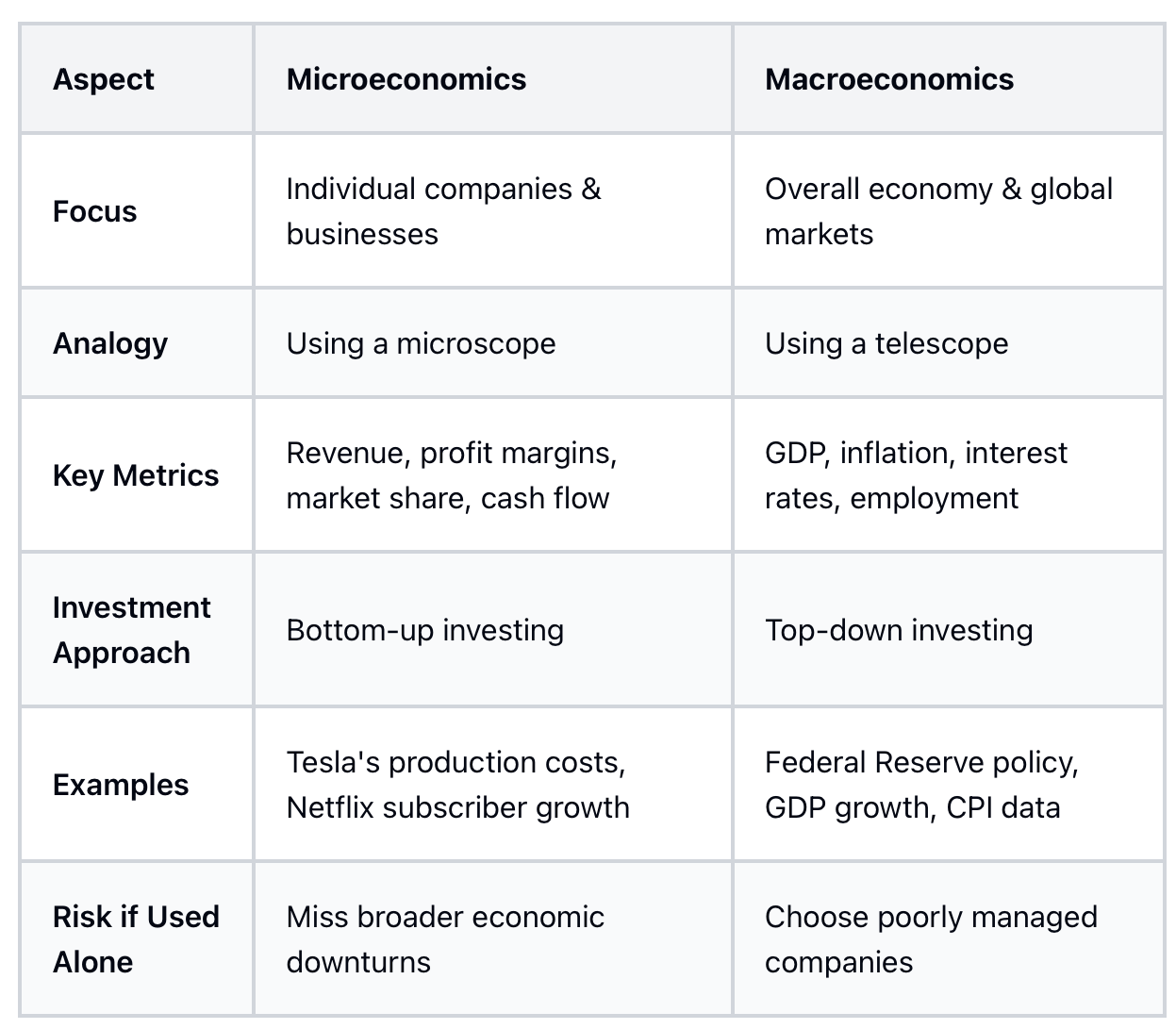
An example is Tesla. A microeconomic analysis of Tesla could be completed by reviewing its quarterly sales data, production costs per vehicle, and market share in the electric vehicle (EV) market. You would need to evaluate their gross profit margin and net profit margin. If Tesla sold more vehicles but experienced a decline in gross profit margin, that could be considered a "red flag".
For the beginner, consider running a lemonade stand. If you are selling lemonade at $2.00 per cup and your expenses are $1.00 for lemons and sugar, then you would need to know how many customers are buying from you daily. If the cost of lemons or sugar increases and you are not able to raise your price to cover the additional costs, you will lose the ability to make a profit. The same concept applies to billion-dollar companies.
Here's what serious investors track:
A company's revenue growth rate indicates whether or not it is growing. For example, even though Netflix has many new subscribers, if the revenue per subscriber decreases, then the revenue growth may not be valuable at all.
The net profit margin provides insight into a company's efficiency. If you compare two companies with the same revenue, and one company has a profit margin of 20% and the other has a profit margin of 5%, then the company with the profit margin of 20% is in much better financial shape than the company with the profit margin of 5%.
Free cash flow shows whether a company is generating real cash or just earnings on paper. Many companies report that they have earned income, but if they don't generate positive cash flow, those earnings are unsustainable.
You also need to understand industry cycles. An example is a steel manufacturer. The steel producer may be very profitable during a construction boom, but when the economy goes down, its profit margins disappear. Therefore, experienced traders and investors account for those cyclical trends in their decision-making.
Another pitfall is to concentrate too heavily on company-specific fundamentals and overlook the overall economic factors that impact the company. A company may have excellent fundamental data, but in a recession, the entire market may decline, and the stock price will also decline. Microeconomic fundamentals provide accuracy, but do not provide the complete picture in a vacuum.
Examples of companies include Apple, Tesla, and Netflix. The financial documentation from these companies may tell a specific micro story. However, it is critical to understand that the environment in which the company is operating will impact the validity of that story in the macroeconomic environment.
Macro Economics: Using the "Telescope" to Observe Global Market Trends
Microeconomics is focused on the performance of individual businesses or companies, while macroeconomics aims to look at the overall performance of an entire economy, where macroeconomists track economic indicators such as GDP, Inflation, Interest Rates, Employment, and Monetary Policy. All of these are important factors that affect all of those who buy or sell in the marketplace, whether they know it or not.
When the Federal Reserve increases the Interest Rates in the U.S., it has an effect on more than just one company; it impacts the Stock Market, Foreign Exchange Markets, and Futures Markets at the same time. Higher Interest Rates cause the cost of borrowing money to increase, and as a result, cause Companies to slow down on Expansion Plans and Consumers to slow down on Spending. Usually, the result will be a decrease in Stock Price and an increase in the Value of the U.S. Dollar compared to other currencies; in addition, Bond Yields will increase.
Thus, as a Trader, one must recognise the connections between these factors. For instance, if you were trading EUR/USD, and the European Central Bank lowered Interest Rates while the Federal Reserve did not change theirs, you would expect to see a weak euro compared to the Dollar; you don't need to be a Doctorate of Economics to know this would happen, you just need to know what the Central Banks announced.
Another way to think of Macro Thinking is to think of yourself as a Lemonade Seller in a Cold City. You have a great Lemonade Recipe, but the weather is cold; it matters little how good the Lemonade is, as I would guess on any given day, the Weather will have a much larger impact on the number of Customers. Therefore, if you experience a Heat Wave, you will have Customers lining up, and if you experience a Cold Snap, you will have no Customers, regardless of how delicious your Lemonade may be. This is Macro Thinking.
Key macroeconomic indicators tell you where markets are headed:
GDP growth tells us about economic growth. A growing GDP reinforces the stock market. A declining GDP indicates trouble for the market.
Inflation the Consumer Price Index, will affect decisions made by Central Banks. Central Banks will typically raise interest rates in times of high inflation, which will hinder the stock market but allow the currency to increase in value.
Interest rates are the largest driver of stock market returns. Low-interest rates increase the number of borrowers and hence investors, which drives up stock prices. Conversely, high-interest rates will decrease the number of lenders and investors.
The Purchasing Managers' Index indicates whether or not manufacturing is contracting or expanding, which will allow investors to predict trends before the official GDP is published.
Different sectors of the market react to macroeconomic changes differently. When interest rates drop, real estate and construction will benefit from lower-cost mortgages, but banks may experience losses because of decreased lending profits. In a low-rate environment, technology will thrive due to cheap capital being available for innovation.
The primary risk with macro investing is that the events of macroeconomic changes will affect all of the markets, i.e., when the COVID-19 pandemic occurred, it did not matter which restaurant chain was the best managed - the entire restaurant sector collapsed because of the pandemic, so there was no possible way through micro analysis that an investor could have avoided the loss.
Recent examples illustrate this point well. CPI data releases in the U.S. have moved markets up and down 2-3% within one day based on the CPI data release. The actions of the ECB regarding raising or lowering rates will have an immediate effect on their markets, specifically European stocks and the euro. The above examples are not accidental; they are predictable responses to macroeconomic policy changes.
Smart traders do not wait until a macroeconomic announcement to react; instead, they are proactive in anticipating macroeconomic developments. They are aware of when the meetings of central banks will take place, and when GDP and unemployment data will be released. These dates are included within a trader's calendar for making trading decisions.
Bottom-Up vs Top-Down Investing: Choosing the Right Strategy for Maximum Returns
Now that you've got a grasp of the basics of micro- and macro-economics, let's look at how investors utilise them via methods known as bottom-up and top-down investing. Each has its advantages and disadvantages, with successful traders often incorporating both methodologies into their strategies.
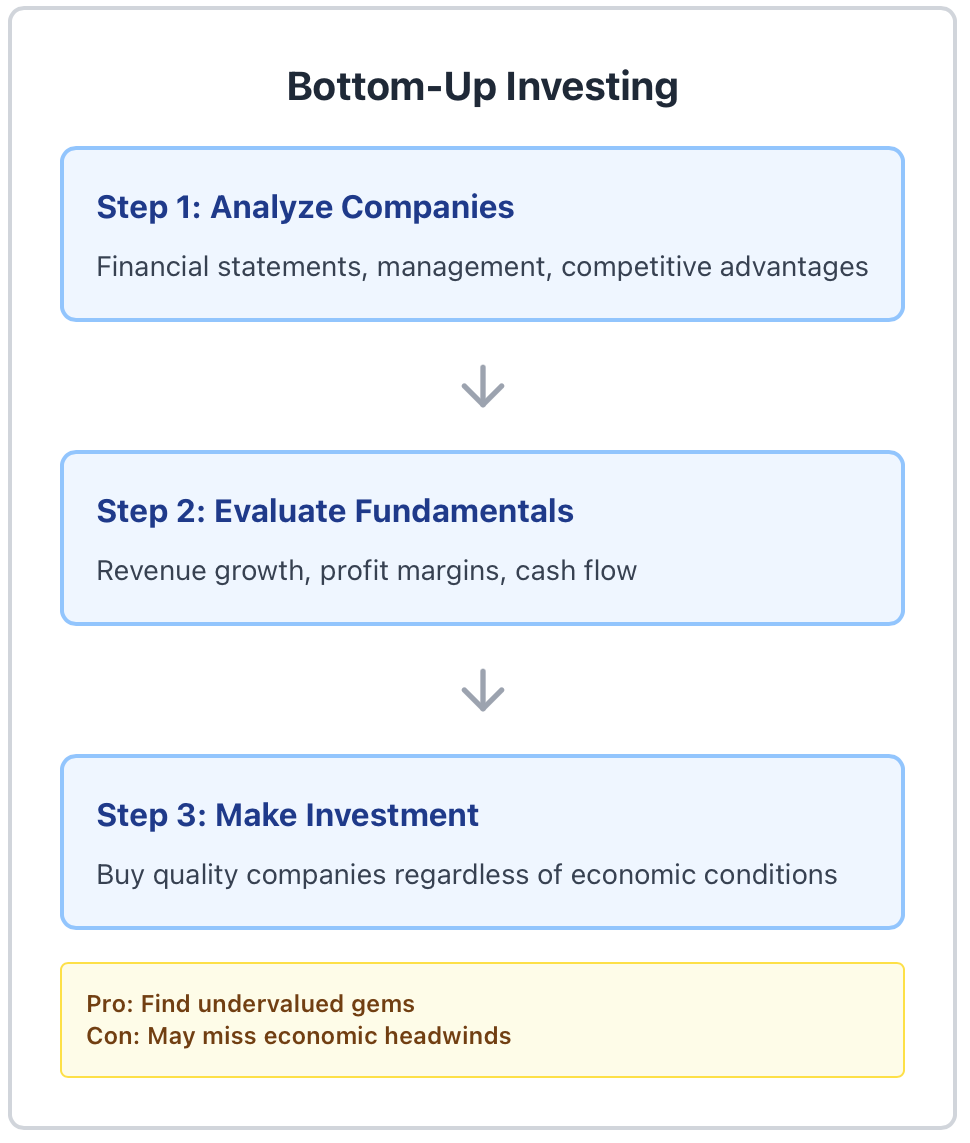
In the case of bottom-up investing, the initial focus is placed on stakeholders and individual corporations. Financial statements, strategy, management effectiveness, competitive advantages, and future growth prospects are then analysed to determine whether or not a company meets your expectations.
If you find a quality corporation at a reasonable price point, you will purchase shares without regard to current economic conditions. Warren Buffett has famously espoused this method of valuing companies based on their business fundamentals over time. Buffett believes in purchasing exceptional businesses and holding them for the long term.
The bottom-up method is specific. The downside of this approach is the potential to overlook broader economic and market trends that may adversely impact your investment return; for example, many investors who held high-quality banks throughout the 2008 global financial crisis suffered significant losses when those companies' values declined sharply.
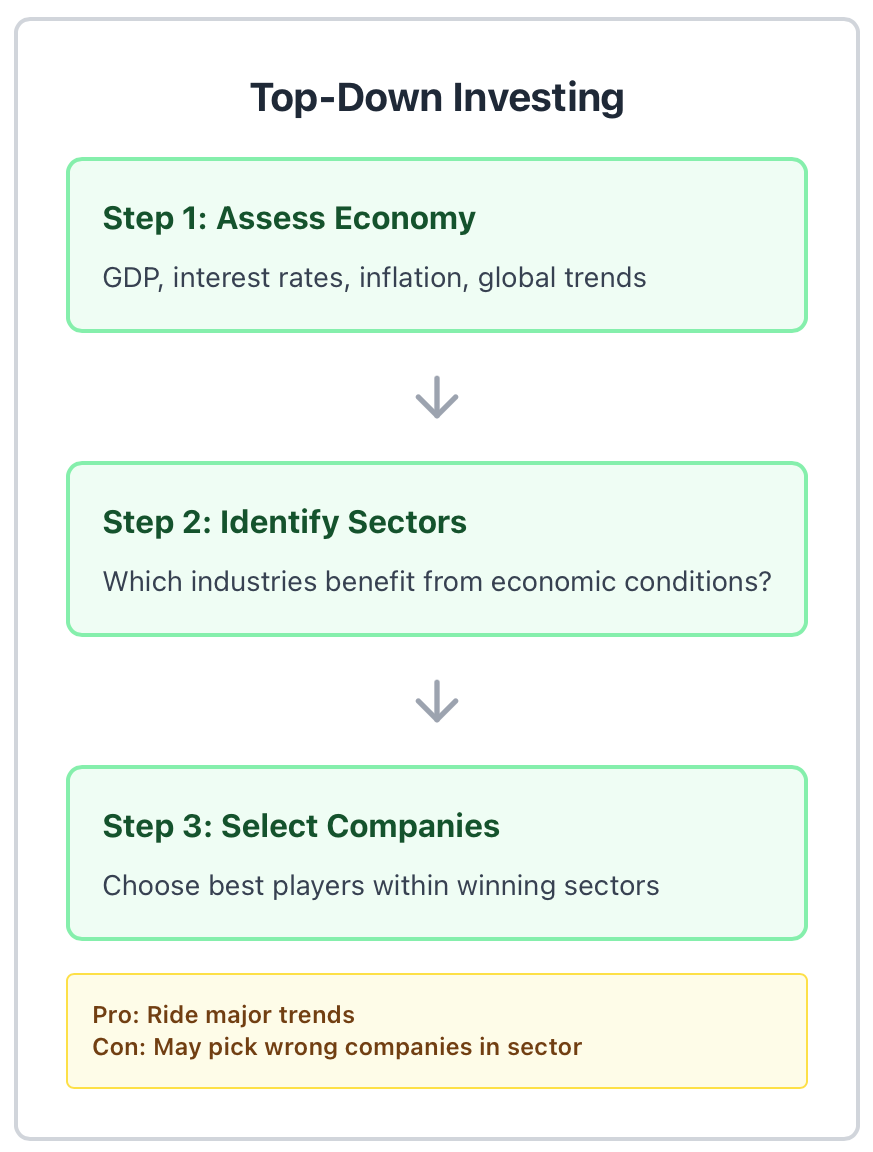
The top-down investing method begins with an overall assessment of the global macro-economy, identifying which sectors appear to be performing well, before finally selecting specific companies for investment within each industry sector. If you believe that the electric vehicle industry will dominate for the next decade, you can research electric vehicle manufacturers, such as Tesla, to determine which companies represent the most attractive investment opportunities.
Identifying which sectors will benefit from major trends is key to riding those trends. For example, if you identify that AI will be a giant wave of transformation of technology, investing at the right time into this space will most likely provide you with outsized returns. On the other hand, if you incorrectly identify which companies in that sector will succeed, you can lose money quickly, too. This will also apply to the EV sector, where many companies will be successful, but many others will not.
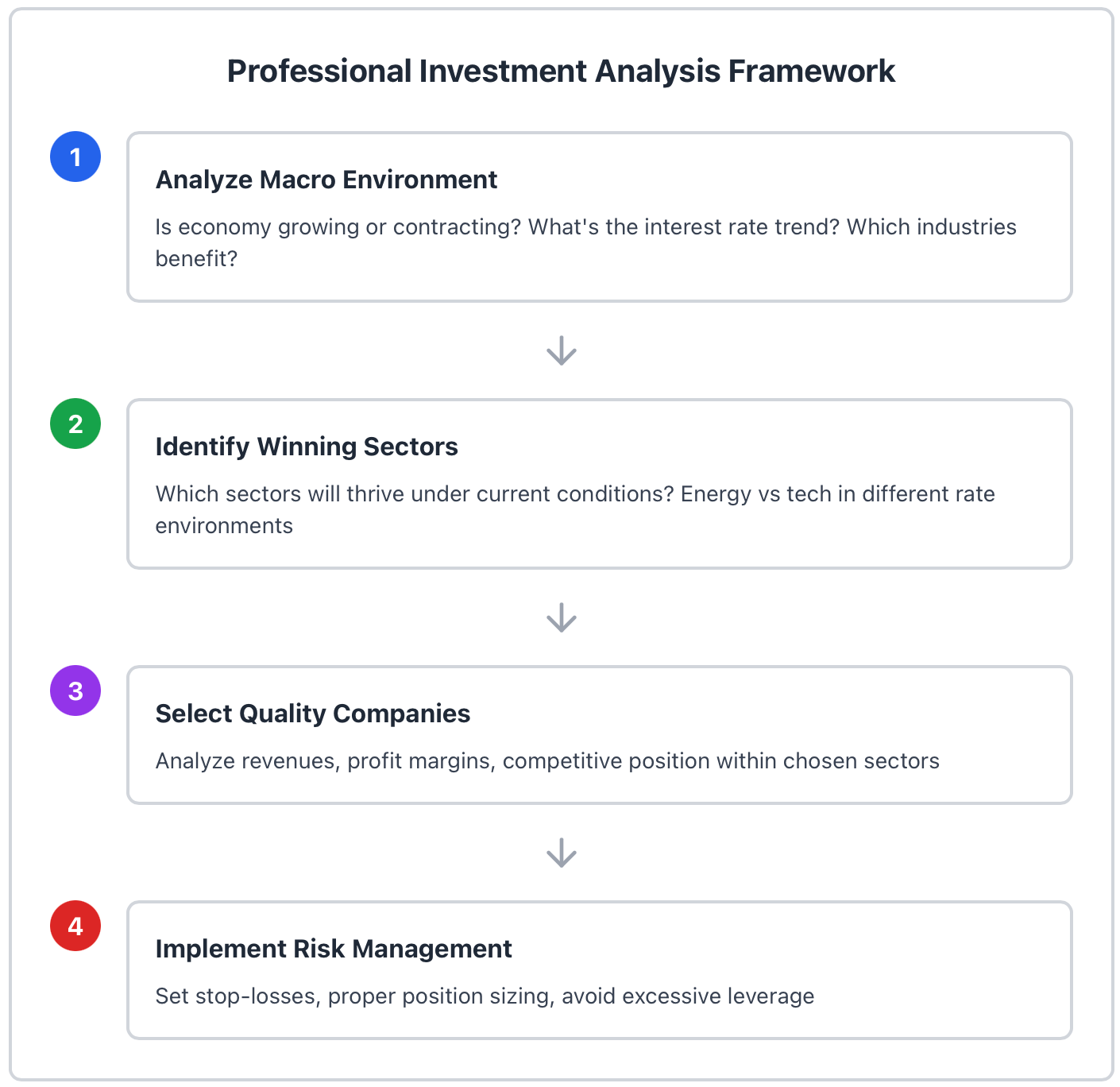
The average professional investor will incorporate both tactical and strategic analysis in their investment decision-making. Their analysis will go like this:
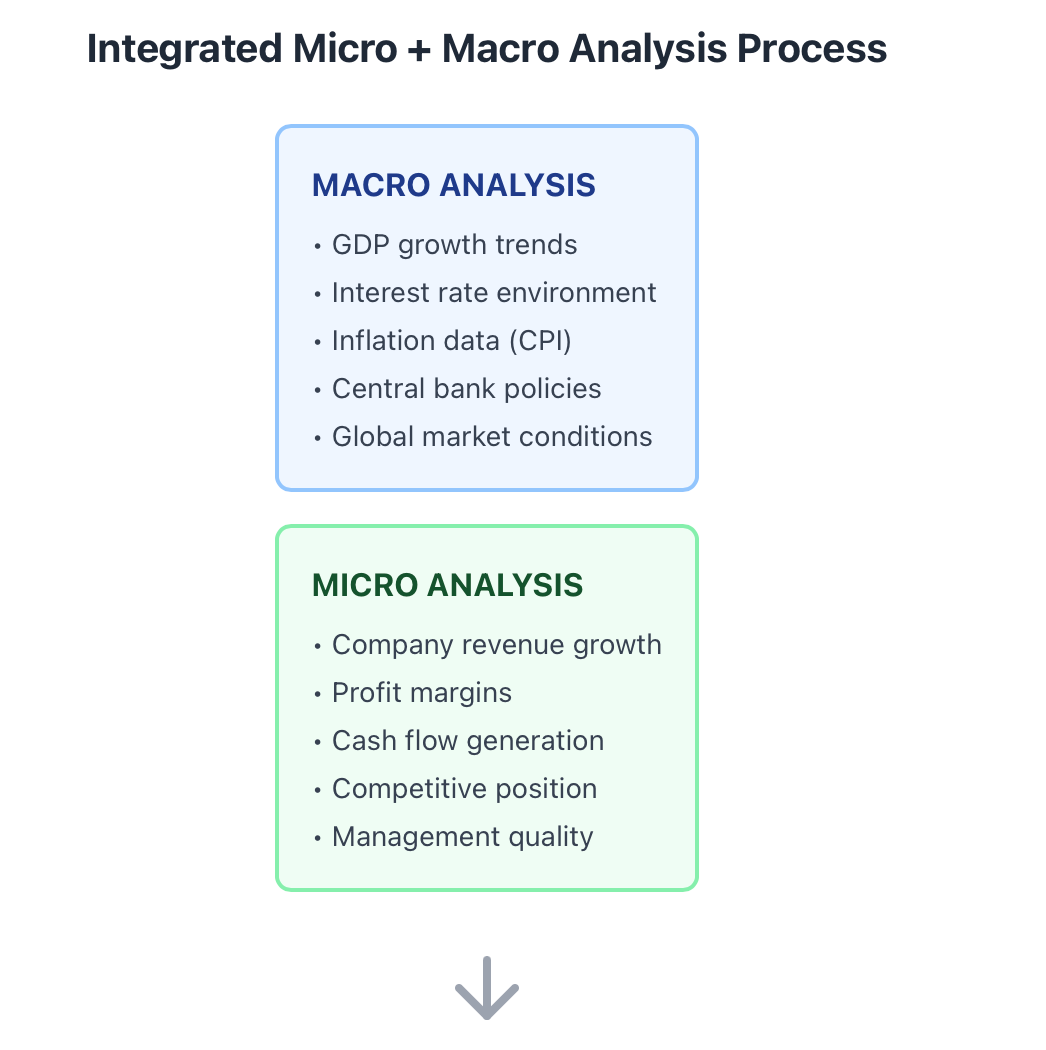
Macro Environment: What is occurring with the economy - is it growing or contracting? What is the trend with interest rates? What industries will benefit or suffer under these economic conditions?
Identify Industry Sectors that will likely do well under those economic conditions - does a rising interest rate environment favour energy companies or low interest rate environments favour the growth of companies in their respective industry sectors? Determine which companies in that industry are of high quality by analysing their revenues, profit margins, and marketplace competitive position.
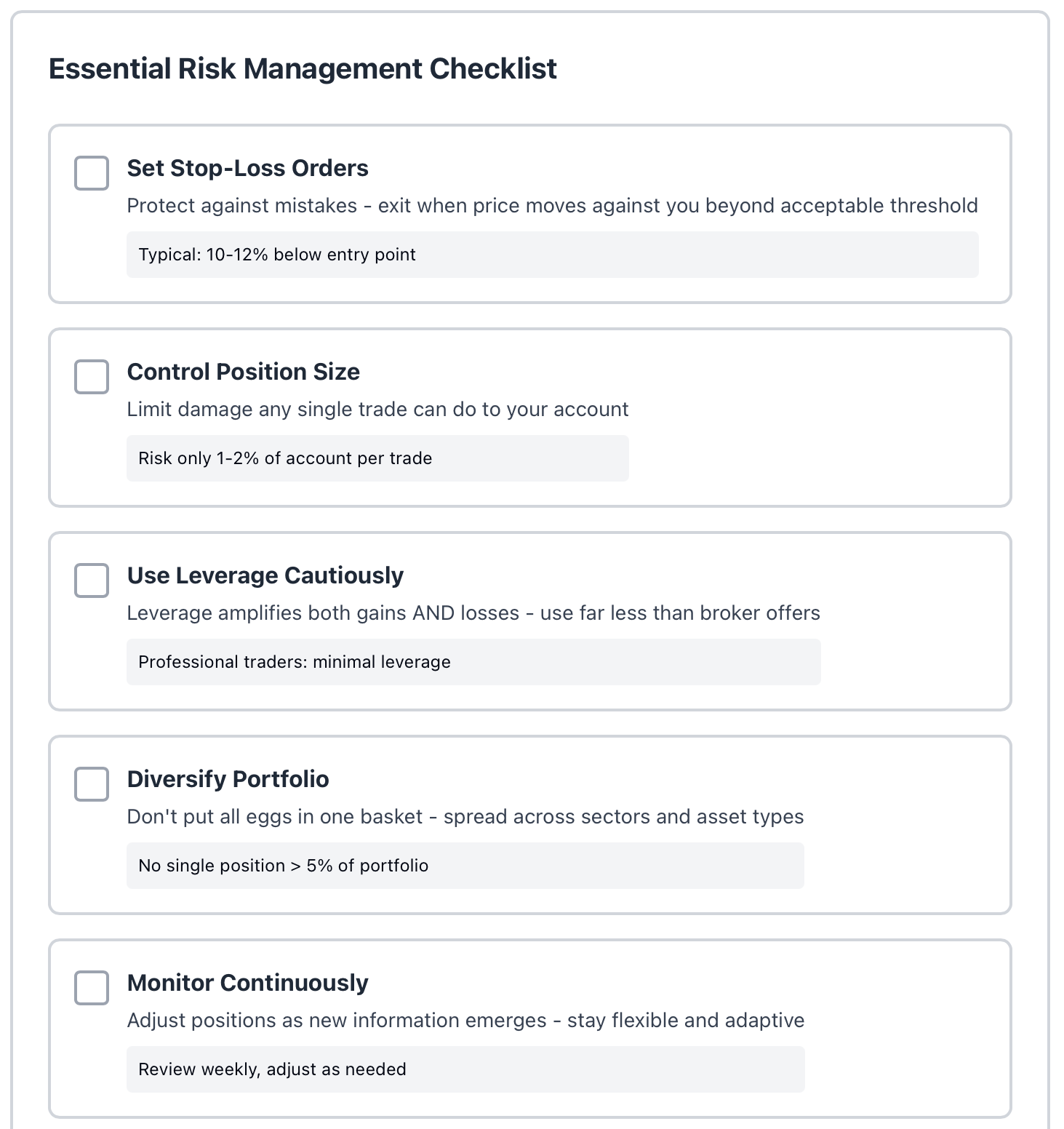
Mitigate Risk: Establish a plan to protect against downside risk, with stop-loss orders, proper position size, and prudent use of leverage.
Let's apply this analysis to a currently relevant example. If you were to analyse the tech sector in 2024:
Industry view: The AI space is experiencing incredible growth. Cloud computing is continuing to grow. Cybersecurity remains an important part of the equation. Combined, these subsectors provide a lot of potential for industry players.
Company view: From an investment standpoint in the AI space, you would look at companies such as NVIDIA, Microsoft, and smaller companies that specialise in AI. You would evaluate their revenue growth rate, profit margin, competitive advantages, and market capitalisation.
Decision: As an investor, you would allocate more of your investment capital towards larger players with established profits than towards early-stage, speculative startups. You would set up stop-loss orders at approximately 10% below your entry point on shares purchased, and you would refrain from overleveraging yourself when investing in the stock market.
When an investor only looks at one side of the coin in their analysis, this can create some common pitfalls. By using a bottom-up analysis only, you run the risk of purchasing shares in a very good company right before an upcoming economic downturn hits the market. By using a top-down approach only, you run the risk of investing in an industry that has a bright future but choosing a poorly run company that could underperform.
Choosing a lemonade stand to buy from when it's hot outside is similar to looking at the macro and micro levels of a company's fundamentals. First, you need to verify that the weather is hot (macro level). Next, you need to choose which lemonade stand has the best location, the lowest cost of production, and the highest level of customer satisfaction (micro level). You would not simply choose the first lemonade stand you found just because the weather was hot, nor would you choose the stand with the highest customer satisfaction in the winter.
The best way to make sure that your analysis continues to evolve as both companies and the economy are changing is to consistently integrate both approaches. As the markets change, as the economy shifts, and as companies change, the analysis must continue to evolve with them.
Practical Case Studies: Applying Micro and Macro Analysis to Real Investments
Theoretical understanding of how microeconomic analysis and macroeconomic analysis apply to trading decisions has little to no value if it is not accompanied by practical application of either or both types of analyses. The following case studies will demonstrate the interplay between microeconomic and macroeconomic analysis.
Stock Case Study: Tech Company During Economic Uncertainty
Let’s say you wanted to analyse one of the largest technology companies, in this example, Microsoft, at the end of 2023. Using a macroeconomic viewpoint, it appeared that inflation was beginning to slow down, the interest rates had stabilised and that consumers had generally been more cautious when making their purchasing decisions. The Federal Reserve signalled a possible halt to any future increases in interest rates, which is generally viewed as a positive for technology stocks due to their sensitivity to interest rates.
For microeconomic analysis, you would analyse Microsoft's most recent quarterly earnings result, where they reported excellent quarter-over-quarter growth due to growth in demand for their cloud services and their continued investment in AI integration into their product offerings. Their cloud platform saw an increase in revenue by 27% quarter-over-quarter, they maintained healthy profit margin averages of 35% and had sufficient/free cash flow, allowing them not only to reinvest into company growth through their development and expansion into AI technology, but also keep cash available for distributing to shareholders.
Thus, through the combination of the macro and micro analyses, it appeared that the macroeconomic environment was beginning to improve for large technology companies as well as the company specifically executing very well with strong operational performance and fundamentals. Accordingly, although the analysis above provided a high probability of success for entering the position, it was important to understand that any unpredictable macroeconomic situation caused by outside influences (e.g., recession) could adversely impact even the best-performing companies.
The trader would likely enter the position with a stop-loss of 10-12% based on macroeconomic fluctuation that could have a short-term impact on either of these types of companies. The position size would remain moderate (approximately 3-5% of the overall portfolio), in acknowledgement of both the opportunity and risk associated with the position.
Forex Case Study: EUR/USD Movement
In the foreign exchange market, one of the biggest factors affecting currency pairs is the economic performance of the countries involved, which will drive traders' decisions about whether to buy or sell those currencies based on how well their home economies perform relative to one another.
Because economics can vary from region to region, it's important for Forex traders to follow the key economic indicators and the major economic decisions made by central banks globally. The following example will help illustrate how macroeconomic divergence between two currencies impacted one another during the early months of 2024.
During the first quarter of 2024, European Central Bank (ECB) interest rates were being cut in an effort to spur Economic Growth from a sluggish economy, while the Federal Reserve (Fed), though also creating an environment to encourage investment through Fed assets, decided to keep interest rates at the same levels because U.S. Economic Growth was more positive than Europe’s. These differences between central banks' actions usually provide strength to a particular currency versus another. For example, the combination of ECB cuts and the Fed keeping their rates steady means the US$ (USD) would strengthen versus Euros (EUR) to become the primary currency of the world.
Futures Case Study: Crude Oil Price Dynamics
Commodity futures provide excellent examples of how macroeconomic and microeconomic factors interact. In the case of crude oil in mid-2024, macroeconomic factors were driving the demand and supply of oil and included geopolitical tensions in the Middle East, OPEC production decisions, and global economic growth forecasts.
Microeconomic factors were more specific to the production costs of crude oil in the U.S., the capacity of refineries to process crude oil, seasonal patterns of demand, and the level of inventory. For example, the anticipated increase in gasoline demand during the summer driving season would likely be less significant if there were an upcoming global recession.
As an example, assume OPEC announces a production cut. From a macroeconomic perspective, this announcement would suggest that oil prices will rise. However, if U.S. crude inventories were building due to increased domestic production, the trader would need to weigh these opposing factors. Therefore, a trader may take a small long position in crude oil futures, based on the belief that OPEC cuts would outweigh the concern over higher inventory levels.
However, the trader would maintain a conservative position size, as the signals were conflicting, and would place his or her stop-loss orders based on key technical levels and adjust them as new inventory data became available weekly.
Risk Management Across All Cases
Every case presented here shows that Risk Management must be part of all forms of investing. This is not a coincidence; true investing is an act of combining research and disciplined execution.
Stop-Loss Levels allow you to protect yourself from mistakes. The market has no regard for what your analysis indicated by moving the price against you above an acceptable threshold; you have to take action and exit the trade.
Position Size is the means by which you can limit the amount of damage one trade can do to your account. High probability trades may not work out every time. By risking 1% or 2% of your account on every trade, you will remain in the market for the long haul.
Leverage usage requires extreme caution. Forex and futures are leveraged tremendously. Therefore, they can amplify both gains and losses. The vast majority of professional traders employ far less leverage than what a broker offers.
These cases demonstrate that micro- and macro-analysis are not two separate processes; rather, they are two continuous and interdependent processes that will inform you of every trading decision. You will be making ongoing adjustments in line with the new information and managing risk as you do.
Conclusion & Actionable Takeaways: Turning Analysis into Investment Decisions
There is more to the difference between microeconomics and macroeconomics than simply academic knowledge; it is also the key to being an intelligent investor. With microeconomics, you can analyse individual companies to determine their value, while with macroeconomics, you can observe how wider forces affect not only markets but also economies as well.
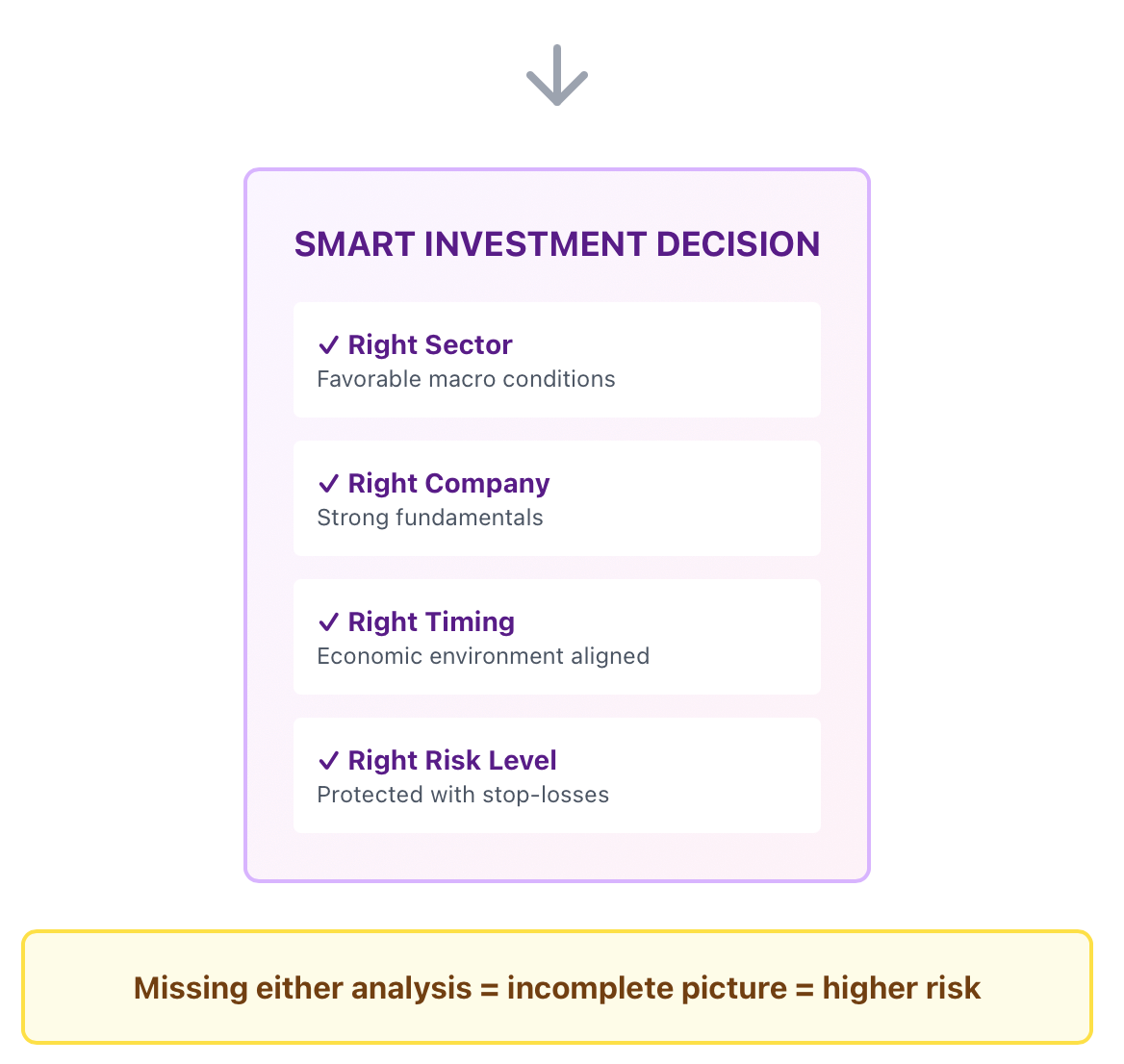
The best way to invest is to combine both top-down analysis (macro analysis) with bottom-up analysis (micro analysis). By performing macro analysis first, you can identify viable market sectors that meet favourable economic conditions and then conduct thorough micro analysis within that particular sector to ascertain which company represents the best opportunity. By using every tool available to you, the integrated approach gives an investor better direction and precision while investing.
You should actively utilise this knowledge in the following manner:
Monthly follow-up on company reports; quarterly earnings releases from companies you are currently following or those you are invested in are critical to understanding revenue growth, profit margin and management guidance. Monitoring this data allows your microeconomic analysis to be up-to-date.
Quarterly follow-up on all major economic indicators, the Gross Domestic Product Manufacturer's (GDP) and inflation index as released and the Federal Reserve meetings. The events occurring within the macroeconomic sector have a direct impact on the entire financial markets, whilst creating the environment where your investments are operating.
You must employ risk management before engaging in any investment or trade; according to your risk tolerance and conviction level, establish stop-loss values before entering a position. Size your position according to your risk tolerance and conviction level, and avoid excessive leverage; excessive leverage can create significant risk even when opportunities appear to offer a good return.
Start small and learn through practice. Open a trading account and begin with modest positions. Use platforms like Btcdana to test strategies in real market conditions. Theory only takes you so far-actual trading teaches lessons no article can convey.
New Investors often make the error of taking only one viewpoint and overlooking the other. They become absorbed by all of the minutiae concerning a company but ignore macroeconomics, or vice versa. You should not make that error. Use both perspectives constantly.
The Market will reward those who can analyse comprehensively while executing with discipline. You now know how to utilise this methodology. You will apply this method/cross-reference methodologies on an ongoing basis to learn from all of your successes and mistakes in order to develop your own way of approaching investments.
Ready to put these strategies into action? Join BTCDANA today and start trading with a platform that gives you the tools to analyse both company fundamentals and global market trends in real-time.