




Introduction
If you've thought about how cryptocurrency networks maintain their security and ongoing functionality, the answer is hash rate. Hash rate is a primary metric to assess the speed at which a miner can resolve complex and computationally intensive problems to verify transactions and earn rewards. In many ways, it is the horsepower that powers the whole blockchain ecosystem.
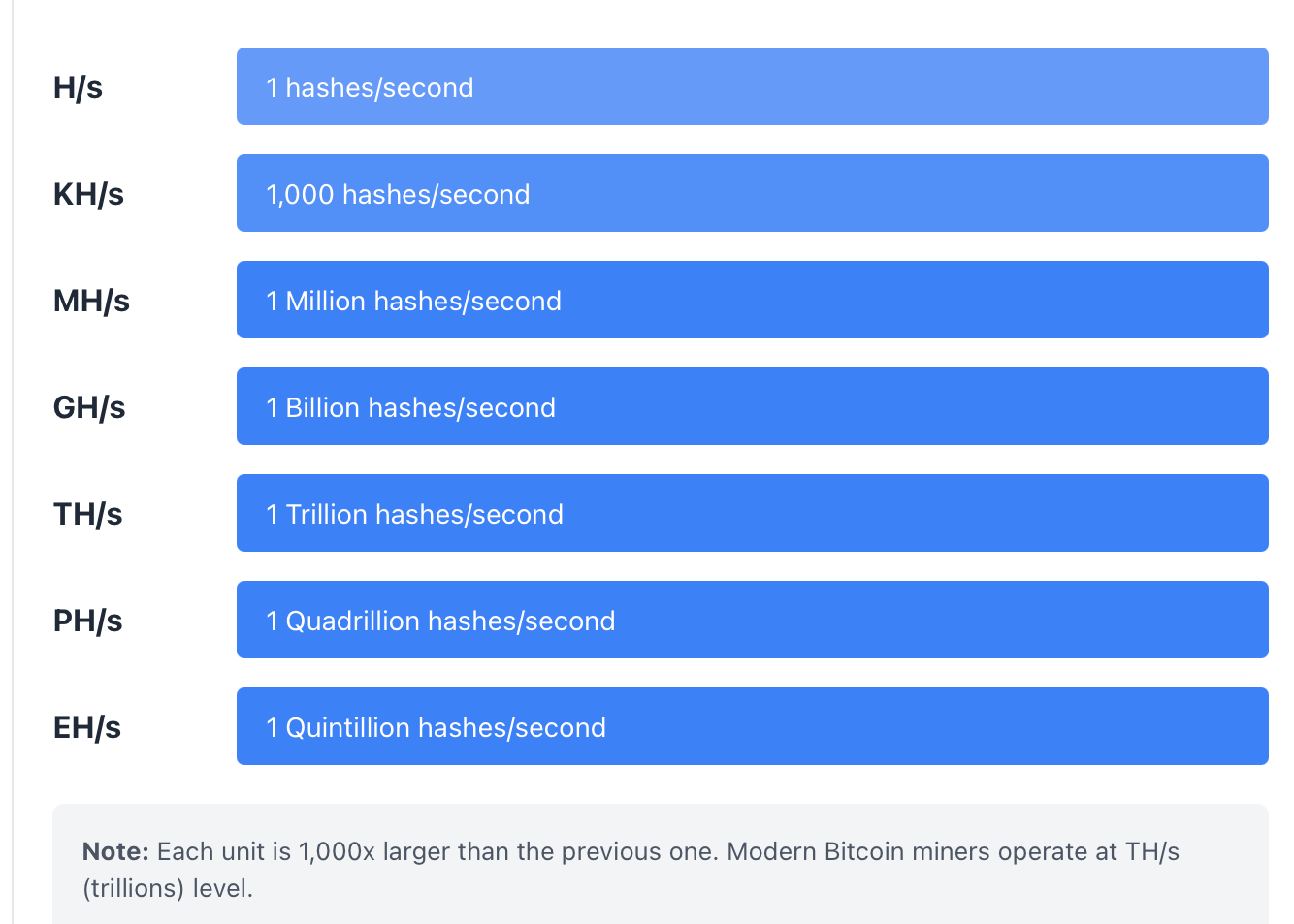
Hash rate is accounted for in hashes per second, where H/s (hashes per second) is the base unit, and scales from KH/s (thousands), MH/s (millions), GH/s (billions), TH/s (trillions), PH/s (quadrillions), and EH/s (quintillions). While the numbers may sound large, they represent the number of attempts a miner has every second to solve a cryptographic puzzle.
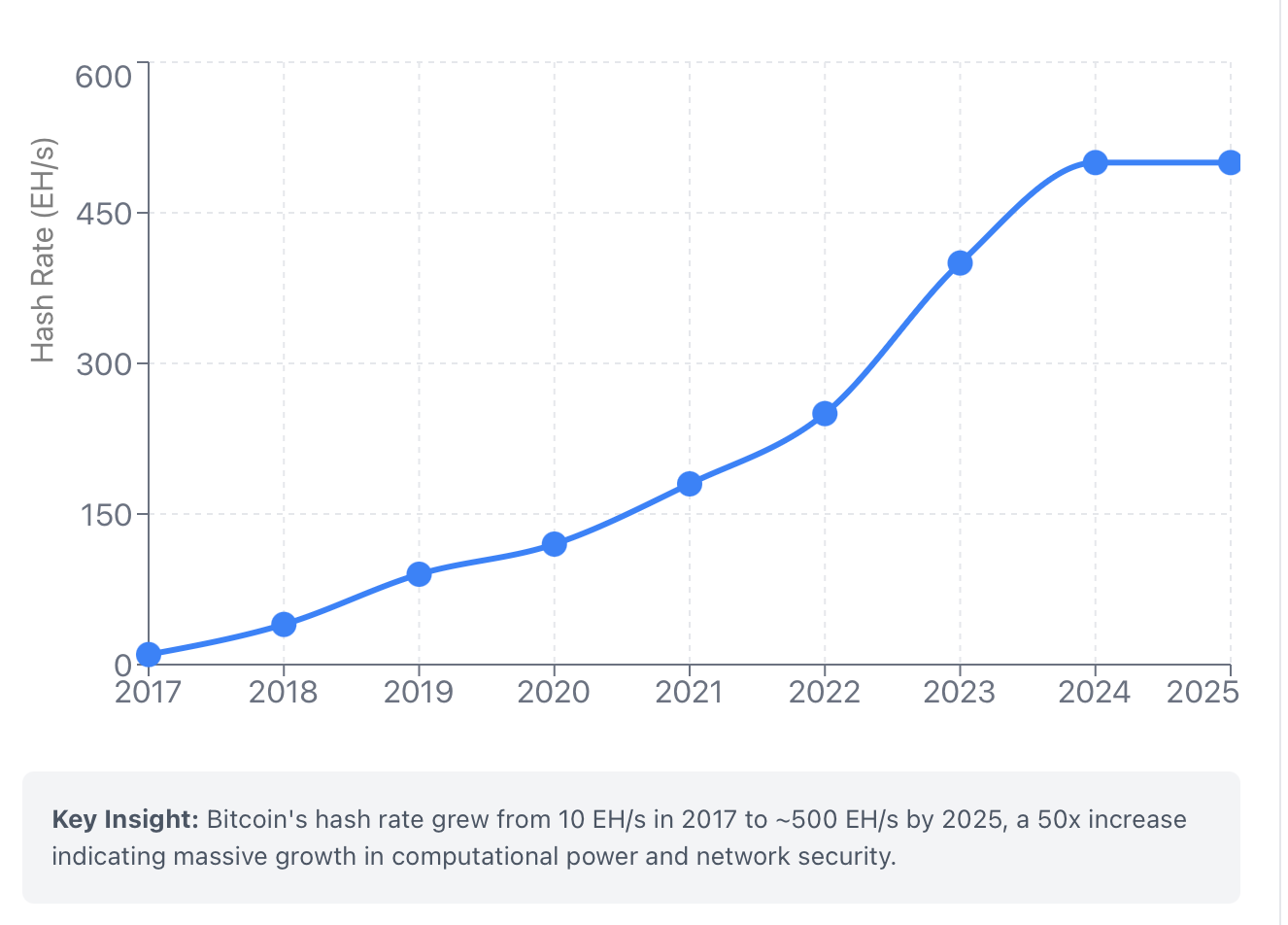
Here’s how mining works: miners regularly execute the hashing function in the hope of validating a transaction and being rewarded to add a block to the blockchain. A larger hash rate means a more secure network and quicker transaction confirmation. In a concrete example, Bitcoin's network hash rate grew from about 10 EH/s in 2017 to approximately 500 EH/s by 2025, indicating immense growth in computational power.
To put it simply for beginners, hash rate is like a math solving race. The faster you can solve them, the better your chances of winning the reward. This article will take you through everything you need to know about hash rate, from the basics and economic implications, to hardware technology and global trends, to future developments.
What Is Hash Rate?
At its most basic level, hash rate is used to quantify the speed at which mining is occurring. However, to truly understand hash rate, we must first define what a hash is. A hash is a type of one-way encryption function that takes any input data and hashes it to a predetermined length. Once an input is hashed, the input data cannot be retroactively produced, which is why hashing is an ideal method for securing transactions on the blockchain.
Hash rates tend to have a simple connotation because, technically, generating more hashes would mean better chances of generating the hash and, therefore, earning block rewards. It's simply a numbers game, in which faster hashing equates to higher productivity.
The way we measure hash rate can be broken down into base unit conversions. Starting from the base unit of H/s (hashes per second), we can quantify in increments of thousands of hashes per second. One kilohash (KH/s) is equal to 1,000 hashes per second, one megahash (MH/s) is equal to 1,000 KH/s, one gigahash (GH/s) is equal to 1,000 MH/s, and so on and so forth. The current leading Bitcoin miners work productively above TH/s (terrahashes) worth of hashing (at least for the best mining equipment); for example, the Antminer S21 hovers in around 200 TH/s.
The hash rate serves many purposes in blockchain networks. First, it helps ensure that transactions are immutable as it would be too expensive to change entries in the history. It also is significantly more expensive to take down the network. A 51% attack becomes impossible as hash rate increases because you are trying to control the majority of mining power.
For students in high school trying to understand this concept, think of it in terms of a number-guessing competition. If you can guess one hundred times per second, while your competitor is only guessing ten times per second, you are ten times more likely to guess correctly first! This is basically what is going on in mining when discussing hash rate.
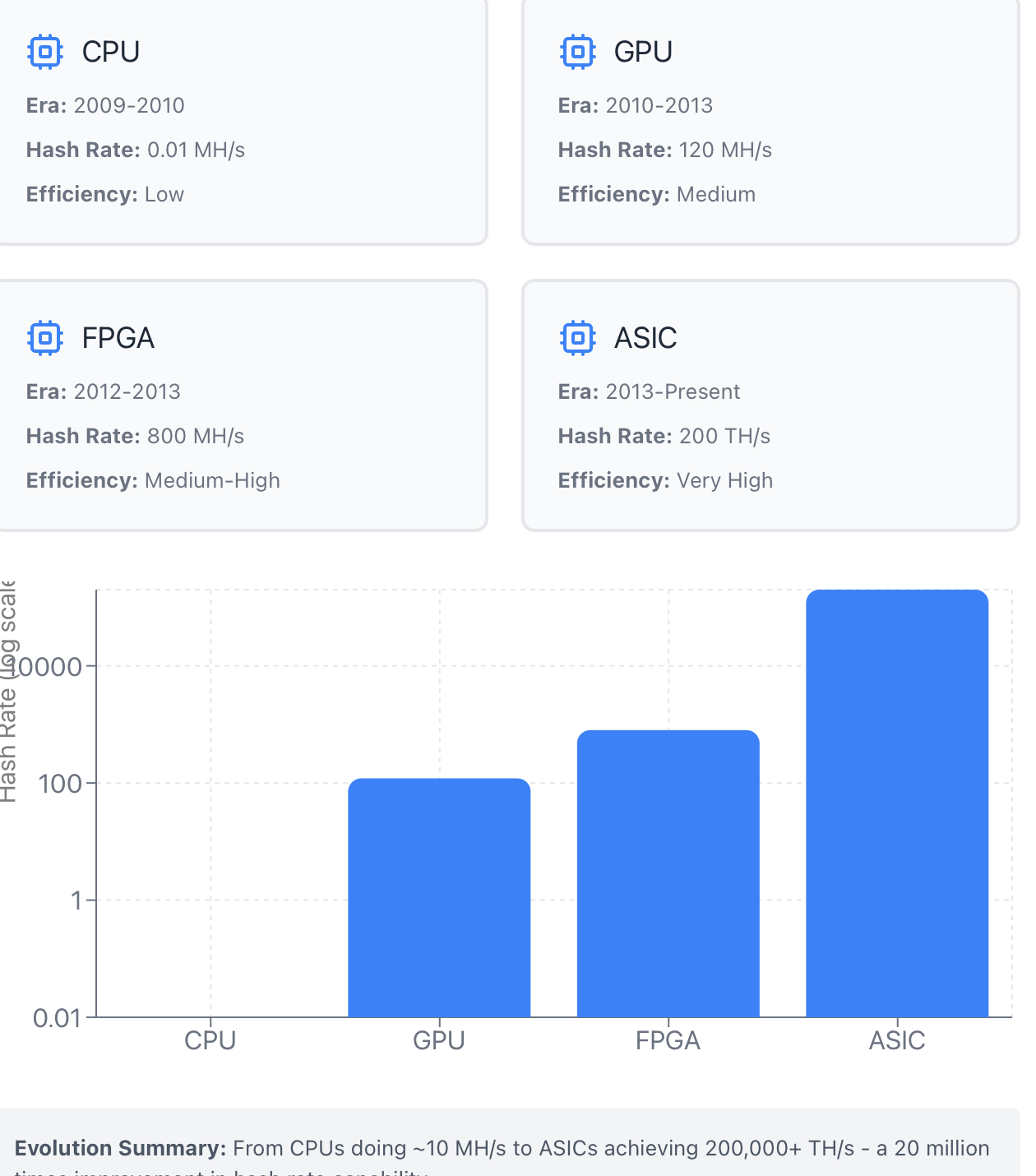
The trend from CPUs to GPUs to ASIC (Application-specific Integrated Circuit) mining is an example of how hash rate has changed this industry. Each iteration has more computing power and is exponentially more efficient than the previous option.
How Hash Rate Affects Mining and the Market
The hash rate is more than a technical measure. It directly impacts network security, mining profitability, and even the price of cryptocurrencies. Gaining perspectives on these relationships enables traders and investors to make more informed decisions.
When the hash rate increases, the network will be a lot more secure. A higher hash rate means that an attacker would have to spend significant resources to compromise the blockchain. This security translates into user confidence, which bodes well for investor confidence, in turn creating a more stable market.
Bitcoin's network has an automatic difficulty adjustment built into it that is triggered every 2,016 blocks, or about every two weeks. When hash rate increases, mining becomes more competitive, so the protocol increases the difficulty in block formation to maintain average block time. When hash rate decreases, difficulty decreases as well, in order to continue generating blocks at the desired rate of once every ten minutes.
The economics of hash rate fluctuations can be intriguing. Higher hash rates typically indicate higher costs of mining, because more powerful machines and more electricity are needed. These higher costs boost the market price of cryptocurrencies as miners need to maintain profitability in order to sustain their mining operations. A sudden drop in hash rate might also indicate network vulnerability, which can shake investor confidence.
In 2021, for instance, China banned cryptocurrency mining. Bitcoin's hash rate dropped nearly 50% practically overnight. This decline understandably caused short-term price volatility as market participants evaluated what it would mean for the security of the Bitcoin network. Over time, miners adjusted and hash rate recovered, illustrating the resiliency of the network overall.
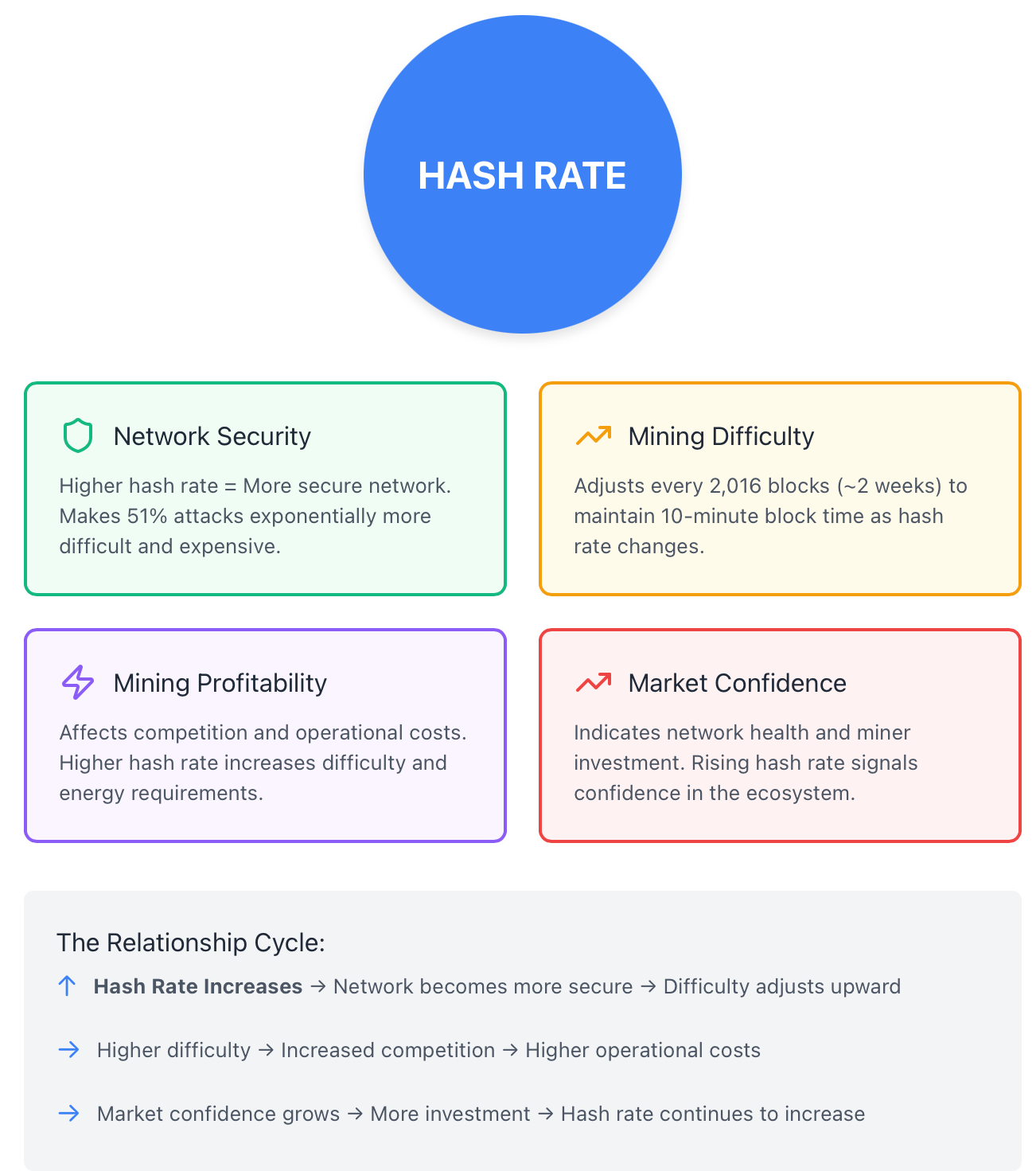
Hash rate provides valuable insight into market-state of play for traders as well. An increasing hash rate indicates more miners are confident that it is worth their time & energy to invest in the network. Sudden drops in hash rate may result from a regulatory crackdown, energy issues, or profitability concerns. Recognizing these trends can greatly assist in identifying potential direction in price and trading activity.
It is analogous to a school exam. When more students take the exam and the questions get harder, it becomes more difficult to do well. But it only means so much more when competing against a larger number of peers in a more competitive situation.
With hash rate, you can measure activity & security of the network. When you see hash rate rising with price increase, it's usually an indicator of a healthy, growing system for Bitcoin. In contrast, when price or hash rate deviate from any patterns in trends of the other, it's likely worth checking to see if there are deeper problems.
Mining Hardware and Hash Rate Performance
The narrative about the story of mining hardware is one of continuous advancements and increasing specialization. Recognizing how different devices work, then, helps to allow for an explanation of how hash rate has achieved such massive gains, and the challenges to that growth.
When Bitcoin first began, anyone could mine, even with a basic computer CPU. In those days, hash rates were only measured in H/s or KH/s. It wasn't long before miners figured out that GPUs (graphics processing units) could hash natively and at much greater power than a CPU could, obtaining hash rates into the MH/s range. This led to a small period in which GPU demand nosedived all of a sudden as gamers became overheated about their graphics cards.
The next leap forward occurred with FPGA (Field-Programmable Gate Array) devices, which achieved even better performance and efficiency than GPUs; however, the real fell revolution was when ASIC miners started becoming fabricated: these ASIC miners are purpose built and designed specifically for hardware mining. ASIC miners dominate the landscape of mining hardware today.
So how much is the gap in performance? Take for example the high end gaming GPU RTX 3090. That gaming GPU has a capability of around 120 MH/s for Ethereum mining, but it fails to run nearly as well when it comes to Bitcoin mining (SHA-256). Meanwhile, the Antminer S21 outputs 200 TH/s for Bitcoin mining. That is not just an incremental improvement, that is several levels beyond.
Nonetheless, that increase in power comes with trade-offs. ASIC miners use a lot of electricity; this can be anywhere from 3,000 to 3,500 watts for high-end models. The feasibility of these miners recouping these set up costs is contingent on a multitude of factors, namely the cost of electricity, the price of Bitcoin, and the difficulty of the network. Each miner needs to consider on an on-going basis whether they are mining profitably.
To use an analogy, CPU mining is a little like using an abacus to solve a math problem. It works, but each problem takes a long time. Once you switch to utilizing an ASIC miner, it is like you have a super-computer dedicated to solving a single (and similar) problem as fast as it can.
Mining pools represent another meaningful evolution in the hash rate story. Miners began to realize that pooling their computing power allowed them to better compete with the large mining operations. Today, large mining pools like Foundry USA, Antpool and others control considerable portions of the network hash rate.
This pooling development is a dual-edged sword. The plus side is the miners, who might have only been able to afford a single ASIC, are now able to earn more predictable rewards. On the other hand, the miners pooling together and the pools becoming dominant signal cause for concern because a few pools controlling hash rate demonstrates a problem with centralization. There are issues with decentralization when few pools are controlling most of the hash rate because, and that is what smart contracts promise us- we can play specifically to the network.
Working to develop miners that operate faster and more efficiently leads to continuous innovation. It can also lead to an arms race where the miner you bought six months ago can be out-dated within days of a new launch. Consequently, as miners become obsolete at a faster rate, it generates a waste stream of equipment that might raise questions about the environmental sustainability of mining while constantly seeking a competitive edge.
The Global Hash Rate Distribution
Global hash rate distribution is uneven. The geographical concentration of mining power is a reflection of meaning costs, regulatory environments, availability of supporting infrastructure. Understanding where mining power is concentrated gives a deeper understanding of both the economic and environmental implications of the industry.
Currently, the United States has the highest hash rate distribution globally. This has been especially augmented since China's ban on mining operations in 2021. States such as Texas, with great energy resources and welcoming policies toward mining, have attracted substantial mining activity. Other notable mining countries include Kazakhstan, Canada, Iceland, and Russia, which host substantial mining operations with each providing their own unique advantages.
Energy source and availability are a significant factor to consider when exploring mining countries. Countries with cheap energy sources, either fossil fueled or renewable, can become natural mining locations. For instance, Iceland has developed geothermal and hydro-electric energy sources which provide some of the cheapest electricity in the world, appealing to environmentally conscious miners.
The environmental effect of cryptocurrency mining has been a subject of considerable debate. Critics highlight the enormous energy consumption, often citing figures that place Bitcoin's electricity consumption on par with a whole country. Proponents argue that mining is increasingly being completed using renewable energy and can even stabilize power grids when drawing from overflow capacity during times of low consumption.
Green mining is an industry trend. Some operations use only renewable energy, such as wind, solar, or hydropower. Other operations are located close to natural gas wells to capture the methane flared into the atmosphere. These two efforts illustrate that high hash rates do not always need to come from dirty energy.
Texas is a great case study. Texas has a deregulated energy system and is rich in wind and solar resources. That makes Texas an attractive place for major mining infrastructure. Some operations can depress their energy usage during peak demand, allowing the energy provider to stabilize the energy grid, while receiving credit for being flexible with their resources. Having energy miners can help develop modern energy systems.
For the beginner, green mining is the difference between charging your phone with a solar panel instead of with coal-based electricity. Both have the same effect on your phone, but one takes advantage of green resources.
Changes in regulation dramatically shape hash rate location. When China banned mining, that didn't mean the hash rate ceased to exist; it simply moved to jurisdictions that were more open to mining activity. This shows the durability of the ecosystem and its ability to adjust and is representative of how, sometimes, regulation can change the global network of miners in a matter of days.
One example was the widespread power outages in Kazakhstan in 2024, which took a large portion of the hash rate offline at once. This demonstrated the weaknesses of geographical concentration, and it highlighted the relevance of decentralization and distributed infrastructure in a mining ecosystem.
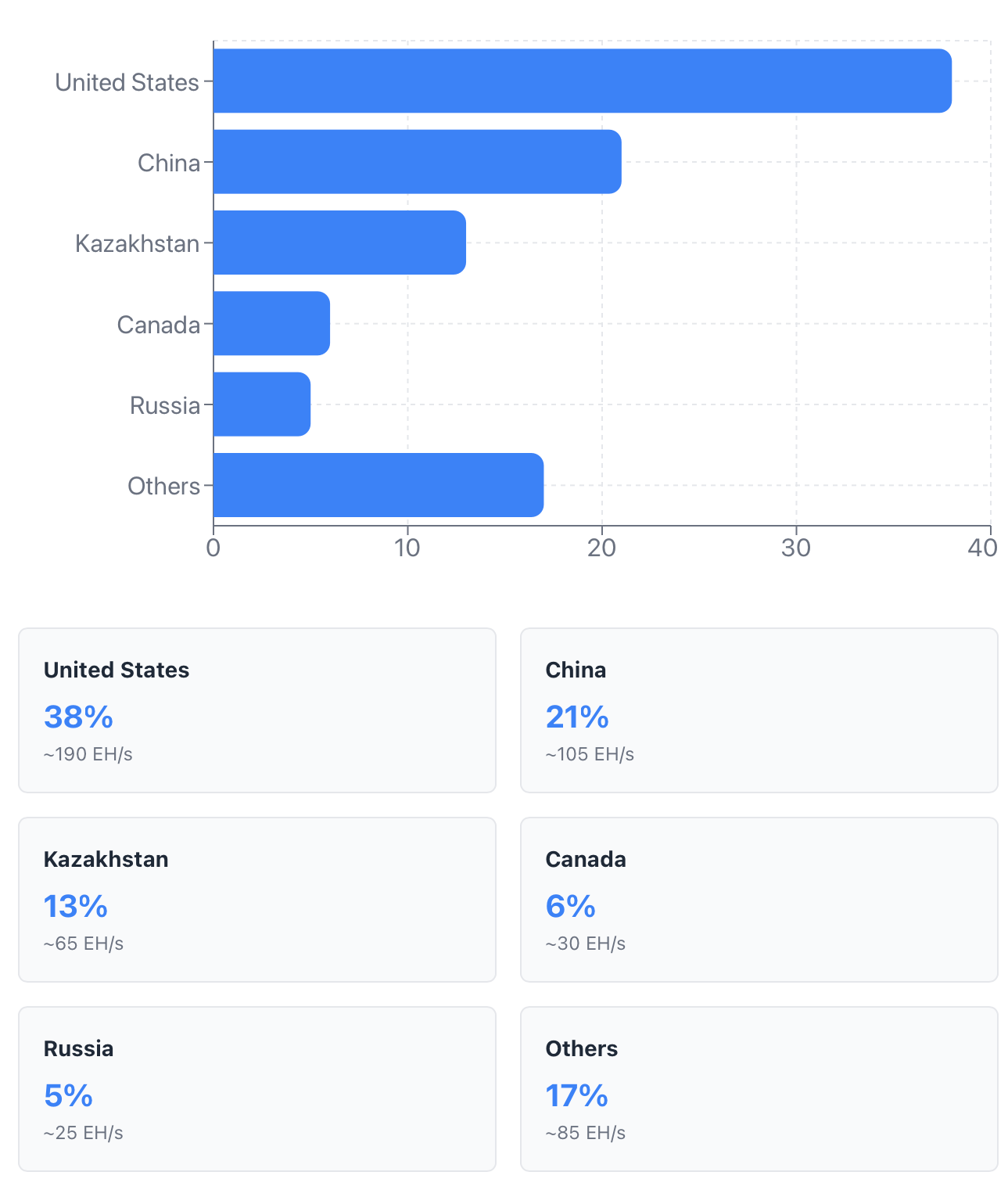
Hash rate geography is also more about energy policy, climate concerns, and how societies like to provide for innovation against resource limits.
The Future of Hash Rate and Mining Efficiency
In the future, the hash rate landscape may change in ways that favor efficiency, sustainability, and decentralization. A number of up-and-coming trends will point toward a mining industry that looks different than we have today.
At the forefront of this innovation is energy efficiency. New mining chips are able to achieve even higher hashing power for every watt of electricity consumed. Software optimization also enables mining firms to use artificial intelligence to analyze pricing and network conditions to automatically determine the best time to mine. In fact, some AI-powered mining farms have achieved as much as 10% efficiency improvements from scheduling alone.
Introduction of decentralized computing networks is yet another fascinating development. Projects like Filecoin and Flux will allow computing tasks to be distributed to many smaller participants, rather than being centralized to large data-centers, and this may even create an easier pathway for them to receive mining rewards.
Regulatory pressures will continuously shift the mining industry landscape. In some jurisdictions energy limitations are tacked onto the mining industry or subject to energy taxes. In other locations they are welcoming miners armed with tax incentives or support infrastructure. It is likely this patchwork situation will continue to impact the geographic location of the hash rate distribution.
The long-term trajectory still suggests a higher total hash rate through increased decentralization. It is becoming easier to access and utilize technology, allowing more participants to contribute significant computing power to the ecosystem without needing to invest in warehouse-scale operations. It is similar to moving from being a solo runner, to participating in a relay race. While the total speed increases, no single runner bears the entire burden of the race.
An important case study is Ethereum's transition away from the Proof of Work consensus mechanism to Proof of Stake in 2022. This transition eliminated traditional mining altogether and, as a result, the hash rate associated with ETH dropped to zero overnight as miners had to either redirect their mining rig hardware to other cryptocurrencies or sell their hardware. This was a dramatic example of how a protocol change could instantly transform the entire mining landscape.
Future projected hash rate growth through 2030 suggests that hash rates will continue to grow for Bitcoin, potentially to ranges upwards of 1,000 EH/s or higher. However, this growth will likely be in a far more efficient and decentralized manner compared to today's mining operation. Continued enhancements to chip design, cooling infrastructure, or energy source accessibility are examples of possible developments that will all contribute to further hash rate growth while possibly being less impactful than present mining operations.
The competition for mining is no longer defined by sheer computing power. It is defined by who can mine the most efficiently with clean energy, lots of intelligence within the systems they create. Intelligence and sustainability will define success in the next generation.
Historical & Industry Evolution
By examining where hash rate and mining have been, one can get a sense of where they are going. The trajectory of the industry mirrors deeper technological trends and economic forces that continue to shape the cryptocurrency markets.
In the earliest days of Bitcoin, the mining community was based on commodity CPUs with hash rates only measured in single-digit MH/s. Satoshi Nakamoto, and others, as individual miners, could mine blocks on their own personal computers, providing true decentralization. This short-lived period of mining ended as various pressures for competition led to innovation.
Around 2010, the era of GPU mining started as miners discovered that graphics cards could process hashes orders of magnitude quicker compared to commodity CPUs. This shift democratized mining in a way, as many owners of graphics cards were already gamers. The shift also became the early movement toward specialization and higher costs of hardware.
Mining pools bounced up with increasing difficulty of solo mining. By pooling resources together, miners no longer needed to compete within the group, but could share rewards on a proportional basis. Pooling resources was a more inclusive and viable approach for small miners, yet still raised the issue of centralization.
The ASIC revolution changed everything. Once ASICs entered the mining marketplace--around 2013--mining as a commodity, along with its associated cost vector, became a relic of prior types of miners. Hash rates went skyward from GH/s to TH/s, and much beyond. The innovation separated serious miners from the hobby level miners.
Changes in regulation have impacted mining for years. Chinese regulations fluctuated, reaching a zenith in 2021 when hash rate jumped, resulting in the sharpest, largest historical move of miners. Other jurisdictions have completely opposing views on regulations, from additional restrictions in a few states to Iceland that encourages it.
The economic argument has changed as well. Early on miners spent a tiny amount on electricity in exchange for an enormous value of Bitcoin. In contrast to today where millions of dollars are spent in facilities with profit margins, typically, weak rather than anything reasonable. Furthermore, mining has shifted from a hobby to an industry that requires business planning.
The dichotomy in CPU mining pool and ASIC mining pool illustrates the change. In the beginning mining consisted of individuals running mining software on computers at home, whereas today it is an industry with dedicated facilities, management, and more in there with traditional finance.
This quantity of history suggests the following about the future: the hash rate will rise, technology will get better, and mining will be stronger and more specialized. Clearly these trends are not reversing.
Conclusion
Hash rate is much more than a technical specification; it is the lifeblood of cryptocurrency networks, indicating their security, efficiency, and health. There are important implications to understanding hash rate for mining profitability, network health and even market dynamics.
There are three principal threads to the importance of hash rate. First, it measures the efficiency of mining and computational power. Second, it correlates directly with network security and resistance to attacks. Third, it is a signal to the market about miners' confidence and ongoing investment into the ecosystem.
When we consider investing in cryptocurrencies, hash rate is an important context for understanding. If the hash rate is increasing, it is suggestive of a healthy improving network ecosystem and immediately fruitful for investors and miners alike. If hash rate was relatively stable or declining (in some scenarios) it could indicate that miners are expecting a probable decline in profitability; an uncommon correctly constructed consequence of known and anticipated regulatory scrutiny. These signals can prove to be useful when considering trading and risk.
Lastly, keep in mind a high hash rate does not automatically mean high profitability to individual miners. Profitability is going to be based on electric costs, efficiencies, and cryptocurrency prices. A high hash rate specifically on its own is a sign of market trust and security for the participants in the ecosystem, not necessarily an indication for individual miners.
The future hash rate is expected to be positive, but it will be different than in the past. Expect growth to continue and emerge from technological innovations, increasingly efficiency through AI optimizations and ultimately greater reliance on renewable energy sources. The mining industry will mature into a professional industry that is growing increasingly cautious about the potential environmental impacts of the industry.
Whether you are a trader trying to understand a market, an investor analyzing cryptocurrency projects or simply curious about the technology behind blockchain, the hash rate reveals the infrastructure behind the power of digital currencies. It translates an abstract concept of cryptographic reality into a concrete reality that includes actual hardware, required electric, and economic incentives.
Ready to deepen your cryptocurrency knowledge and make smarter trading decisions? Visit btcdana.com today for comprehensive guides, real-time market analysis, and expert insights that will help you navigate the exciting world of digital assets with confidence.